We use cookies to enhance your browsing experience. If you continue to use our website we will take this to mean that you agree to our use of cookies. If you want to find out more, please view our cookie policy. Accept and Hide [x]
UK Human Rights Blog - 1 Crown Office Row
Search Results for: puberty blockers consent/page/23/Freedom of information - right of access) [2015] UKUT 159 (AAC) (30 March 2015)
The Appellant, Harry Miller, succeeded in this appeal. Image: The Guardian
In R (Harry Miller) v The College of Policing [2021] EWCA Civ 1926, the Court of Appeal ruled that current police guidance on the recording of ‘hate incidents’ unlawfully interferes with the right to freedom of expression. The decision overturns a 2020 ruling by the High Court in which Mr Miller’s challenge to the lawfulness of the Hate Crime Operational Guidance was dismissed (discussed previously on this Blog here).
Facts
The central issue raised in the appeal is the lawfulness of certain parts of the Hate Crime Operational Guidance. The Guidance, issued in 2014 by the College of Policing, sets out the national policy in relation to the monitoring and recording of what are described as “non-crime hate incidents”. At the root of the challenge is the policy of “perception-based recording”, which states that non-crime hate incidents must be recorded by the police as such (against the named person allegedly responsible) if the incident is subjectively perceived by the “victim or any other person to be motivated by a hostility or prejudice against a person who is transgender or perceived to be transgender” and irrespective of any evidence of the “hate” element.
Mr Miller, who is described as having “gender critical” beliefs, was reported to Humberside Police by Mrs B in January 2019 for posting comments on his Twitter account, which she asserted were “designed to cause deep offence and show his hatred for the transgender community.” Whilst there was no evidence of a criminal offence, the incident was recorded as a “hate incident” and Mr Miller was visited at work by a police officer who told him to “check his thinking.” Mr Miller subsequently brought a claim for judicial review.
PHG, linked with Cambridge University, provides independent advice and evaluations of biomedical and digital innovations in healthcare. PHG has recently published a series of reports exploring the interpretability of machine learning in this context. The one I will focus on in this post is the report considering the requirements of the GDPR for machine learning in healthcare and medical research by way of transparency, interpretability, or explanation. Links to the other reports are given at the end of this post.
Just a brief summary of machine learning in healthcare (for the detail, go to PHG’s report Machine Learning Landscape).
Machine learning typically denotes “methods that only have task-specific intelligence and lack the broad powers of cognition feared when ‘AI’ is mentioned”. Artificial intelligence (AI) can be defined as “the science and engineering of making computers behave in ways that, until recently, we thought required human intelligence.” We are only beginning to realise the scope of intelligence that is silicone-based, rather than meat-based, in the reductionist words of neurscientist and author Sam Harris. It is important too to grasp the difference between types of programming. As this report puts it,
Machine learningas a programming paradigm differs from classical programming in that machine learning systems are trained rather than explicitly programmed. Classical programming combines rules and data to provide answers. Machine learning combines data and answers to provide the rules
R (on the application of J) v the Chief Constable of Devon and Cornwall [2012] EWHC 2996, 26 October 2012 – read judgment
Close on the heels of last week’s decision regarding disclosure of information from the Child Sex Offenders Register comes this ruling on the police decision to disclose certain information from a nurse’s enhanced criminal records certificates without affording her an opportunity to make representations before the information was released.
The International Court of Justice has given a near-unanimous opinion that the separation in 1965 of the Chagos Archipelago from the then British colony of Mauritius was contrary to the right of self determination, and that accordingly the de-colonisation of Mauritius by the United Kingdom had not been in accordance with international law. The ICJ held that Britain’s continued administration of the islands was an internationally wrongful act, which should cease as soon as possible.
This is the latest in a long series of cases concerning the Chagossian islanders, the last domestic one being Hoareau last month, which summarises decisions so far. Also see [120]-[130] of the ICJ’s opinion for the back-story.
Background
The Chagos Archipelago consists of a number of islands and atolls in the Indian Ocean. The largest island is Diego Garcia, which accounts for more than half of the archipelago’s total land area.
Mauritius is located about 2,200 km south-west of the Chagos Archipelago. Between 1814 and 1965, the islands were administered by the United Kingdom as a dependency of the colony of Mauritius. In 1964, there were discussions between America and Britain regarding the use by the United States of certain British-owned islands in the Indian Ocean, in particular in establishing an American base on Diego Garcia.
Animal Defenders International v United Kingdom, April 22 2013 – read judgment
In what was a profoundly sad day for democracy, on 22 April 2013 the European Court of Human Rights found in favour of the UK government in a landmark test case concerning a TV advertisement produced by ADI in 2005, and subsequently banned under the Communications Act 2003.
This announcement by Animal Defenders International (ADI) describes the fate of a film from which the picture above is taken. The verdict was carried through by a majority of one – eight out of seventeen judges dissented. And the reference to “democracy” in ADI’s response to the judgment is not overblown. The general trend of the majority appears to suggest that it is legitimate, in a democracy, for a government to impose a blanket restriction on the exercise of freedom in the name of broadcasting freedom. Such an aim is not one of those listed in Article 10(2). As some of the dissenting judges pointed out,
The ban itself creates the condition it is supposedly trying to avert – out of fear that small organisations could not win a broadcast competition of ideas, it prevents them from competing at all.
….A robust democracy is not helped by well-intentioned paternalism. Continue reading →
The opinions expressed in this article are the personal opinions of its author. Legal scrutiny of the provisions discussed in this piece is warranted but should not be taken to question the requirement to obey the regulations.
Article 9 ECHR provides as follows:
1. Everyone has the right to freedom of thought, conscience and religion; this right includes freedom to change his religion or belief and freedom, either alone or in community with others and in public or private, to manifest his religion or belief, in worship, teaching practice and observance.
2. Freedom to manifest one’s religion or beliefs shall be subject only to such limitations as are prescribed by law and are necessary in a democratic society in the interests of public safety, for the protection of public order, health or morals, or for the protection of the rights and freedoms of others.
This protects the right to public and communal worship where that is part of the belief held by an individual or group, and accordingly Article 9 is clearly engaged.
Nevertheless, when considering the legality of the lockdown it is relevant that the neither latest iteration of the Coronavirus Regulations, nor the previous version that imposed the earlier lockdown, in any way restrict the Article 9(1) right to hold a belief, or choices made regarding personal behaviour outside the context of places of worship.
Further, the European Court of Human Rights (ECtHR) held in Pavlides v Turkey [2013] (Application 9130/09) at [29] that Article 9, taken alone or in conjunction with Article 11, does
not bestow a right at large for applicants to gather to manifest their religious beliefs wherever they wish.
The issue is therefore whether any interference with Article 9 rights was or is both necessary to meet the pressing social need of protecting the health of infected and potentially infected people (the specified exemption from Article 9) and also proportionate.
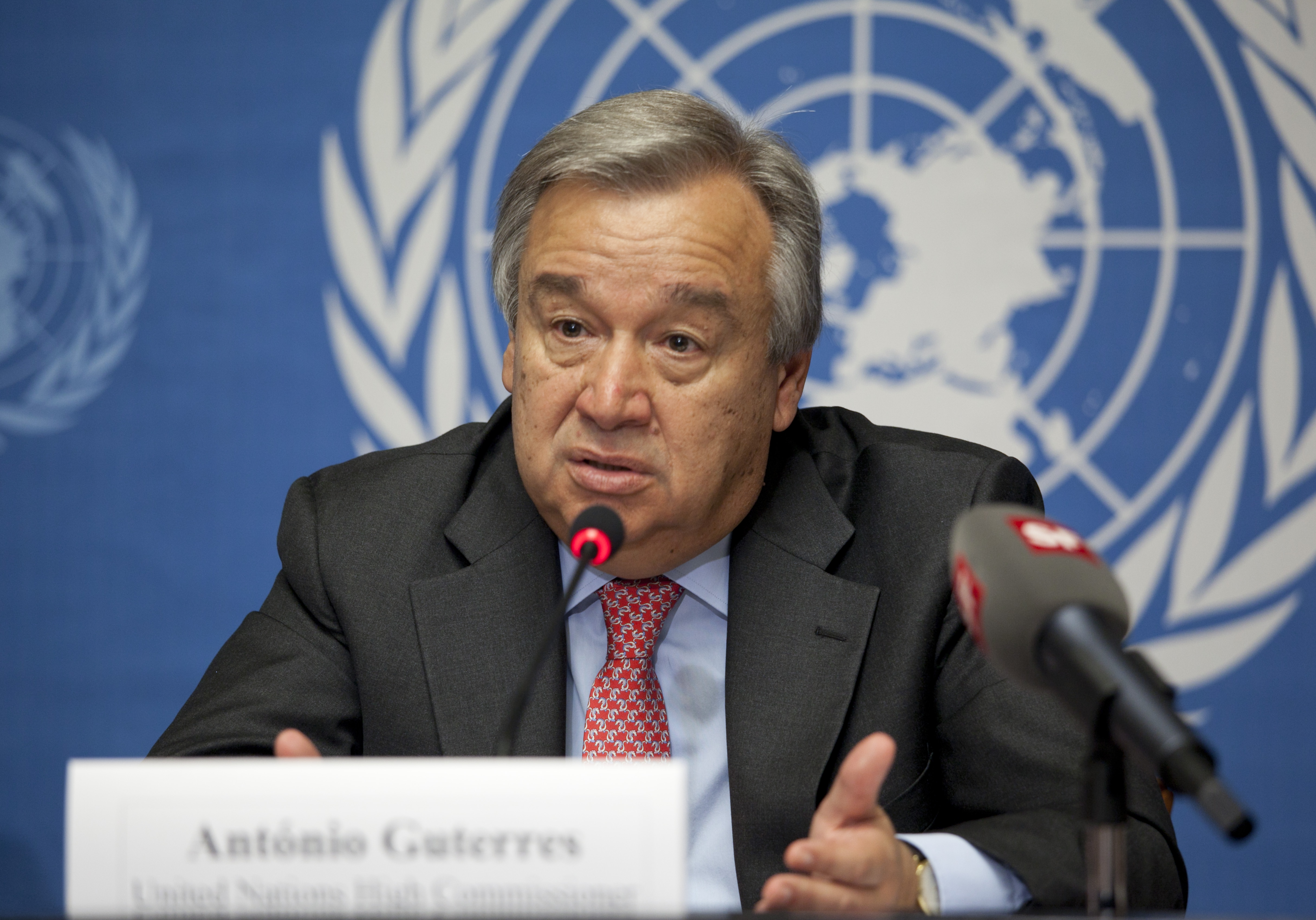
The world is reckoning this week with the human rights consequences of governmental efforts across the world to address the coronavirus pandemic. UN Secretary-General Antonio Gutierres has released a report on how the pandemic is becoming a ‘human rights crisis’. He highlights the disproportionate impact on minority communities, urging that national states of emergency must be proportionate, limited in scope, and alert to the risks of undue censorship and privacy violations. The report is available here.
Within the UK, the Equality and Human Rights Commission has been urging that more reasonable adjustments be made for the disabled and vulnerable in the handling of the pandemic.
In the sphere of criminal justice, the EHRC warns in an interim report that video hearings risk serious discrimination for people with learning disabilities, autism spectrum disorders, and mental health conditions. The report’s recommendations include ensuring disabled defendants have accessible information explaining their right to raise issues to do with participation, ensuring frontline professionals consider identifying people for whom video hearings may be unsuitable, and using registered intermediaries to support disabled defendants in video hearings. The report is available here.
But it would be too narrow to characterise the case as being about trans rights only. At its core, it concerns the role of the police in responding to reports of hate incidents which do not amount to criminal behaviour. As such, the findings of Julian Knowles J have implications that extend beyond trans rights, impacting on how police should respond to reports of racism, antisemitism, Islamophobia, and other forms of discrimination that fall short of criminality. Clearly, the case raises extremely important questions. The Claimant already has permission to appeal to the Court of Appeal and a leapfrog certificate, allowing him to go directly to the Supreme Court to ask for permission to appeal there.
Lee v. Ashers Baking Company Ltd– read judgment here. It is rare indeed for a court judgment to unite newspapers across the political spectrum in criticism, from the Guardianto theTelegraph (taking in veteran human rights campaigner Peter Tatchell on the way), but the so-called ‘gay cake’ case has achieved just that.
The Northern Ireland Court of Appeal upheld the decision of District Judge Brownlie that it was direct discrimination on the grounds of sexual orientation for the owners of Ashers Bakery to refuse to bake a cake saying ‘Support Gay Marriage’ on the basis that such a message conflicted with their deeply-held Christian beliefs about the nature of marriage.
As the Court of Appeal acknowledged, the basic facts of the case “might not suggest that it is a matter of any great moment“. The owners of the bakery, Mr and Mrs McArthur, cancelled the order quickly and politely, providing an immediate refund. The customer, Mr Lee, was able to obtain a suitable replacement cake very easily from another supplier. So why all the fuss? Well, as the Court explained, “those bare facts engage the crucial issue of the manner in which any conflicts between the LGBT community and the faith community in the commercial space should be resolved“. The case is therefore of much greater significance than a single order for cake, raising key questions about the scope of discrimination law and the appropriate level of protection for freedom of conscience in a plural society.
In The Government of the United States v Julian Assange (2021), the District Judge sitting at Westminster Magistrates’ Court discharged the American extradition request against the founder of WikiLeaks because there is a substantial risk that he would commit suicide. Given Julian Assange’s political notoriety as an avowed whistle-blower, however, the judgment is significant for its dismissal of the defence’s free speech arguments. This article analyses why these human rights submissions were unsuccessful.
The Criminal Charges against Assange
In December 2017, Assange was charged with a conspiracy to commit unlawful computer intrusion contrary to Title 18 of the US Code. Assange is alleged to have conspired with Chelsea Manning to steal classified material. Manning was previously convicted by court martial in July 2013 for violations of the Espionage Act 1917 and other related offences.
Subsequently, in May 2019, a federal grand jury returned a superseding indictment containing eighteen counts alleging further offences related to the obtaining, receiving and disclosure of “National Defense Information” (contrary to Title 18).
The information Assange is alleged to have unlawfully acquired and published relates to the illegal actions of the United States’ military and intelligence agencies during the wars in Afghanistan and Iraq, as well as the abusive treatment of detainees at Guantanamo Bay. An extradition request was submitted to the British government in June 2019.
C-115/09 Bund für Umwelt und Naturschutz Deutschland, Landesverband Nordrhein-Westfalen eVvBezirksregierung Arnsberg Trianel Kohlekraftwerk Lünen (intervening) – read judgment
The German system of judicial review involves a “careful and detailed” scrutiny of administrative decisions. However, admissibility criteria are such that few are able to access this system, particularly groups bringing actions alleging environmental harm.
At the centre of this case is the highly topical matter, relevant to one of the discussion threads on this site, of the trend towards a new system of environmental justice, heralded by Aarhus and the accompanying EU Directives, where national courts to are required to recognise claims brought by pressure groups alleging infringement of environmental provisions, even where there is no individual legal interest involved. The Trianel case puts into sharp focus the debate as to whether the environment should be protected not as an expression of an individual’s interest, but as a general public interest, enforceable in the courts. Continue reading →
What is the scope of a school’s duty to accommodate the religion of a parent whose children attend its schools? From September 2020, it will become mandatory for “relationship education” which includes lessons about LGBT relationships to be taught in English primary schools under the Children and Social Work Act 2017. According to a petition by Muslim parents in Birmingham, however, such teaching contradicts the Islamic faith, thereby violating their freedom of religion.
The ongoing protests raise a host of questions about the boundaries between religious rights and the obligation of the state to promote social inclusion through universal and non-discriminatory education.
In this article, it will be argued that the rigorous approach taken by the Canadian courts to this issue should serve as a template for possible future consideration by the English courts and also that uneven standards in the statutory guidance for maintained and independent (including faith) schools undermine the equality duty in the UK.
Tan & Anor v Law & Anor (2013) – Currently available on Lawtel 25/6/2013 and Westlaw, BAILII link to follow
The absence of legal representation for defendants to an action for debt who contended they could not speak English resulted in the High Court granting an application that the trial be adjourned for a second time. The judgment is a good example of the interaction of Article 6 ECHR (right to a fair trial) with the Civil Procedure Rules (CPR).
The decision by Judge Burrell QC obviously turns on its own facts. But the absence of legal aid, the rise in litigants in person, and the increasing number of persons in this country for whom English is not their first language (or indeed their language at all) mean that this is not likely to be the last such case.
The Mayor of London v Hall & Ors [2010] EWHC 1613 (QB) (29 June 2010) – Read judgment
The Mayor of London has won a court order to evict a camp of protesters from Parliamentary Square, with the High Court stating that his response to the protest was proportionate and not a breach of the protesters’ human rights.
The protesters have gained a temporary reprieve by appealing the decision, and according to their website have therefore delayed their eviction until at least 4pm on Friday 2 July
As we posted earlier this month, during the build-up to the General Election a number of protesters erected tents and flags in Parliament Square, a green outside the Houses of Parliament. The protesters named the site “Democracy Village”. Boris Johnson, the Mayor of London, launched an action for possession against the protestors, who he claimed were trespassing on Parliament Square.
This blog is maintained for information purposes only. It is not intended to be a source of legal advice and must not be relied upon as such. Blog posts reflect the views and opinions of their individual authors, not of chambers as a whole.
Our privacy policy can be found on our ‘subscribe’ page or by clicking here.





 Tan & Anor v Law & Anor (2013) – Currently available on Lawtel 25/6/2013 and Westlaw, BAILII link to follow


Recent comments