Search Results for: prisoners/page/42/ministers have been procrastinating on the issue, fearing that it will prove unpopular with the electorate.
9 June 2020 by Jake Richards
The Government’s announcement that eleven local authorities across England would be taking part in voter ID pilots for the 2019 local elections was controversial. There is a heated debate as to whether citizens should have to provide photo identification before receiving their ballot at elections. For some, it is a straight-forward measure to avoid the risk of fraud. For others, it is a policy that, by design or inadvertently, leads to the disenfranchisement of certain groups.
This debate was not considered by the courts in the challenge to the legality of the pilot schemes brought by Mr Neil Coughlan, a former district councillor from Witham Essex. But the consequences of the decision of the Court of Appeal in R (Coughlan) v Minister for the Cabinet Office [2020] EWCA Civ 723 could be profound for our electoral law.
Continue reading →
5 November 2010 by Rosalind English
 Updated | We posted earlier on the Supreme Court ruling in Manchester City Council (Respondent) v Pinnock (Appellant), that requires courts to be satisfied that any order for possession sought by local authorities must be “in accordance with the law”, and (ii) “necessary in a democratic society” – that is, that it should be proportionate in the full meaning of the word.
How far this takes us from the previous position, where the role of the county court was limited to conducting a conventional judicial review of the councils’ decision in such cases, remains to be seen.
Continue reading →
14 June 2017 by Guest Contributor

On 29 March 2017, Theresa May’s Article 50 letter of notice was delivered to Donald Tusk, thereby formally triggering the Treaty-based process for the UK’s withdrawal from the EU. The question remains: is this trajectory irreversible, or can the UK rescind its notification?
While the legal arguments in favour of Article 50’s revocability have already been raised repeatedly in academic discourse, they now merit reconsideration. The results of the UK general election on 8 June have brought about a substantive change of circumstances, and the notion of Breverse no longer seems relegated to the realms of academic hypotheticals. This post explores the legal reality of revocability as a matter of UK constitutional, EU and international law, before considering how the current political situation interacts with this.
Continue reading →
6 May 2015 by Adam Wagner
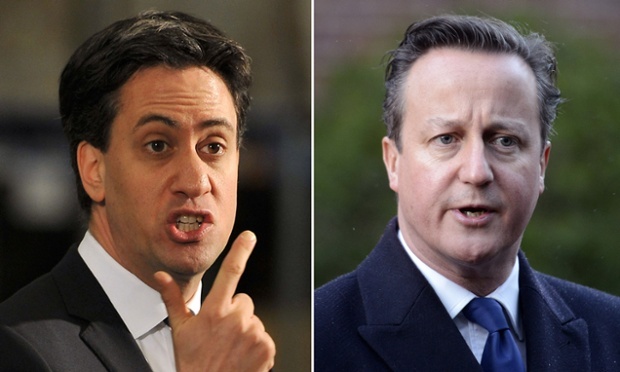 “Our aim is a straightforward one”, New Labour Party told us in October 1997 “[it is] to bring those rights home”. In 2000, the Human Rights Act came into force. For the first time, people in the UK had human rights which could be enforced in UK courts. The right to life, the right not to be tortured, to free speech. What was not to love?
If only it was that simple. 1997 seems a very long time ago. Now, in the final few hours before the 2015 Election, we see the major parties fundamentally divided on human rights.I haven’t written about the Election and human rights yet, mainly because I have been setting up a wonderful new human rights website, rightsinfo.org (more on that later).
Continue reading →
9 May 2011 by Adam Wagner
 A near-hysterical reaction has greeted some recent European court rulings. If you believed the coverage, you would think that unelected, underqualified and frankly bonkers judges are dictating our laws and making our Prime Minister physically ill.
With this week potentially heralding another hang-the-judges media storm over Max Mosley’s Strasbourg privacy case, it is a relief to read three sensible and balanced pieces on European courts this week, all of which highlights the courts’ shortcomings, but also the risks of a UK withdrawal.
First up is Charlemagne, the European columnist in The Economist, who finds a European court system which is “bewildering” – rightly wondering what the difference is between the European Council and the Council of Europe – and staffed by judges who “annoy most national politicians some of the time and infuriate some most of the time“.
Continue reading →
20 December 2012 by Guest Contributor
 Don’t be fooled! We have been led to believe there was a two-way split on the government-appointed Bill of Rights Commission, which published its report on Tuesday, but the split was at least three-way. The Commissioners tell us that ‘it [was] not always easy to disentangle in the opinions expressed to [them] what are tactical positions rather than fundamental beliefs’. The same must surely be said of the report’s seven ‘majority’ authors.
The two dissenters who did not sign up to the majority’s conclusions – Baroness Kennedy of the Shaws QC and Philippe Sands QC – are clear: the time is not ripe for a new UK Bill of Rights. This is because (a) the devolution arrangements in the UK, in which the HRA is successfully embedded, are potentially about to undergo significant change (post-Scottish referendum) (b) the majority of respondents to the Commission’s consultation support the HRA as the UK’s Bill of Rights which incorporates the ECHR rights (but not the European Court case law) into domestic law and (c) for some Commissioners, a Bill of Rights would be a means to decoupling the connection between the United Kingdom and the European Convention on Human Rights (ECHR). In sum, “the case for a UK bill of rights has not been made” and the arguments against such a Bill “remain far more persuasive, at least for now.”
Continue reading →
24 March 2016 by Guest Contributor

“Roses are red.
Violets are blue.
Whatever your political colour;
Human rights should matter to you”
Some legal oratory flows into the profound, beautiful and inspiring. Most of the time when it comes to poetry – as this particularly appalling ditty is designed to demonstrate – we lawyers should stick to the day job.*
This week human rights commentators celebrated both World Poetry Day and the launch of a new project on the conservative commitment to human rights. Announcing a Commission made up of MPs and commentators – including Maria Miller MP, Dominic Grieve QC MP and Matthew D’Ancona – Bright Blue this week published a series of essays by Conservative leaders on a range of human rights threats; from the refugee crisis to the repeal of the Human Rights Act.
Bright Blue now joins the Labour Campaign for Human Rights in taking steps to take the current debate beyond the heat and light of party politics and into a greater conversation about how we protect the rights of the most vulnerable in our communities and about the UK’s place in the world.
Continue reading →
17 February 2011 by Adam Wagner
 The Telegraph has an editorial this morning entitled “Common sense needed in human rights review“.
It refers to the Prime Minister’s answers to questions in parliament yesterday. In reply to a question about the supreme court sex offenders ruling, which has led the government to change the law but which apparently makes Philip Davies MP’s constituents “sick to the back teeth” of human rights, the PM responded:
My hon. Friend speaks for many people in saying how completely offensive it is, once again, to have a ruling by a court that flies in the face of common sense. Requiring serious sexual offenders to sign the register for life, as they now do, has broad support across this House and across the country. I am appalled by the Supreme Court ruling. We will take the minimum possible approach to this ruling and use the opportunity to close some loopholes in the sex offenders register.
Continue reading →
2 December 2012 by Adam Wagner
 You know those films where a couple spend the first two acts hating each other until, possibly at night when it is raining, they realise they have been in love all along? It seems that following the Leveson Inquiry report, a winter romance is developing between the Mail on Sunday and the Human Rights Act.
In Bombshell by Leveson’s own adviser: His law to gag press is illegal as it breaches Human Rights Act, the Mail reveals an interview with Shami Chakrabarti, director of human rights advocacy organisation Liberty and also advisor to the Leveson Inquiry, in which she argues that any new law that made the government quango Ofcom the ‘backstop regulator’ with sweeping powers to punish newspapers would violate Article 10 of the European Convention On Human Right, which protects free speech (Update: for more, see this post by Hugh Tomlinson QC – he disagrees with Chakrabarti, although also points out she has been misrepresented).
It only seems like a few months ago (actually, it was only a few months ago) that a Mail editorial thundered: Human rights is a charter for criminals and parasites our anger is no longer enough. As Private Eye might say… just fancy that!
Continue reading →
20 January 2020 by Thomas Hayes
Protestors demonstrate outside the Famagusta district court in Paralimni, Cyprus, at the trial of a 19-year old girl convicted of public mischief after withdrawing a rape allegation in contested circumstances. Credit: The Guardian.
A quick look at the “recent decisions” page of the British and Irish Legal Information Institute’s (BAILII) website did not, at first glance, give this author much cause for optimism in the preparation of this blog. However, a more careful reflection on the week’s events provided a plethora of material to consider, notwithstanding the absence of any recent decisions from the Supreme Court or civil Court of Appeal.
When the domestic courts go on leave, it falls to their European counterparts to pick up the slack and churn out judgments to help keep us occupied. It was with surprise however, that a hopeful scroll through the week’s European Court of Human Rights (ECtHR) decisions revealed not only the familiar names paying a visit to Strasbourg (ahem, Russia), but also that our own United Kingdom had put in an appearance at Europe’s legal naughty corner. Some further creative searching on BAILII revealed that the UK paid nine visits to the ECtHR last year, compared to Russia’s one-hundred and seventy-three.
In Yam v United Kingdom [2020] ECHR 41, a former MI6 informant and Chinese dissident failed in his attempt to have the ECtHR rule that his 2009 murder trial had been prejudiced by virtue of parts of it being held in camera, rather than in public. The applicant had relied upon the provisions of Article 6 of the European Convention on Human Rights, specifically 6(1) and 6(3)(d):
“1. In the determination of … any criminal charge against him, everyone is entitled to a fair and public hearing … [T]he press and public may be excluded from all or part of the trial in the interests of morals, public order or national security in a democratic society, where the interests of juveniles or the protection of the private life of the parties so require, or to the extent strictly necessary in the opinion of the court in special circumstances where publicity would prejudice the interests of justice.
3. Everyone charged with a criminal offence has the following minimum rights:
(d) to examine or have examined witnesses against him and to obtain the attendance and examination of witnesses on his behalf under the same conditions as witnesses against him;”
The court held however that these provisions did not prohibit domestic courts from derogating from public hearings where special circumstances justified it. The measures adopted during his trial had met the requirement of necessity. Furthermore, the ECtHR considered itself poorly equipped to challenge national authorities’ judgement when assessing national security concerns. The court held that the trial judge had carefully balanced the need for openness against the national security interests at stake, and in so doing, had limited the private aspects of the trial to the minimum possible. Through such an analysis, he had satisfied himself that a fair trial was still possible. Consequently, there was no thus disadvantage to the applicant, who had suffered no breach of his Article 6 rights.
In other international developments, lawyers acting for a British 19-year-old in Cyprus filed an appeal against her suspended sentence for public mischief and fabricating an “imaginary crime”. The woman involved had initially made accusations of gang-rape against 12 Israeli youths before retracting her accusation in circumstances now disputed. Her defence have suggested that not only was she suffering from PTSD at the time her claims were withdrawn, but also that she was in fear for her life. The signed confession was in Greek rather than English and made after several hours of unrecorded questioning by detectives in the absence of a lawyer. Her legal team seek to have her conviction overturned.
Returning to purely domestic considerations, the week also saw the announcement that judicial sentencing remarks in high profile cases will in future be broadcast on television from Crown Courts. The move was lauded by broadcasters and the Lord Chief Justice as promoting transparency and as an aid to public understanding of the criminal justice system.
The move was not however uncontroversial. Concerns were raised by the Bar Council of England and Wales that the broadcast of sentencing remarks in the absence of fuller details of the trial could lead to a failure on behalf of viewers to appreciate why a particular sentence has been passed. They expressed anxiety that the audience will be deprived of relevant context, such as mitigation. Further fears included that increased disclosure of judges to the public eye could expose them to undue attack and criticism in circumstances where a given sentence proves unpopular. However regardless of the merits, the development was successful in affording current BBC radio 4 listeners one of the funnier moments so far of 2020, when Evan Davis introduced American lawyer Robert Shapiro to debate the topic with Lord Sumption, only to find that they had inadvertently invited an American political adviser with the same name to the PM show instead (listen here).
The week also saw:
- The Mail of Sunday file its defence at the High Court on Tuesday in response to a claim brought by the Duchess of Sussex for breach of copyright, invasion of privacy and misuse of personal data. The case concerns excerpts of correspondence between the Duchess and her father published by the newspaper.
- The ECHR deliver judgment in favour of nine Russians detained pending trial for as long as 7 years, some of whom remain incarcerated, in circumstances characterised by fragile reasoning of the courts and an absence of due process – DIGAY AND OTHERS v. RUSSIA [2020] ECHR 54.
- The entire Russian government resign in a move thought likely to pave the way for amendments to the country’s constitution favourable to current leader Vladimir Putin. The proposed reforms would strengthen the role of the Prime Minister and weaken that of the President. Mr Putin is constitutionally barred from standing again for the presidency but could transition into one of the roles in which the proposed constitutional changes are likely to vest more power. The reforms would also restrict the applicability of international law in Russia to circumstances where it did not contradict the constitution or restrict people’s rights and freedoms, a measure framed as one to increase national sovereignty.
- The High Court refuse permission to appeal in a case brought by a soldier, who contracted Q-fever whilst serving in Afghanistan, against the Ministry of Defence (MOD). The claimant soldier had alleged failings on behalf of the MOD in not providing him with adequate chemoprophylaxis to protect him from the disease – Bass v Ministry of Defence [2020] EWHC 36 (QB).
Lastly, on the UK Human Rights Blog:
2 August 2010 by Adam Wagner
 Updated (4 Aug 2010)
Army generals are notorious for fighting the last war instead of the current one. Human rights campaigners may be in danger of the same mistake if they get their strategy wrong for the new coalition government.
The great civil liberties fight of the last decade centered on New Labour’s anti-terrorism measures. Keystone issues such as stop and search, 42-day detention without charge and control orders caught the public imagination and have been the subject of bitterly fought and largely successful campaigns by rights groups.
The other significant fights have been over the so-called surveillance state; for example CCTV, the DNA database and ASBOs, all of which are now being considered for reform by the new government.
Continue reading →
28 February 2011 by Adam Wagner

Peter Sutcliffe
Three convicted murderers are challenging their sentences in the European Court of Human Rights. They claim that the rare “whole life” tariffs which have been imposed in their cases is contrary to their human rights.
Jeremy Bamber, Peter Moore and Douglas Vinter were all convicted for murder and therefore sentenced to life imprisonment, which is the mandatory sentence for the crime. It has been so since death penalty was abolished in 1969. However, as is well-known, life does not always mean life, and when a judge passes sentence he also sets a tariff, which is the number of years before which the prisoner will be eligible to be considered for early release on licence. The rules have already been altered to make them compatible with fair trial rights. Will they have to be altered again?
Continue reading →
17 November 2010 by Alasdair Henderson

As we reported recently, the Special Immigration Appeals Commission has ruled that Abu Hamza, the extremist Muslim cleric, cannot be stripped of his British citizenship since this would have the effect of making him stateless.
This is the latest in a string of decisions by various courts in a long-running legal saga surrounding the British government’s attempts to remove Abu Hamza from the UK. Hamza is also facing extradition to the United States, but this has been stayed pending the substantive decision of the European Court of Human Rights as to whether the prospect of serving a life sentence in a ‘supermax’ US prison would breach his Article 3 rights (our analysis of the admissibility decision can be found here).
Continue reading →
3 February 2013 by Sam Murrant

Welcome back to the UK Human Rights Roundup, your recommended weekly dose of human rights news. The full list of links can be found here. You can also find our table of human rights cases here and previous roundups here.
This week, the focus of the online commentary has been very much on the subject of equal access to justice, which is beset on all sides from legal aid cuts, the proposals for secret courts to protect sensitive government information, the lack of representation for the judiciary in the government, and the efficiency drive in Strasbourg.
Continue reading →
19 April 2011 by Adam Wagner

There is a scene in the film Milk in which Harvey Milk, a gay rights leader and politician, counsels his young protegé Cleve Jones on how to rally an angry crowd. Cleve has been reading a convoluted speech to little effect, when Milk steps in to show him how it’s done.”Lose the note cards next time”, he tells Cleve, “your job is to say into that bullhorn what they’re all feeling”.
Geoffrey Robertson QC has taken Harvey Milk’s advice in a recent article in the Daily Mail in support of a British Bill of Rights. We can be angry about European human rights judges and the European Convention, says Robertson, because “human rights can be delivered without Europe infringing the sovereignty of the British Parliament” through a British Bill of Rights. He feels the pain of the Euro-sceptic case.
Continue reading →



Recent comments