We use cookies to enhance your browsing experience. If you continue to use our website we will take this to mean that you agree to our use of cookies. If you want to find out more, please view our cookie policy. Accept and Hide [x]
UK Human Rights Blog - 1 Crown Office Row
Search Results for: prisoner voting/page/46/ministers have been procrastinating on the issue, fearing that it will prove unpopular with the electorate.
In R. (on the application of Conway) v Secretary of State for Justice [2018] EWCA Civ 1431 the Court of Appeal held that the blanket ban on assisted suicide in the Suicide Act 1961 s.2(1) was a necessary and proportionate interference with the ECHR art.8 rights of the appellant.
The appellant had proposed an alternative scheme for assisted suicide containing certain conditions and safeguards, including the approval of a High Court judge, for those who were terminally ill and had less than six months to live. However, it was held that the alternative scheme would not be effective and raised wide-ranging policy issues that would be better dealt with by Parliament.
The Court identified the origin of the case as being that the Claimant has a prognosis of six months or less to live and wishes to have the option of taking action to end his life peacefully and with dignity, with the assistance of a medical professional, at a time of his choosing, whilst remaining in control of the final act that may be required to bring about his death. However, Section 2(1) of the 1961 Suicide Act makes it a criminal offence to provide encouragement or assistance for a person to commit suicide.
Mr Conway therefore sought a declaration of incompatibility under section 4 of the HRA , on the basis that the ban on assisted suicide was a disproportionate interference with his right to respect for his private life under Article 8 of the Convention (“Article 8”).
R (Ferguson) v HM Assistant Coroner for Sefton, Knowlsey and St Helens [2025] EWHC 1901 (Admin) concerned a challenge by the next of kin of Joseph Farley, who died after jumping from the fourteenth floor of a carpark. The Coroner conducting mr Farley’s inquest has determined that Article 2, ECHR, did not apply and that the inquest could be heard without a jury. Mr Ferguson challenged both of these decisions by way of judicial review.
In a thorough and detailed judgment upholding Mr Ferguson’s challenge, Mrs Justice Hill gave a useful restatement of the law on Article 2, as well as a useful illustration of how it applies if difficult and complex fact patterns. The judgment also contains helpful clarification on the different sorts of causation tests that apply to parts of the Coronial process.
BIG BROTHER WATCH AND OTHERS v. THE UNITED KINGDOM
In an exhaustive and detailed judgment coming to over 200 pages, the ECtHR held that both the bulk electronic communications interception regime operated by the UK’s intelligence agencies under the Regulation of Investigatory Powers Act 2000 and its provisions for acquiring communications data from telecommunications operators violated Articles 8 and 10 of ECHR.
However, the ECtHR held that there was no violation of Article 8 through the UK’s receipt and use of similar information obtained from other countries.
The ECtHR’s judgment is as noteworthy for what it deemed to be incompatible with the ECHR as what it deemed to be incompatible. In contrast to the tenor of many of the headlines in the media about the judgment, it was not an unreserved endorsement of the criticisms that have been levelled at the intelligence services in light of the Snowden revelations. The ECtHR’s comments as to the proportionality and necessity of the bulk collection of electronic communications, as well as about the adequacy of the safeguards and oversight structures will be of some consolation to the government.
The real issue for the Government is whether the ‘checks and balances’ in the Investigatory Powers Act (which is not yet fully in force) will be sufficient to defeat the criticisms made by the ECtHR of the previous regime under RIPA; in particular over the selection criteria for material that would be seen by human eyes and whether there are sufficient ‘journalistic’ safeguards.
R v Gul (Appellant) [2013] UKSC 64, 23 October 2013 – read judgment
It is a platitude that one man’s terrorist is another man’s freedom fighter. It is for precisely this reason that the international community has not been able to agree on a definition of terrorism to be embedded in international law.
The issue in this appeal was whether the definition of ‘terrorism’ in the UK Terrorism Act 2000 includes military attacks by non-state armed groups against national or international armed forces in a non-international armed conflict.
The following is taken from the Supreme Court’s press summary. References in square brackets are to paragraphs in the judgment. Continue reading →
M.R. and D.R.(suing by their father and next friend O.R.) & ors -v- An t-Ard-Chláraitheoir & ors [2014] IESC 60 (7 November 2014) – read judgment
The definition of a mother, whether she is “genetic” or “gestational” for the purpose of registration laws was a matter for parliament, not the courts, the Irish Supreme Court has ruled.
At the core of the case was the question whether a mother whose donated ova had resulted in twin children born by a surrogacy arrangement should be registered as their parent, as opposed to the gestational mother who had borne the twins.
The genetic mother and father sought her registration as “mother” under the Civil Registration Act, 2004, along with a declaration that she was entitled to have the particulars of her maternity entered on the Certificate of Birth, and that the twins were entitled to have their relationship to the fourth named respondent recorded on their Certificates of Birth. Continue reading →
Erlam et al v. Rahman et al, Richard Mawrey QC, April 2015, judgment here
The Guardian has reported that Lutfur Rahman, the former directly elected mayor of Tower Hamlets is “exploring the possibility” of judicially reviewing the judgment of the Election Commissioner, Richard Mawrey QC declaring his 2014 election void and barring him from standing in the mandated repeat of the poll.
The only surprise is the qualified nature of the statement as his website had already announced his decision to appeal two days before. This site also directs readers to a petition which describes the case as, “a politically-charged stitch up and an anti-democratic coup.” The Guardian quotes the Head of the Tower Hamlets branch of UNITE as describing the judgment as “an undemocratic assault on the people of Tower Hamlets” which was both “racist” and “Islamophobic”.
The High Contracting Parties shall hold free elections at reasonable intervals by secret ballot, under conditions which will ensure the free expression of the opinion of the people in the choice of the legislature.
This Article imposes obligations on States rather than creating rights for individuals. This provision includes the right to vote and the right of candidates to stand for election.
States are under an obligation not to impose any form of pressure as to the choice of candidates at elections: Moureaux v Ors (1983) DR 97.
Protocol 1 Article 3 does not require that every vote is given equal weight; different electoral systems all involve wasted votes and there is no obligation to introduce proportional representation.
Access to the media must not be discriminatory. However, a wide margin of appreciation applies under this Article and the Strasbourg authorities have been slow to strike down national rules relating to election coverage (Tete v France (1987) 54 DR 52).
So there is nothing controversial about the express terms of A1 31, however this Article has become something of a battleground for almost everything the Convention stands for, in the eyes of its opponents as well as its supporters. This is because the Strsabourg Court found, in Hirst v United Kingdom (2006) 42 EHRR 41, that the provision implies that all individuals have the right to vote, and that therefore the UK blanket ban a blanket ban on all prisoners serving a sentence of imprisonment is unlawful. The standoff between the UK and Strasbourg on this matter is as yet unresolved. The reason the argument has become so heated is that it turns on a fundamental question at the base of human rights instruments such as the Convention: Is it the right of the democratically elected Parliament to decide who their electorate should be? See the numerous case reports, news pieces and discussions on the prisoner voting issue here, here and here.
Protesters outside the Marie Stopes clinic in Ealing have been told they must stay 100m from the building
In the News
Rumours of a coming parliamentary coup to avoid a no-deal outcome rumble on, prompting the usual range of responses.
Speaking at the G7 summit in Biarritz on Sunday, Boris Johnson stated that Britain can ‘easily cope’ with a no-deal Brexit. The Prime Minister ascribed sole responsibility for whether or not Britain crashed out of the European Union on 31 October to ‘our EU friends and partners’, while Brussels officials asserted that it was ‘squarely and firmly’ up to Britain to find a solution to the Irish border issue. His comments come after a week in which Angela Merkel and Emmanuel Macron indicated their unwillingness to countenance reopening the withdrawal agreement, while Donald Trump promised a ‘very big trade deal’ between the United Kingdom and the United States once the country had freed itself from the ‘anchor’ of the EU.
Writing in the Times, Cambridge historian Robert Tombs argues that those who consider parliamentary resistance a legitimate expression of its sovereignty would ‘do untold damage to the institution they claim to defend’ by preventing the government from ‘[carrying] out a policy approved by the electorate’. In the Guardian, Heather Stewart and Rowena Mason covered the opposing view, outlining the key points in the six-page document prepared for Jeremy Corbyn by the shadow attorney general, Shami Chakrabarti. The advice includes an assertion that Boris Johnson would be committing the ‘gravest abuse of power and attack on UK constitutional principle in living memory’ if he shuts down parliament to help force through a no-deal Brexit.
Earlier this week, the archbishop of Canterbury sparked criticism by Brexiteers, including former Conservative party leader Iain Duncan Smith, for reportedly meeting MPs with a view to chairing citizens’ assemblies to stop a no-deal departure from the EU. Today, Jeremy Corbyn met with the leaders of the SNP, the Liberal Democrats, Plaid Cymru, the Green party and the Independent Group for Change and issued a joint statement agreeing to work together to avoid ‘a disastrous no-deal exit’.
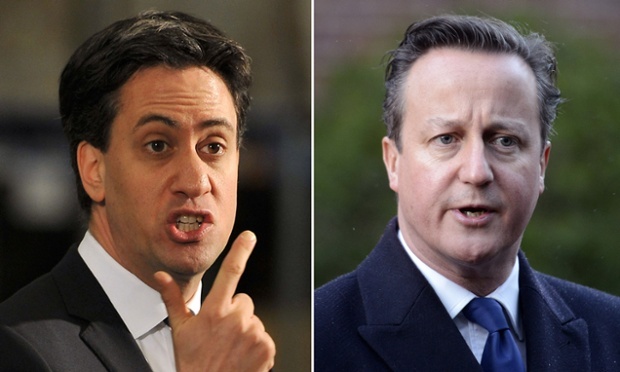
“Our aim is a straightforward one”, New Labour Party told us in October 1997 “[it is] to bring those rights home”. In 2000, the Human Rights Act came into force. For the first time, people in the UK had human rights which could be enforced in UK courts. The right to life, the right not to be tortured, to free speech. What was not to love?
If only it was that simple. 1997 seems a very long time ago. Now, in the final few hours before the 2015 Election, we see the major parties fundamentally divided on human rights.I haven’t written about the Election and human rights yet, mainly because I have been setting up a wonderful new human rights website, rightsinfo.org (more on that later).
Do Lord Phillips, Baroness Hale and other members of the judiciary have the right to say what they think? At first glance that seems like a ridiculous question. Firstly, it is their job to express their views on the legal disputes coming before them on an almost daily basis. Secondly, to look at it from an entirely different perspective, they enjoy the same protections granted by article 10 of the European Convention of Human Rights (ECHR) as the rest of us. Of course they have the right to say what they think.
But what about when they are acting in a non-judicial capacity – when they are giving speeches or participating in conferences or being interviewed? What about when the topic of discussion is not a narrowly defined legal point but a more politically charged issue of public debate? The answer must be the same. They have the right to express their views, but whether or not they should is a more nuanced question. This was the topic selected by the Lord Neuberger MR in his Presidential Address to the Holdsworth Club on 2 March 2012.
Dr John Sentamu, the Archbishop of York, has thrown a firecracker into the consultation on gay marriage, which is about to begin in March. In an interview with the Daily Telegraph he declared that he did not agree that it was the role of the state to define what marriage is. “It is set in tradition and history and you can’t just [change it] overnight, no matter how powerful you are”.
Gay rights campaigners have poured scorn on this pronouncement, calling the Archbishop a “religious authoritarian” who wants to “impose his personal opposition to same-sex marriage on the rest of society.” But this outbreak of bad temper – not unpredictable, given the skirmishing over the consultation on the same issue which took place in Scotland last year – raises the wider issue of the role and influence of church leaders in the process of legal change.
In a secular society, the participation of clerics in the House of Lords is grudgingly accepted as part of an ancient tradition. And on this issue at least, the general view seems to be that the Church has grounds for complaint. The current system recognises gay partnerships under the Civil Partnership Act 2004 (CPA). But the main change is to alter the Equality Act so as to allow such partnerships to take place on religious premises, and it is that which is being so bitterly opposed, apparently because it brings the matter within the church’s bailiwick. But even if it does, we have to ask what it is that privileges Sentamu’s voice over any others in the debate over whether gay and heterosexual partnerships should be on an equal footing in all respects, including the place where they are registered. Continue reading →
There is a scene in the film Milk in which Harvey Milk, a gay rights leader and politician, counsels his young protegé Cleve Jones on how to rally an angry crowd. Cleve has been reading a convoluted speech to little effect, when Milk steps in to show him how it’s done.”Lose the note cards next time”, he tells Cleve, “your job is to say into that bullhorn what they’re all feeling”.
Geoffrey Robertson QC has taken Harvey Milk’s advice in a recent article in the Daily Mail in support of a British Bill of Rights. We can be angry about European human rights judges and the European Convention, says Robertson, because “human rights can be delivered without Europe infringing the sovereignty of the British Parliament” through a British Bill of Rights. He feels the pain of the Euro-sceptic case.
How can someone who suffers from severely limited sight avail herself of the process for making a mark on a paper ballot under the Representation of the People Act 1983?
In R (on the application of Rachel Andrews v Minister for the Cabinet Office [2019] EWHC 1126 (Admin) Swift J was presented with this very question, as the claimant, a sufferer from myopic macular degeneration who has been registered blind since 2000, was unable to vote without assistance, “either from the Presiding Officer at a Polling Station or a companion”
The main basis for her claim was that the regulations under the 1983 RPA have failed to achieve the purpose of prescribing the use of a device that enables blind and partially sighted voters to vote without assistance.
In the judgment, Swift J refers as short hand to “blind voters”, rather than “blind and partially sighted voters”.
Under challenge were the provisions for voting for blind voters. Rule 37 sets out the procedure thus:
The voter, on receiving the ballot paper, shall forthwith proceed into one of the compartments in the polling station and there secretly mark his paper and fold it up so as to conceal his vote, and shall then show to the presiding officer the back of the paper, so as to disclose the number and other unique identifying mark, and put the ballot paper so folded up into the ballot box in the presiding officer’s presence.
The provision for blind voters is limited to “at least one large version of the ballot paper” to be displayed at the polling station and
A device of such description which may be prescribed for enabling voters who are blind or partially-sighted to vote without the need for assistance from the presiding officer or any companion.
The device prescribed is a “tactile voting device” made from a sheet of plastic with a number of tabs, printed in Braille, corresponding to the number of candidates standing in the constituency. However there are a number of shortcomings with the TVD, including the fact that a blind person has no way of knowing the name of the candidate or the name of the party the candidate represents. The TVD only permits a blind person to vote without assistance if she or he has memorised the order of candidates on the ballot paper.
The claimant contended that this was unsatisfactory. Without the assistance of the poll officer or a companion there was no way that she could mark her ballot paper against the name of the candidate she wished to vote for. It was not realistic, she contended, to expect her to memorise not only all the names of the candidates but the order in which they appeared on the ballot paper. In the 2009 by-election in her constituency for example there were twelve candidates. The position becomes even more complicated if more than one election takes place on the same day.>
This effectively denied her the opportunity to cast her ballot in secret.
The question before the court was the precise meaning of the words in Rule 29(3A) making provision for blind voters:
…a device … for enabling voters who are blind or partially-sighted to vote without any need for assistance from the presiding officer or any companion …
The judge concluded that a device that enabled a blind voter to vote without the need for the assistance that could be provided by a Presiding Officer or companion would need to do more than the present TVD.
It would, at the least, have to comprise a fuller TVD of the sort suggested by the Claimant, which in addition to the numbered tabs has the name of each candidate and/or the party she stands for, either in raised lettering, or Braille, or both.
This was because of what it means to vote, which extends beyond the dictionary definition of the word. The respondent claimed that it meant the mere marking of one of the areas indicated on the ballot paper. But, in Swift J’s view, there was more to it, as indicated by the rules on spoilt ballot papers, which reflect
the clear (and to my mind obvious) connection between marking the ballot paper and choice. Voting under the rules means marking a ballot paper so as to indicate an intention to vote for one or other candidate….A device that does no more than enable blind voters to identify where on a ballot paper the cross can be marked, without being able to distinguish one candidate from another, does not in any realistic sense enable that person to vote. Enabling a blind voter to mark ballot papers without being able to know which candidate she is voting for, is a parody of the electoral process established under the Rules. [paras 21 – 22]
His conclusion was that the present TVD did not represent the fullest possible use of the power at Rule 29(3A). In order to enable a blind person to vote, a device must allow the blind voter to mark the ballot paper against the name of her candidate of choice. Declaratory relief was ordered to that effect.
The Conservative Party Conference began today. As has been the case in past years, human rights policy will have a prominent role to play, but much of which is said will be bluster. The Prime Minister has already said that all options are on the table, including withdrawal from the European Convention on Human Rights (ECHR). Expect more tomorrow when Lord Chancellor Chris Grayling and Home Secretary Theresa May step up to the podium from 2:30pm to 4pm.
Judging from the Prime Minister’s comments as well as Chris Grayling’s in the Spectator, it appears likely that this party conference will be similar to previous ones. Government ministers will promise that a majority Conservative government will replace “Labour’s” Human Rights Act with a Bill of Rights – a longstanding Tory policy which also featured in the party’s 2010 manifesto (at p.79). The promise was scuppered after the 2010 election due to demands from coalition partners, the Liberal Democrats. And, the Tories will continue to make vague threats that “people want to see the Supreme Court of the United Kingdom being in the United Kingdom and not in Strasbourg” (Grayling, a self-described “staunch Eurosceptic”) and that ECHR withdrawal “may be… where we end up” (Cameron).
Aside from lazy sub-editors (one of whom was me), what is causing this proliferation of Top Judges? It may be that senior judges are speaking out more, even on controversial topics which could create problems for them in the future.
Or perhaps Top Judge has always been outspoken, but fewer people were listening. In the internet age judges’ pronouncements are more quickly and widely reported. Speeches are often published instantly (sometimes, even before being made) on websites such as judiciary.gov.uk. Previously obscure Parliamentary committee hearings are broadcast live on the internet. The increased profile of the still-new Supreme Court adds to this dynamic.
This blog is maintained for information purposes only. It is not intended to be a source of legal advice and must not be relied upon as such. Blog posts reflect the views and opinions of their individual authors, not of chambers as a whole.
Our privacy policy can be found on our ‘subscribe’ page or by clicking here.

 In R. (on the application of Conway) v Secretary of State for Justice [2018] EWCA Civ 1431 the Court of Appeal held that the blanket ban on assisted suicide in the Suicide Act 1961 s.2(1) was a necessary and proportionate interference with the ECHR art.8 rights of the appellant.

 BIG BROTHER WATCH AND OTHERS v. THE UNITED KINGDOM


 “Our aim is a straightforward one”, New Labour Party told us in October 1997 “[it is] to bring those rights home”. In 2000, the Human Rights Act came into force. For the first time, people in the UK had human rights which could be enforced in UK courts. The right to life, the right not to be tortured, to free speech. What was not to love?


 The
The 


Recent comments