We use cookies to enhance your browsing experience. If you continue to use our website we will take this to mean that you agree to our use of cookies. If you want to find out more, please view our cookie policy. Accept and Hide [x]
UK Human Rights Blog - 1 Crown Office Row
Search Results for: prisoner voting/page/16/ministers have been procrastinating on the issue, fearing that it will prove unpopular with the electorate.
The Government has announced a new definition of extremism. Michael Gove, communities secretary, told ministers on Thursday that they should not interact with any groups labelled as extremist or that do not maintain ‘public confidence in government’. While the former definition encompassed ‘vocal or active opposition’, the new definition refers to the ‘promotion or advancement of ideology’. This move away from physical acts into ideas has been criticised as having the potential to infringe on the right to freedom of thought when there is no harmful consequence – Miriam Cates MP warned of its potential to ‘chill speech of people who have perfectly legitimate, harmless views’. Any organisations judged to fall within the remit of the new definition will be excluded from receiving funding or having an audience with any minister. If a group feels that their labelling as extremist is incorrect, they can challenge the ministerial decision before the courts – but there is no process for internal appeal. The chief executive of MEND, one of the organisations mentioned by Mr Gove, told the BBC he would pursue legal action if the organisation was labelled extremist. Brendan Cox, widower of Jo Cox MP, told The Guardian in the wake of the change that ‘extremism deserves to be treated seriously and soberly, not used tactically to seek party political advantage’.
On Wednesday, the House of Commons passed the Post Office (Horizon System) Offences Bill, which automatically quashes the convictions of hundreds of sub-postmasters wrongly convicted as a result of the Horizon IT scandal. This is the first time a piece of legislation has been used in order to vacate convictions en masse. On top of the £179m already paid to those wrongly convicted, a £600,000 lump sum has been made available to sub-postmasters wrongly convicted, and a £75,000 payment was approved for any who, though not convicted, suffered mistreatment. Though the subject of the Bill is uncontroversial, some lawyers have been left feeling uneasy about its methods; legal experts have warned that legislating to overturn convictions threatens to override the judicial process and could set a dangerous precedent.
In wider news
Voting in Russia’s presidential election began on Friday with ballots continuing to be cast over the weekend. Vladimir Putin is standing for his fifth term as president after amendments to the constitution were made in 2020 to allow a candidate to stand for fifth and sixth terms; another term will see him having served 30 years in power. Although a handful of candidates are running against him, others have been disqualified and many consider that those remaining pose no credible threat. Nations have been called upon by the Parliamentary Assembly of the Council of Europe to refuse to recognise and legitimate the results of this weekend’s election, which has been referred to as a ‘carefully staged legitimisation ritual’.
Five years after the proposal for regulation was first tabled, the EU voted in a plenary session on Wednesday to adopt the Artificial Intelligence (AI) Act, now expected to receive final approval within weeks. The Act categorises the risk level of various programs and imposes stepped restrictions accordingly, including banning any system of AI deemed to pose an ‘unacceptable risk’ (with exemptions for military and national security use). The response to the Bill has been mixed – while many are praising the EU for being the first to create a set of binding regulations on AI, the Act has been criticised both for being too burdensome and stifling competition in the tech sector and for its silence on crucial human rights matters such as biometric mass surveillance and predictive policing. Amnesty International has suggested that the failure of EU lawmakers to ban the export of AI incompatible with the new legislation will allow companies to profit from technologies the Union itself has deemed excessively dangerous and harmful, establishing ‘a dangerous double standard’.
An open letter signed this week by twelve Israeli human rights organisations has accused Israel of ignoring the provisional ruling delivered by the ICJ over the military campaign in Gaza. 25 NGOs have also sent a letter this week to President Joe Biden calling for the United States to end their ‘support for the ongoing catastrophic humanitarian situation’ by terminating the provision of weapons and security assistance. This comes as the President announced a floating pier would be built for aid to access Gaza while President of the EU Commission Ursula von der Leyen announced that a sea corridor would be opened into Gaza to supply food amid fears of an impending famine.
In the courts
On Tuesday, the ECHR published a judgment confirming that the right to conscientiously object to military service is protected by the right to freedom of conscience and religion under Article 9 of the European Convention on Human Rights and Freedoms. The applicant, Murat Kanatlı, was convicted for refusing to perform compulsory Turkish military service on the grounds that he conscientiously objected. The statutory provisions did not allow him to undertake any other kind of civilian service in substitution, and therefore there was no possibility a fair balance between his interests and the interests of society had been struck. Accordingly, the Court found a breach his rights under Article 9.
Two courts in Japan ruled last week that the country’s ban on same sex marriage was unconstitutional. In separate rulings, the Sapporo High Court ruled that the lack of recognition of same sex marriage in the Civil Code violated the constitution while the Tokyo District Court declared that the ban violated the dignity of the individual and was therefore unconstitutional. These are the latest in a slew of Japanese judgments over the last five years suggesting the that the legislature should recognise same sex marriage in order to honour the rights of citizens. Though polls suggest same sex marriage enjoys support from up to 70% of the population, the government have shown no indication that this is likely to occur in the near future.
Thirty-three Metropolitan police officers are suing the Met for trauma stemming from the Grenfell Tower fire. Civil claims are being pursued for psychiatric injury suffered during the tragic event in 2017 which killed 72 people. Mediation is ongoing and it is hoped an out of court settlement will be reached. The proceedings have commenced against the Met Police after it was announced last month by the Fire Brigades Union that the claims of firefighters responding to the tower fire had been settled for over £20m. It is expected that the second and final report of the Grenfell Tower Inquiry will be published this spring or summer and will inform the Met Police’s decision as to whether to bring criminal charges against any parties, including corporate and gross negligence manslaughter.
Conor Monighan brings us the latest updates in human rights law
In the News:
Credit: The Guardian
The House of Commons has passed amendments which are likely to liberalise the law on abortion and same-sex marriages in Northern Ireland.
The amendments were added to the NI Executive Formation Bill. The first was put forward by Conor McGinn (Labour). It states that if the NI Assembly is not restored by the 21st October, the government must create secondary legislation to allow same-sex marriage in Northern Ireland. This means there will be no further debate in the House of Commons, because the government will make use of regulations. The second amendment, tabled by Stella Creasy (Labour), has a similar effect. However, both are subject to the condition that the Northern Irish Assembly can legislate to change the law.
Prior to the vote, Ms Creasy said “At this moment in time, if somebody is raped in Northern Ireland and they become pregnant and they seek a termination, they will face a longer prison sentence than their attacker”.
The Conservative leadership contenders were split on the vote. Boris Johnson stated that both subjects were devolved matters, whilst Jeremy Hunt voted for both proposals. Karen Bradley (the Northern Ireland Secretary) and Theresa May (PM) abstained.
Unusually, MPs in the Scottish National Party were given a free vote. The party ordinarily abstains from voting on devolved issues in other countries. Continue reading →
In an appeal brought by the former joint administrators of Rangers Football Club, the Inner House of the Court of Session ruled that the Lord Advocate does not have absolute immunity from suit for malicious prosecution. It marks a significant change in an area of the law that has remained largely untouched for almost sixty years.
Background
The serious financial troubles and subsequent winding up and sale of Rangers Football Club is well documented.
The two pursuers in this case were appointed as the joint administrators of Rangers when the club entered administration in 2012. They reported to the police that the acquisition of Rangers may have involved illegal financial assistance. The police then investigated the acquisition and financial management of Rangers. Whitehouse and Clark ceased to be the administrators later in 2012 when the club entered liquidation after an agreement with the club’s creditors couldn’t be reached. New joint liquidators were then appointed.
In November 2014, the pursuers were detained by Police Scotland on suspicion of being involved in a “fraudulent scheme and attempt to pervert the course of justice”. It was alleged that Craig Whyte, who became the club’s majority shareholder in 2011, had fraudulently bought the club and forced it into administration, which had financially benefitted the pursuers. Over the next year, there were a series of hearings and court proceedings. The pursuers were detained once again and re-arrested and charged with similar offences. They were then charged on a separate occasion with “conspiracy to defraud and attempting to pervert the course of justice”. They objected to the relevancy of these charges.
Whitehouse and Clark aver that they were then told by the Crown in June 2016 that all proceeding against them were finished, and they have not been charged with any offences since.
Following David Hart’s guide to taking a human rights point in local and regional courts, here is an attempt to explain what is meant by the requirement set out in Article 35 of the Convention, that any petitioner before the court has to “exhaust” their local remedies before their complaint will be considered.
The rule of exhaustion of local remedies started as an international law principle relating to diplomatic protection. The idea was that a measure of respect should be accorded to the respondent state and its legal rules. In human rights law, the rule of local remedies is based on the principle that states should be primary enforcers of Convention rights. But very soon after the Convention went into operation, certain limitations grew up around the rule as a result of the consideration of the interests of the individual. It was felt that unlike diplomatic procedures, the application of the rule should conform to fairness and not cause the individual undue hardship in securing a reasonably quick resolution in Strasbourg. In effect, petitioners are not prevented from bringing cases straight to the Strasbourg Court without first going through the national authorities, it is simply that if they do so, it is open to the respondent state to assert inadmissibility based on non-exhaustion. In practice this means that when the respondent state is formally informed of the petition and requested to submit observations, it must satisfy the court that remedies have been available and sufficient at the relevant time. Once this is established the burden passes to the petitioner to prove that local remedies have been exhausted.
Of course if the government fails to assert non-exhaustion under Article 35 prior to the Court’s decision on admissibility the matter will proceed to an examination on the merits by default; the government is effectively estopped by its own delay from protesting the point. Continue reading →
Last Wednesday, the European Court of Justice issued a flurry of judgments just before the Christmas break. Indeed, there were so many interesting and important decisions amongst the twenty or so handed down that seems foolish to consider any of them the ‘most important’. Nonetheless the judgment in NS and Others v SSHD(C-411/10) must be a contender for the title.
The case concerns an asylum seeker in Britain who first entered the EU through Greece. The Dublin Regulation, which governs this aspect of EU asylum law, would ordinarily dictate that the applicant should be sent to Greece to have his asylum claim considered there. However, Mr Saeedi challenged his transfer to Greece, claiming that his human rights would be infringed by such a transfer as Greece would be unable to process his application. NS was joined with an Irish case, ME & Others v Refugee Applications Commissioner & MEJLR (C-493/10), which raised similar questions for EU law.
Welcome back to the UK Human Rights Roundup, your regular potpourri of human rights news. The full list of links can be found here. You can also find our table of human rights cases here and previous roundups here.
This week, in order to deport Abu Qatada, there have been mumblings of a temporary departure from the ECHR. Furthermore, Justice Secretary Chris Grayling’s legal services reforms lead to a strike in the North, and the recent ECHR decision to allow the UK’s ban on political advertising continues to generate discourse.
R (Victor Nealon) v Secretary of State for Justice : R (Sam Hallam) v Secretary of State for Justice [2015] EWHC 1565 (Admin), 8 June 2015 – read judgment
As Michael Gove contemplates the future of the Human Rights Act 1998, the High Court has considered how far the presumption of innocence in Article 6(2) ECHR spreads into decisions on payment of compensation for a miscarriage of justice. In doing so, Burnett LJ also managed to find some less than complimentary sentiments about the Strasbourg court’s decision-making.
Sam Hallam was convicted of murder in 2011. Victor Nealon was convicted of rape in 1997. Both successfully appealed against their convictions and then applied to the Secretary of State (‘SoS’) for compensation under s133 of the Criminal Justice Act 1988 (the ‘1988 Act’’), as amended by the Anti-Social Behaviour, Crime and Policing Act 2014 (the ‘2014 Act’). Both men were refused compensation on the basis that their circumstances did not meet the s133 statutory test (as amended). Continue reading →
Dr Simon Singh has won the first battle in the libel action, brought by the British Chiropractic Association (BCA), in the Court of Appeal. Dr Singh was sued by the BCA in respect of an article he wrote in The Guardian in April 2008, in which he said there was not enough evidence to prove that chiropractic treatment is effective against certain childhood conditions including colic and asthma.
Mr Justice Eady ruled against Dr Singh in May 2009 in relation to two important preliminary issues. Dr Singh appealed to the Court of Appeal, and Lord Judge, Lord Neuberger and Lord Justice Sedley were asked to rule on the preliminary points relating to possible defences.
The Court has used the opportunity to mount a robust and somewhat lyrical defence of the right to freedom of expression.
Calderdale Huddersfield NHS Foundation Trust v Sandip Singh Atwal [2018] EWHC 961 (QB) — read judgment
In a landmark case an NHS trust has successfully brought contempt proceedings against a DJ who grossly exaggerated the effect of his injuries in an attempt to claim over £800,000 in damages for clinical negligence. He faces a potential jail sentence.
Background
In June 2008 Sandip Singh Atwal attended the A&E department of Huddersfield Royal Infirmary with injuries to his hands and lip sustained after being attacked with a baseball bat. In 2011 Mr Atwal sued Calderdale and Huddersfield NHS Foundation trust for negligence, alleging a failure to treat his injuries appropriately. The trust admitted liability, offering Mr Atwal £30,000 to settle the case. Mr Atwal did not accept the offer and in 2014 made a claim for £837,109. The claim including substantial sums for future loss of earnings and care, on the basis that he was unable to work and was grossly incapacitated as a result of his injuries.
The trust were suspicious of Mr Atwal’s claimed disabilities, which were out of all proportion to his injuries and were inconsistent with entries in his contemporaneous medical records. In 2015 they commissioned covert video surveillance of Mr Atwal and investigated his social media postings. The footage showed him working as a courier, lifting heavy items without visible signs of discomfort and dancing in a music video for a single he had released. This led the trust to plead fraudulent exaggeration and to seek to strike out the whole of the special damages claim as an abuse of process. In 2016, shortly before the assessment of damages hearing, Mr Atwal accepted the trust’s offer of £30,000. However the whole £30,000 in compensation was swallowed up in paying the trust’s costs. In fact, Mr Atwal owed a further £5,000 to the trust after eight years of litigation.
Contempt Proceedings
In November 2016 the trust made an application to bring committal proceedings against Mr Atwal for contempt of court, claiming that he had pursued a fraudulent claim for damages for clinical negligence by grossly exaggerating the continuing effect of his injuries. It alleged two forms of contempt:
These two appeals both concern Section 20 of the Extradition Act 2003 (“the Act”) which deals with convicted individuals who are subject to convictions in their absence. Trials in absentia are extremely common in civil law jurisdictions and it is sometimes said that there is the possibility of unfairness arising from a trial with an absent defendant
Section 20(3) requires an extradition judge to decide whether or not a person has deliberately absented themselves from their trial. In those circumstances they can be extradited to serve a sentence without an entitlement to a retrial.
If the Court determines that the person was not deliberately absent Section 20(5) must be addressed and it is necessary to decide if they would be entitled to a retrial or (on appeal) a review amounting to a retrial. The case of Bertino considered deliberate absence within Section 20(3) and Merticariu the right to a retrial within Section 20(5).
These issues are integral to the protection of Article 6 of the ECHR. It is plain that deliberately absenting oneself from a trial would not subject someone to a violation of Article 6 but the two basic principles of that Article are the right to be present and the right to be represented (Bertino §27).
Bertino: the facts
The Appellant’s extradition was sought pursuant to a European Arrest Warrant (“EAW”) issued for his extradition to serve a year’s imprisonment after trial in his absence at the Italian Court of Pordenone. He was convicted for the offence of sexual activity with an under-age person.
The Appellant signed a document confirming that he was under investigation and he “elected domicile” in Italy. The document stipulated that he was obliged to notify the authorities of any change of address. Without such a notification service of any document would be executed by delivery to his lawyer. Mr Bertino elected his domicile by giving an address in Venetico, Messina and also indicated that he would be assisted by a court-appointed lawyer.
However he then left the country in November 2015 and came to the UK where he began to work. Meanwhile the prosecution in Italy commenced on 8 June 2017, a writ of summons for the court hearing was issued on 12 June 2017 and he was summoned to appeal at the Pordenone Court on 28 September 2017. The summons included a warning that his non-attendance without “lawful impediment” would lead to judgment in his absence. However he had never received the summons and by then the judicial authority knew that he was no longer at the address in Venetico. He had also failed to notify the authorities of any change of address.
There were then many unsuccessful attempts to trace him in Italy between 2016 and 2019. The Appellant did tell Westminster Magistrates’ Court that he had informed the authorities of his departure to the UK for family law purposes because, by then, his marriage was failing and arrangements were to be made for the children, but not the police in connection with the investigation.
The Council Framework Decision
EAWs must be drafted in a prescribed form according to the Council Framework Decision of 26 February 2009 2009/299/JHA, and there are various options which the issuing judicial authority is required to tick. In this case the EAW indicated that he was absent from his trial. There are a range of boxes for indicating, roughly, why this was; in Mr Bertino’s case none of those boxes was ticked and the evidence was that he was unaware of the date and place of his trial and even that there had been a decision to prosecute him.
The Deputy Senior District Judge ordering extradition found that, because the Appellant left his address without notifying a forwarding address and then came to the UK he had demonstrated a “manifest lack of diligence” [§10], a phrase echoing Court of Justice of the European Union case law.
On appeal Swift J found that there was no reason in principle to distinguish between a requested person’s awareness of the date and place of trial and the knowledge that if he does not attend trial he could be tried in absentia. This, he observed, is in accordance with Article 6 ECHR which guarantees a person’s right to be present at trial but that right, so he said, could be waived expressly or by inference.
Swift J certified the following point of law of general public importance:
For a requested person to have deliberately absented himself from trial for the purpose of Section 20(3) of the Extradition Act 2003 must the requesting authority prove that he has actual knowledge that he could be convicted and sentenced in absentia?
The Court’s conclusions on the law
If the EAW is used to convey information which demonstrates that one of the criteria from the 2009 Framework Decision is met that is normally determinative of whether or not the extraditee can be considered deliberately absent (§44). However the Framework Decision (§45) acknowledges that the question of whether or not to extradite is a matter of domestic law when none of the criteria has been satisfied. Consequently Section 20 falls to be analysed.
The phrase “deliberately absented himself from his trial” is the same, under Strasbourg jurisprudence, as the suggestion that an accused has unequivocally waived his right to be present at trial. If those circumstances lead to a finding of a breach of Article 6 then the judge must be required to consider retrial rights under Section 20(5). However if the trial in absentia did not lead to a breach of Article 6 then the person will have deliberately absented himself from his trial.
It is also for the requesting judicial authority to prove to the criminal standard that an appellant has unequivocally waived his right to be present at his trial.
Application of the facts to the law
The Appellant was never arrested, charged or questioned. He was never informed that he was to be prosecuted and was never notified of the time and place of his trial (§50). He knew that he was suspected of a crime which was being investigated but there was no certainty that he would subsequently be prosecuted. When he left Italy, without giving the judicial police a new address, there were no criminal proceedings of which he could have been aware and definitely no trial from which he could have deliberately absented himself. This was the basis upon which the Supreme Court ruled that the Courts below had erred in finding that he had deliberately absented himself.
At paragraph 52 the Court stated that the Magistrates’ Court and the High Court had inferred that he had unequivocally and intentionally waived his right to be present at his trial by finding that he could reasonably foresee that the trial would proceed in his absence. The Supreme Court noted that the concepts of waiver and reasonable foreseeability were from Strasbourg case law and were not synonymous with the same concepts in English private law. The Strasbourg standard is that, in order for a waiver to be unequivocal and effective, knowing and intelligent, the accused must ordinarily be shown to have appreciated the consequences of their own behaviour and will usually require them to have been warned (§54).
The District Judge had described the Appellant’s “manifest lack of diligence” but the Supreme Court concluded (§55) that this would not have been a waiver by the fact that he could have avoided the situation which led to an impairment of his rights. It was on that basis that the Supreme Court found that the courts had previously overly broadened the definition by finding that deliberate absence is found where the person’s conduct led to him becoming unaware of the date and time of trial. However (§58) these cases are clearly to be considered on their individual facts and there may be circumstances where accused people knowingly and intelligently place themselves beyond the jurisdiction of the prosecuting and judicial authorities so that a trial in their presence is impossible and they could be considered to appreciate that a trial in absentia is the only option.
The Court therefore ruled that Mr Bertino did not unequivocally waive his right to be present at his trial and was not deliberately absent. The appeal was therefore allowed.
Merticariu: the facts
The EAW was issued in 2019. District Judge Ezzat gave judgment on 26 August 2020 and found that Mr Merticariu had not deliberately absented himself from his trial but did have a right to a retrial in Romania and therefore, with this apparent guarantee, extradition was ordered.
On appeal (§6) to the High Court Chamberlain J dismissed the appeal, having found that he was bound by the authority of BP v Romania [2015] EWHC 3417 where the Divisional Court held that Section 20(5) of the Act will be satisfied even if the right to a retrial is conditional on a finding in the requesting state that the person was not deliberately absent from their trial.
The certified question
Chamberlain J certified the following question of general public importance arising from his decision. He refused leave to appeal.
In a case where the appropriate judge has decided the questions in section 20(1) and (3) of the Extradition Act 2003 in the negative, can the appropriate judge answer the question in section 20(5) in the affirmative if (a) the law of the requesting state confers a right to retrial which depends on a finding by a judicial authority of that state as to whether the requested person was deliberately absent from his trial; and (b) it is not possible to say that a finding of deliberate absence is ‘theoretical’ or ‘so remote that it can be discounted’? If so, in what circumstances?
The decision
As a Romanian extradition case the High Court considered Article 466 of the Code of Criminal Procedure which provided that the person has a “right to ask for a retrial of the case”(§34). However this was not sufficient for the Supreme Court. The “natural and ordinary” meaning of the words in Section 20(5) were clear. It is not solely a question of being entitled to apply for a retrial. The answer to the question in Section 20(5) should not be “perhaps” or “in certain circumstances” (§51). The entitlement to a retrial therefore cannot be contingent on the court making a factual finding that the person was not present at or was not deliberately absent from their trial. The question is clear: are they entitled to a retrial or (on appeal) to a review amounting to a retrial?
The decision in BP was therefore wrong at paragraph 44 where it stated that an application for a retrial was a procedural step contingent on the court determining whether the person had or had not instructed a lawyer to represent her at her trial (§52). The 2009 Framework Decision replaced “an opportunity to apply for a retrial” with “a right to a retrial.”
The Supreme Court also agreed that the right to a retrial was consistent with Strasbourg principles where there is a “duty to guarantee the right of a criminal defendant to be present in the courtroom” (§54). It is consistent with Article 6 obligations.
Furthermore the principle of mutual trust and confidence, which pervades extradition arrangements between the UK and EU (§60) runs both ways because the issuing judicial authority takes part and is represented in the proceedings in the UK court and it would be entirely in accordance with this principle that courts in requesting states respect the executing courts’ decisions in this country.
The answers to the certified questions
The Supreme Court found that an appropriate judge cannot answer Section 20(5) in the affirmative if the law confers a right to a retrial which depends on a finding by a judicial authority as to whether the person was deliberately absent from their trial.
In relation to (b) of the question the Court found that it is for the issuing judicial authority to provide information in the EAW or in response to a request for further information. The executing court should not take part in a “mini trial” as to whether, on the facts and law of the requesting state, a finding is theoretical or so remote that it can be discounted. The evidence should be clear. (§64)
The application to the case
Given that the judicial authority in this case was unable to confirm whether or not the Appellant had a right to a retrial and Article 466 of the Romanian Code of Criminal Procedure demonstrated that he would not be regarded as having been tried in absentia he had no right to a retrial (§67).
Comments
In Bertino, This decision represents a pendulum swing from the past ten years of High Court authority where the concept of “manifest lack of diligence” had imposed a significant level of responsibility on a person who may not have fully understood the consequences of their decision to leave the country after they may have only been partly aware of a criminal prosecution. It provides a greater protection to those lay persons who assume that the authorities will contact them. It also now requires District Judges to exercise greater inquiry into the circumstances of an individuals departure from the country which requests their extradition.
In Merticariu, the Supreme Court has finally resolved what is a very short point. If the Court is required to consider Section 20(5) there can be no assumptions in these cases, in the absence of any clear evidence, that a right to a retrial exists. There was always a doubt that the requesting state’s s findings about deliberate absence would chime with those of the executing state and now they need to be considered together. These questions are fundamental to the fair carriage of extradition cases between the UK and EU. Whilst the earlier cases assumed compliance with Article 6 on the basis of mutual trust and confidence the UK courts now do not need to be so quick to reach the same conclusions and they will also offer greater protections to those who find themselves in our extradition courts.
When does being not guilty make you innocent? This question arose coincidentally in two rulings, just over a month of each other, from the highest courts of the UK and South Africa respectively.
The Citizen and others v McBride concerned libel proceedings which had been brought against a former member of the armed wing of the ANC. McBride had been convicted of murder and sentenced to death in 1986 after killing three women in a bomb attack. Nine years later he was granted an amnesty by the SA Truth and Reconciliation Commission. The question before the Constitutional Court was whether a person convicted of murder, but granted amnesty under the Reconciliation Act, can later be called a “criminal” and a “murderer” in comment opposing his appointment to a public position.
Migrant workers have been essential to the operations of the NHS ever since its inception in 1948. Over the decades, many programmes have been used to encourage and find overseas workers and help them migrate to the UK to be employed in the healthcare system, demonstrating our governments acknowledgment of how important they are. As early as 1949, campaigns were made by the UK government in the Caribbean to recruit NHS staff, through advertisements in local newspapers.
However, throughout the current COVID-19 pandemic, many have argued that migrant workers have not been given the rightful respect or recognition in which they truly deserve. Many of them have been putting their lives on the line every single day fighting against a deadly virus, yet still face immigration insecurity.
There are currently 170,000 overseas NHS workers from 200 countries residing within the UK, many of which have to apply every year for five years to renew their work visas. Some are required to have employers provide certificates of sponsorship for them, and if they do not, then they can be deported at any time despite their critical service to the country. These certificates are necessary for those applying for skilled worker visas, to prove that the conditions of the visa have been met. If they are not signed it becomes increasingly difficult for migrants to apply for the visa needed to remain in the UK. As the pandemic has raged on since March 2020, support for a Private Member’s Bill which would grant migrant NHS workers indefinite leave to remain has grown.
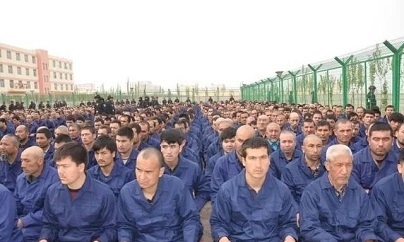
For several years, China has been enacting a policy of repression and brainwashing against over a million Uyghur Muslims in its northwest Xinjiang province. Reports include instances of forced sterilisation. Its hundreds of ‘re-education’ camps have been revealed as places where contact with relatives, the ability to pray and even when to use the toilet are tightly controlled. A leaked document reveals the state’s use of algorithms to score inmates on a ‘behaviour-modification’ points system, which tells guards when to mete out rewards and punishments. Absent from their homes, Uyghur places of worship are secretly bulldozed en masse.
On Tuesday, the UK government announced new rules that seek to prevent UK companies profiting from forced Uyghur labour. Companies will have to demonstrate that their supply chains are free from slavery. Public procurement rules will also attempt to exclude suppliers with links to human rights violations. This new policy appears to implement Key Proposal no. 5 of the newly created China Research Group, a think tank set up by Tory MPs to ‘counter violations of international universal human rights’. The ERG-style group was formed after China’s coronavirus cover-up operation became clear.
As I observed in Part I of this article, no UK court has yet issued a judgment in a libel or defamation claim concerning AI-generated content, but several cases and legal actions are emerging and the issue is widely anticipated to reach the courts soon. Proceedings are emerging in other jurisdictions in the US (see Part I) and in Australia.
Belfast- based libel lawyer Paul Tweed is reportedly preparing a group action in the UK against technology providers (including OpenAI, Meta, Google, and Amazon) alleging that their AI chatbots and other AI-generated content breach defamation and privacy laws. The 2013 Defamation Act provides for certain protection for internet intermediaries —specifically the statutory defences found in Section 5. Under this section operators of websites hosting user-generated content may enjoy immunity from suit when they comply with regulations after being notified of defamatory material. Social media platforms or hosts are generally not liable under UK law unless they have knowledge, control, or refuse to act upon notice of defamatory content. Claims must typically be directed at the original author, and intermediary platform liability arises mainly if the author is unidentifiable or unreachable.
This proposed group action will argue that generative AI material produced by the likes of ChatGPT is new material that falls outside of this immunity. Tweed is looking at three alleged grounds to bring an action: defamation by AI chatbots; unauthorised use of works for training AI models; and the creation by AI of fake biographies that he says are being sold by the likes of Amazon. In his letter to the Northern Ireland Affairs Committee (February 2025) Mr Tweed asserted that there have been several serious examples of false allegations and misinformation appearing on a number of the generative AI platforms and chatbots, including “particularly troubling instances” where leading figures from academia and the law have been wrongly accused of serious misconduct.
Just a quick note to say that yesterday, in the furore surrounding the Conservative Party potentially threatening to take the UK out of the European Court of Human Rights and Angela Patrick’s post on secret trials, the UK Human Rights Blog surpassed an all-time total of two million hits.
The blog was launched on 31 March 2010 and is written by members of 1 Crown Office Row barristers’ Chambers. It is now attracting around 100,000 page views per month and has thousands of subscribers across email, Facebook and Twitter. If you haven’t already, you can subscribe for free by email, Twitter or Facebook – more details here.
This blog is maintained for information purposes only. It is not intended to be a source of legal advice and must not be relied upon as such. Blog posts reflect the views and opinions of their individual authors, not of chambers as a whole.
Our privacy policy can be found on our ‘subscribe’ page or by clicking here.



 Last Wednesday, the European Court of Justice issued a flurry of judgments just before the Christmas break. Indeed, there were so many interesting and important decisions amongst the twenty or so handed down that seems foolish to consider any of them the ‘most important’. Nonetheless the judgment in
 Welcome back to the UK Human Rights Roundup, your regular potpourri of human rights news. The full list of links can be found




 Just a quick note to say that yesterday, in the furore surrounding the

Recent comments