We use cookies to enhance your browsing experience. If you continue to use our website we will take this to mean that you agree to our use of cookies. If you want to find out more, please view our cookie policy. Accept and Hide [x]
It emerged this week that Dominic Cummings drove 250 miles from London to Durham with his wife and child to be with his parents, while his wife was experiencing symptoms of COVID-19. In so doing, Mr Cummings appears to have flouted the government guidance of which he was one of the architects. Leading Tory MPs have called for the Prime Minister to sack Mr Cummings, but he has refused to do so, saying that Mr Cummings “followed the instincts of every father and parent”, and “has acted legally, responsibly, and with integrity”.
Apparently in response to the incident, a rogue Civil Service employee tweeted from the official Civil Service Twitter account “Arrogant and offensive. Can you imagine having to work with these truth twisters?” The Tweet was swiftly deleted, and a Cabinet Office investigation is under way into how it was released.
The situation in Hong Kong has escalated again this week, as Beijing gears up to enact Article 23 of the Basic Law, Hong Kong’s ‘mini-constitution’ of 1997, and impose national security laws to prohibit “treason, secession, sedition [and] subversion”. Protesters have been out in force in defiance of coronavirus restrictions, and police have repeatedly made use of tear gas, pepper spray, and water cannons. Notably, protesters have started to call for full independence for Hong Kong, which has not previously been one of the pro-democracy movement’s official objectives.
Sajid Javid’s reported objections to the Government’s pre-election proposals on countering extremist ideas uncover just how controversial the new laws will be. He had objected, it seems, to a mooted expansion of Ofcom’s powers to take pre-emptive action to prevent the broadcast of programmes with ‘extremist content’ before they are transmitted.
That specific proposal may no longer be part of the proposed laws, but Ofcom is likely to be given powers to move against broadcasters after transmission. And there will be plenty else to discuss when the legislation is likely announced in the Queen’s Speech next week.
The main points have already been revealed when last week the Prime Minister and the Home Secretary announced that new laws will be introduced ‘to make it much harder for people to promote dangerous extremist views in our communities.’ As always in counter-terrorism laws, the relationship between freedom and security will be brought into sharp focus when the proposals are debated. In this piece we set down some of the questions which we think warrant attention. Continue reading →
The criminalisation of support for terrorist organisations has arisen in various domestic and international contexts recently, and it is likely that the issue will continue to attract controversy as states attempt to trace the boundaries of what can fairly be considered “support” for terrorism, and risk criminal legislation unjustifiably infringing on human rights.
The Human Rights in Ireland blog has posted the first in a series addressing the issue (update – the second post in the series is now available, see below). In the post, Dr. Cian Murphy suggests that “One of the most corrosive effects on political freedom during the “war on terrorism” has been that caused by material support legislation.” He goes on to refer to three recent decisions, including the 2008 Kadicase on EU implementation of UN sanctions against individuals linked to the Taleban, al-Qaeda and bin Laden (see ASIL case comment).
In the introduction, this Guidance note announces that “It updates and replaces the guidance document issued in April 2025”, which shows the speed at which AI is developing. It “sets out key risks and issues associated with using AI and some suggestions for minimising them”. And there have indeed been problems facing the judiciary lately arising particularly out of “AI hallucinations”. These are incorrect or misleading results that AI models generate.
On 8th February 2018, the Supreme Court held that the power to grant bail and impose bail conditions in respect of a person pending deportation ceases to be lawful if there is no legal basis for detaining that person. The power to impose bail conditions is inextricably linked to the power of detention. Once the Home Secretary ceases to have the power to detain a person under immigration law, she can’t then impose conditions on that person’s freedom through bail conditions.
In Privacy International v Investigatory Powers Tribunal, the Divisional Court held that s.5 Intelligence Services Act 1994 does not permit the government to issue general warrants to engage in computer network exploitation (“CNE”) – more commonly known as computer hacking. The court also offered valuable guidance on warrants and what is required to make them lawful.
The Issues
There were three issues:
1. Does s.5 Intelligence Services Act 1994 (“the 1994 Act”) permit the Secretary of State to issue ‘thematic’ or ‘general’ warrants to hack computers? General warrants are those which purportedly authorise acts in respect of an entire class of people or an entire class of acts (e.g. ‘all mobile phones in London’).
2. Should the court allow the claim to be amended to include a complaint that, prior to February 2015, the s.5 regime did not comply with Articles 8 and 10 of the European Convention on Human Rights?
3. If permission is given to amend the claim, should the new ground succeed?
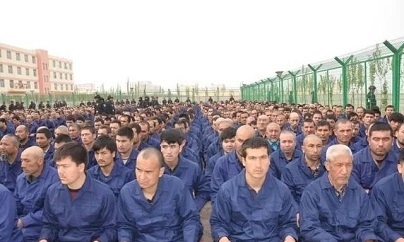
For several years, China has been enacting a policy of repression and brainwashing against over a million Uyghur Muslims in its northwest Xinjiang province. Reports include instances of forced sterilisation. Its hundreds of ‘re-education’ camps have been revealed as places where contact with relatives, the ability to pray and even when to use the toilet are tightly controlled. A leaked document reveals the state’s use of algorithms to score inmates on a ‘behaviour-modification’ points system, which tells guards when to mete out rewards and punishments. Absent from their homes, Uyghur places of worship are secretly bulldozed en masse.
On Tuesday, the UK government announced new rules that seek to prevent UK companies profiting from forced Uyghur labour. Companies will have to demonstrate that their supply chains are free from slavery. Public procurement rules will also attempt to exclude suppliers with links to human rights violations. This new policy appears to implement Key Proposal no. 5 of the newly created China Research Group, a think tank set up by Tory MPs to ‘counter violations of international universal human rights’. The ERG-style group was formed after China’s coronavirus cover-up operation became clear.
R (on the application of Keyu) v Secretary of State for Foreign and Commonwealth Affairs [2015] UKSC 69 – read judgment
The Supreme Court has ruled that the United Kingdom was not obliged to hold a public inquiry into the shooting in December 1948 during the Malayan Emergency by British troops of 24 unarmed civilians at Batang Kali. The Court held that (1) the lapse of time meant that there was no Article 2 requirement to hold an inquiry; (2) a duty to hold an inquiry could not be implied into common law under the principles of customary international law; and (3) the decision not to hold an inquiry under the Inquiries Act 2005 was not open to challenge on ordinary judicial review principles. However, the Supreme Court did hold that the deaths were within the United Kingdom’s jurisdiction for the purposes of the application of the ECHR.
The shootings had originally been described by the Army in 1948 as resulting from an attempted mass escape by ‘bandits.’ Limited contemporaneous investigations were conducted following a growing public outcry in Malaya into the deaths of the unarmed men at Batang Kali. Their approach and conclusions was summed up in a written answer to a Parliamentary Question about the incident given by the then Colonial Secretary in January 1949. This stated:
The Chinese in question were detained for interrogation under powers conferred by the Emergency Regulations. An inquiry into this incident was made by the civil authorities and, after careful consideration of the evidence and a personal visit to the place concerned, the Attorney General was satisfied that, had the Security Forces not opened fire, the suspect Chinese would have made good an attempt at escape which had been obviously pre-arranged.
After newspaper interviews in 1970 were given by some of the soldiers involved in which the shootings were described as cold blooded murder, the Metropolitan Police was ordered by the DPP to investigate the incident. Four soldiers stated under caution that they had been ordered to shoot the men, who had not been attempting to escape, as suspected bandits or sympathisers. However, the Police inquiry was terminated by the DPP before it had been able to make any investigations in Malaysia, on the basis that it was unlikely that sufficient evidence would be obtained to support a prosecution. Continue reading →
W (Algeria) (FC) and BB (Algeria) (FC) and others v Secretary of State for the Home Department [2012] UKSC 8 – read judgment
The court is entitled to make an order for a witness to give evidence before the Special Immigration Appeals Commission (SIAC) in such a way that the identity of the witness and the substance of the evidence remains confidential. Such an order will only be granted if the court is satisfied that a witness can give evidence which appears to be capable of belief and which could be decisive or at least highly material on the issue of safety of return and it has no reason to doubt that the witness genuinely and reasonably fears that he and/or others close to him would face reprisals if his identity and the evidence that he is willing to give were disclosed to the relevant foreign state.
To what extent can the government be held liable for facilitating the imposition of the death penalty in a foreign state?
Since signing the Sixth Protocol to the European Convention in 1999, the UK has refused to extradite or deport persons to countries where they are facing criminal charges that carry the death penalty.
There is no judicial precedent, however, which prohibits the sharing of information relevant to a criminal prosecution in a non-abolitionist country. Therefore, in Elgizouli v Secretary of State for the Home Department [2020] UKSC 10, there were two questions before the Supreme Court:
1. Whether it is unlawful at common law for the Secretary of State to provide mutual legal assistance (in the form of evidence) that will facilitate the death penalty in a foreign state against the individual in respect of whom the evidence is sought; and
2. Whether and in what circumstances it is lawful under Part 3 of the Data Protection Act 2018, as interpreted in light of relevant provisions of European Union data protection law, for law enforcement authorities in the UK to transfer “personal data” to law enforcement authorities abroad for use in capital criminal proceedings.
In a judgment which showed tremendous sensitivity to the primacy of the legislature, a majority of the Supreme Court (with Lord Kerr dissenting) held the provision of mutual legal assistance (MLA) was not unlawful under the common law.
Nonetheless, the Court unanimously allowed the appeal on the second ground under Part 3 of the DPA 2018, overturning the ruling of the Divisional Court.
Together with anti-racism protests sparked by the death of George Floyd, the coronavirus pandemic has continued to dominate the news. Two recently published reports have highlighted flaws in the government’s response in relation to the provision of social security and domestic abuse support during the crisis.
How far are the courts willing to go to intervene in matters of foreign affairs in order to protect human rights? Spoiler: they’re not. Continue reading →
The UK has seen an increasingly falling rate in arrests and prosecutions for cannabis possession over recent years, as police forces no longer see the point in enforcement. The Liberal Democrats have campaigned for its legalisation since 2016, and the first medically-prescribed cannabis was permitted in the UK in 2018. However, crucial NHS cannabis-based medicines for epilepsy remained prohibitively difficult to access for another year, with the majority of self-reported ‘medicinal’ users still turning to the black market. With growing numbers of US states, alongside Canada and South Africa decriminalising recreational use over the past three years, some UK MPs believe that cannabis legalisation will occur in the UK within five to ten years.
Comparing different countries’ legal systems is a dangerous game, but three cases came to light this week which beg to be compared. The criminalisation of criticising political leaders has always been a hallmark of illiberal societies, and it seems that the tradition is still going strong today: in France, the West Bank and the UK too.
First, the European Court of Human Rights ruled that a man should not have been convicted of a criminal offence for waving a placard at (as he was then) President Sarkozy reading “Casse toi pov’con” (“Get lost, you sad prick”). He was prosecuted for insulting the president, an offence under an 1881 Act, even though the phrase was one of Sarkozy’s own, uttered a few months previously. The Court rightly found a violation of the applicant’s rights to free expression protected under Article 10 ECHR, stating that satire, including satirical impertinence:
Protesters in Los Angeles on Saturday. Credit: The Guardian.
The usual purpose of these round ups is to try and avoid repeating the headline news of the previous week whilst instead summarising the key legal developments. There are some weeks, however, in which events tend to put the judgments of the Court of Appeal into the shade.
The death of George Floyd on May 25th not only placed concerns about policing attitudes and deaths in custody onto the front pages, but also shone a light on to wider systemic racism. Protests in response were ongoing as of Sunday, both in the USA and around the world. The use of force by police in the aftermath of demonstrations has been widely reported upon, particularly in the United States, where the extent of force deployed against the British media led to a formal raising of the matter by the British embassy in Washington. Continue reading →
This blog is maintained for information purposes only. It is not intended to be a source of legal advice and must not be relied upon as such. Blog posts reflect the views and opinions of their individual authors, not of chambers as a whole.
Our privacy policy can be found on our ‘subscribe’ page or by clicking here.





Recent comments