Search Results for: bill of rights/page/69/HTML
3 March 2013 by Adam Wagner
 Today’s Mail on Sunday reports that the Home Secretary is to announce “soon” that the Conservative Party’s election manifesto for 2015 will include a pledge to withdraw from the European Court of Human Rights if the party obtains an overall majority.
I thought it would be useful to answer a few basic questions about what this would might mean for the UK. Bizarrely, the article appears alongside the Prime Minister’s opinion piece in the Sunday Telegraph promising that his party would not “veer right” and also “stick to the course we are on“. Talk about mixed messages. Anyway, let’s concentrate on Strasbourg. For a basic introduction to the Court and what it does, see my recent post: No, The Sun, the Human Rights Act is not the EU and David Hart QC’s A bluffer’s guide to human rights courts.
Continue reading →
Like this:
Like Loading...
2 October 2011 by Adam Wagner
 The Home Secretary Theresa May’s has told the Sunday Telegraph that she would “like to see the Human Rights Act go“.
There is plenty of nonsense out there about the Human Rights Act. For example Emma McClarkin – a member of the European Parliament no less – said on BBC’s Politics Show (at 5:15) that we are “hamstrung by the European Charter of Human Rights”; a charter which does not exist.
There will more of this before the Conservative party conference is over, so let’s go back to basics with a few questions and answers about the Human Rights Act.
Continue reading →
Like this:
Like Loading...
24 October 2012 by Guest Contributor
 Debate about whether the Human Rights Act (HRA) might be replaced by a new UK Bill of Rights often dwells on the potential loss, or at least weakening, of the legal route to accountability and redress for victims of human rights violations. An event next month in Liverpool reminds us how much more might be lost if the HRA were to be scrapped or watered down. In particular, it highlights the significance of section 6 of the Act, which requires all public authorities to act in a way which is compatible with European Convention rights unless primary legislation requires them to act otherwise.
The event in question is the launch of the latest results of the Human Rights in Healthcare programme. The programme was set up in 2006 by the Department of Health and the British Institute of Human Rights; in 2011-12, it was led by Lindsey Dyer of Mersey Care NHS Trust. Under its leadership, pilot NHS Trusts have used human rights to design and run services in areas as diverse as dementia care, acute hospital settings, district nursing and care homes.
Continue reading →
Like this:
Like Loading...
4 April 2011 by Matthew Flinn
 The proposition that burglars have rights incites debate, and sometimes anger, which is often directed towards the Human Rights Act 1998 and the European Convention of Human Rights. However, on closer examination, the idea of “burglars’ rights” is not a new phenomenon in English law, and nor has it been imposed upon us by Strasbourg. The rights that burglars enjoy have long been part of the fabric of English common law.
There is nothing new about the idea that criminals in general, and burglars in particular, have forfeited their human rights by virtue of their criminality.
As Michael Cholbi of the University of New York has described in his article discussing felon disenfranchisement in the United States, “A Felon’s Right to Vote”, the strong conviction held by some that criminals should not enjoy the benefit of human rights is founded upon a basic intuition that “criminal acts alter the moral status of wrongdoers, permitting us to do to them what is otherwise unjust”. Essentially, having demonstrated an unwillingness to regulate their own conduct, criminals cease to be an object of moral concern.
Continue reading →
Like this:
Like Loading...
6 May 2015 by Adam Wagner
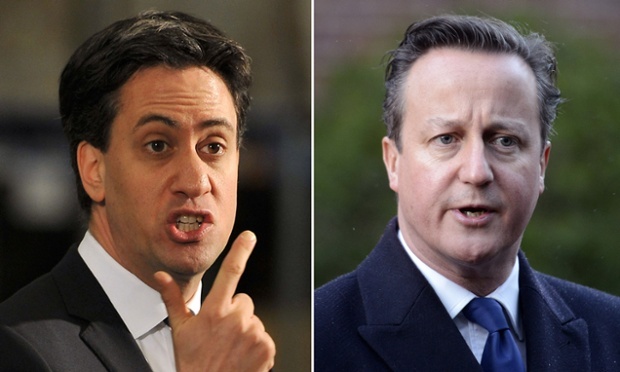 “Our aim is a straightforward one”, New Labour Party told us in October 1997 “[it is] to bring those rights home”. In 2000, the Human Rights Act came into force. For the first time, people in the UK had human rights which could be enforced in UK courts. The right to life, the right not to be tortured, to free speech. What was not to love?
If only it was that simple. 1997 seems a very long time ago. Now, in the final few hours before the 2015 Election, we see the major parties fundamentally divided on human rights.I haven’t written about the Election and human rights yet, mainly because I have been setting up a wonderful new human rights website, rightsinfo.org (more on that later).
Continue reading →
Like this:
Like Loading...
18 December 2012 by Adam Wagner

Update, 15:15: I originally referred below to there being a majority of six versus two in favour of introducing a bill of rights. This was wrong – in fact there were seven. The Commission chair, Sir Leigh Lewis, should have been included in that number.
The Commission on a Bill of Rights has reported, just in time for its end-of-2012 deadline. The documents are here: News release ; Volume 1 ; Volume 2.
I have read the introduction, which sets out the main proposals. A few things that jumped out:
- As predicted by most people since the beginning, there are areas of agreement but also some significant disagreements. Only seven out of the nine Commissioners believe there should be a bill of rights. Helena Kennedy and Philippe Sands disagree. Even the title is equivocal: “A UK Bill of Rights? The choice before us“.
- This is not a unified document, but rather a running, almost Socratic, dialectic between the nine members. It is difficult to follow who agrees with which bit, even in individual paragraphs which are often qualified by “a majority believes”. Bizarrely, and going beyond even my pessimistic expectations of strife, there are eight (eight!) separate papers written by individuals and groups of individuals included in the report, including one by Lord Faulks and Jonathan Fisher on the European Court and why it is going beyond its original remit, one by Sands and Kennedy on why they don’t think there should be a bill of rights, a personal explanatory note by Lord Lester… it goes on. That is one of the reasons this is such a long document.
Like this:
Like Loading...
21 September 2015 by Guest Contributor
 On 7th September 2015, Judge Robert Spano (of the European Court of Human Rights) spoke at a high-level international conference on “The Role of Parliaments in the Realisation and Protection of the Rule of Law and Human Rights”, organised by Murray Hunt, Legal Adviser to Parliament’s Joint Committee on Human Rights. This was his second public intervention in the United Kingdom since his seminal speech on “Universality or Diversity of Human Rights: Strasbourg in the Age of Subsidiarity” delivered at Oxford in 2014, the first having been covered by UK Human Rights Blog here, and built upon his earlier speeches by elaborating on four post-Brighton Declaration cases in which the Grand Chamber of the European Court of Human Rights (the European Court) applied the principle of subsidiarity to find no violation of human rights, considering that the cases fell within the national margin of appreciation, after having examined evidence demonstrating that the national Parliaments had considered the human rights issues. Taken collectively, the four cases demonstrate that Strasbourg is well and truly in the age of subsidiarity, deferring to the decisions of national Parliaments, provided those Parliaments had considered the human rights implications of legislation. Whether this will satisfy Conservative Party concerns that membership of the European Convention on Human Rights is incompatible with the doctrine of Parliamentary sovereignty will be explored at the end of this post.
Continue reading →
Like this:
Like Loading...
9 April 2013 by Guest Contributor

‘Working Together to Safeguard Children’ is the lead piece of statutory guidance on… well, working together to safeguard children. Originally published in 1999, a new edition was published in 2006 following the changes brought about following the death of Victoria Climbié. And the next edition in 2010 incorporated recommendations of the second Laming Report which followed the death of Baby P. It had grown longer over time, as we all learned lessons from Haringey; but its growing length was causing concern.
A new version was published last month. The new version was published the week after judgment was handed down in AB & Anor, R (on the application of) v The London Borough of Haringey [2013] EWHC 416 (Admin) (13 March 2013) (my firm represented the Claimants).
Continue reading →
Like this:
Like Loading...
3 December 2012 by Sam Murrant
 Welcome back to the UK Human Rights Roundup, your weekly smorgasbord of human rights news. The full list of links can be found here. You can also find our table of human rights cases here and previous roundups here.
A bumper edition this week, mostly thanks to Lord Justice Leveson and his long-awaited report, released this week to a tumult of online commentary. In overshadowed, but potentially no less significant news, the House of Lords approved amendments to the “secret courts” Justice and Security Bill; the Joint Committee on Human Rights reported on the Crime and Courts Bill, and we have another round of arguments for and against the UK’s continuing association with the European Court of Human Rights.
Continue reading →
Like this:
Like Loading...
22 June 2010 by Adam Wagner
 George Osborne is to announce the Government’s emergency budget today. Although the Government has been seeking to emphasise measures which will soften the blow to the poor, the fact remains that these are the biggest cuts in decades and that many will end up worse off, particularly if wages decrease and unemployment increases.
Update: The full budget can be downloaded here. The section on benefits starts at page 33.
The Government is to cut benefits by £11bn by 2014-15. The huge cost of benefits (“spending on social security and tax credits has increased by 45 per cent, around £60 billion, in real terms over the past 10 years.), the Chancellor told Parliament, were one of the reasons why there isn’t any more money in the Government coffers. The Health in Pregnancy grant will be abolished from 2011 and Sure Start will be limited. Child Benefit is to be frozen for the next three years. Disability Living Allowance will be restricted by a new medical check from 2013. The Chancellor has said he will “increase the incentives to work” and will reassess benefits on the basis of the Consumer Price Index rather than the Retail Price Index. Housing benefit will be limited significantly and maximum limits on what can be claimed are to be introduced for the first time.
Rosalind English posted two weeks ago on whether budget cuts will lead to revised calls for “socio-economic” human rights; a concept which is as old as the European Convention on Human Rights and just as controversial. We will now revisit that post.
Continue reading →
Like this:
Like Loading...
17 December 2012 by Adam Wagner
 The Commission on a Bill of Rights is rumoured to be publishing its report tomorrow, just in time for its end-of-2012 deadline. It is also widely being reported, unsurprisingly, that the Commission may not produce a unified report at all. Unsurprising because the Commission was set an almost impossible task from the start.
Four Conservatives and four Liberal Democrats told to “sort out” UK human rights (the terms of reference were a little less vague, but that’s basically it), whilst also being limited to proposing a Bill of Rights that “incorporates and builds on all our obligations under the European Convention on Human Rights“. In other words, the could do very little at all except fiddle with our already existing, and actually quite elegant, Human Rights Act 1998. I have compared any new Bill of Rights arising from the Commission a bit like an updated Ford Fiesta; a new look and a few new features, but essentially the same car.
There will be plenty of analysis once the report is released. I wanted to concentrate here on the likely reaction. Matthew Parris got it right in Saturday’s Times (£) when he quoted Edmund Burke:
Continue reading →
Like this:
Like Loading...
5 December 2022 by Guest Contributor
We are pleased to welcome this guest post from Prof Brice Dickson, Emeritus Professor of International and Comparative Law at Queen’s University Belfast, in which he sets out the international human rights monitoring mechanisms applicable to the UK and considers the UK’s engagement with the relevant monitoring processes (Eds).
On 10 November 2022 the UN Human Rights Council conducted its fourth Universal Periodic Review of the UK’s compliance with international human rights standards. The Council’s report was adopted just six days later and contained no fewer than 302 recommendations from other States on how the UK could improve its human rights record. That figure is up from 227 in 2017. For early accounts of the review meeting see the pieces by Marcial Boo and Robert Booth.
The UPR, of course, is just one of many international mechanisms for monitoring human rights in the UK. In a book published this month, International Human Rights Monitoring Mechanisms: A Study of their Impact in the UK, I examine the full range of monitoring mechanisms to which the UK is subject and attempt to evaluate how they have operated to date, especially since 2000. In particular, I try to determine what difference they have made to the protection of human rights in practice. The analysis extends to monitoring conducted by a committee of the International Labour Organisation and by the Council of Europe’s Group of States against Corruption (GRECO), two bodies which do not usually attract the attention of human rights lawyers.
Continue reading →Like this:
Like Loading...
5 August 2011 by Adam Wagner
 The UK Bill of Rights Commission has launched a public consultation on whether we need a Bill of Rights.
The consultation document is here and reproduced below. You have until 11 November 2011 to respond and you can do so via email or post.
The document provides a useful and fairly noncontroversial summary of rights protections as they currently exist within the UK constitutional structure. It does not, however, provide any information at all about what a “bill of rights” might entail or how such instruments work in other countries: contrast the far more detailed (and very useful) document produced in 2010 by the Equality and Human Rights Commission.
Continue reading →
Like this:
Like Loading...
17 July 2012 by Guest Contributor
 Last week, a number of media commentators, politicians and others sought to subvert the second consultation of the Bill of Rights Commission. This consultation invites views on a number of key issues that form part of the Commission’s mandate. In the Daily Mail’s correspondent’s view, the Commission has committed an appalling transgression by asking potential respondents whether the UK Bill of Rights should include additional rights, referring amongst other things to socio-economic rights. This is echoed by the Sun which argues that the Commission has ‘suggested’ (which it clearly has not) that ‘all Brits be given handouts as a birth right’, and the Daily Express which suggests “Spongers can Sue to Claim Benefits”.
Socio-economic rights are rights that relate to human survival and development. Like the majority of European and other countries, the UK has volunteered to be bound by a range of such rights as a result of ratifying a number of international human rights treaties, including the International Covenant on Economic, Social and Cultural Rights (ratified by the UK in 1976); the Convention on the Rights of the Child (ratified in 1992) and the European Social Charter (ratified by the UK in 1962). While these treaties haven’t been made part of our domestic law in the way the European Convention on Human Rights has been as a result of the Human Rights Act, they impose a range of human rights obligations on the UK. The government reports back periodically to the UN expert committees that monitor the implementation of these treaties.
Continue reading →
Like this:
Like Loading...
24 March 2016 by Guest Contributor

“Roses are red.
Violets are blue.
Whatever your political colour;
Human rights should matter to you”
Some legal oratory flows into the profound, beautiful and inspiring. Most of the time when it comes to poetry – as this particularly appalling ditty is designed to demonstrate – we lawyers should stick to the day job.*
This week human rights commentators celebrated both World Poetry Day and the launch of a new project on the conservative commitment to human rights. Announcing a Commission made up of MPs and commentators – including Maria Miller MP, Dominic Grieve QC MP and Matthew D’Ancona – Bright Blue this week published a series of essays by Conservative leaders on a range of human rights threats; from the refugee crisis to the repeal of the Human Rights Act.
Bright Blue now joins the Labour Campaign for Human Rights in taking steps to take the current debate beyond the heat and light of party politics and into a greater conversation about how we protect the rights of the most vulnerable in our communities and about the UK’s place in the world.
Continue reading →
Like this:
Like Loading...



Recent comments