Search Results for: bill of rights/page/69/HTML
22 October 2010 by Adam Wagner
 For your weekend reading pleasure, some of this week’s human rights news, in bite-size form. The full list of our external links can be found on the right sidebar or here.
The Inevitable Racial Effect: Counter-Terror Stop and Search Powers – Human Rights in Ireland: Rachel Heron, a PHD candidate at Durham Law School, argues that stop and search power under section 44 of the Terrorism Act 2000 has failed to yield significant results, except one: it has provided a further example of how racially neutral laws have a seemingly inevitable racial effect. Our most recent post on stop and search, which has been the subject of a decision of the European Court of Human Rights followed by a climb-down by the UK government, is here.
Case Law: Bernard Gray v UVW – privacy injunctions and anonymity – Henry Fox – Inforrm’s Blog: Mr Justice Tugendhat has returned to the subject of anonymity in privacy actions. These cases consistently test the interrelationship between Article 8 (right to privacy) and Article 10 (freedom of expression) of the European Convention on Human Rights.
Continue reading →
Like this:
Like Loading...
30 November 2010 by Adam Wagner
 Schalk and Kopf v. Austria (application no. 30141/04) – Read judgment / press release / press release 2
The European Court of Human Rights has refused permission to appeal in a challenge to the ban on gay marriage in Austria. The effect of the decision is to make the court’s rejection of the same-sex couple’s claim final.
The decision means that the European Court of Human Rights will not force states to allow same-sex couples to marry, for now at least. This has a potential bearing on the UK, where a number of same-sex and heterosexual couples are currently bringing claims against UK laws which permit civil partnerships for same-sex couples but prevents them from marrying.
Continue reading →
Like this:
Like Loading...
6 May 2014 by Celia Rooney
 Welcome back to the UK Human Rights Roundup, your regular spring bouquet of human rights news and views. The full list of links can be found here. You can find previous roundups here. Links compiled by Adam Wagner, post by Celia Rooney.
In the News
Legal aid, judicial review and the role of the Lord Chancellor dominated the headlines last week – with the Operation Cotton case and the Joint Committee on Human Right’s report on judicial review putting increasing pressure on the Government’s reforms.
Continue reading →
Like this:
Like Loading...
9 January 2012 by Graeme Hall
 Welcome back to the first UK human rights roundup for 2012. Our full list of links can be found here. You can also find our table of human rights cases here and previous roundups here.
by Graeme Hall
In the news
Although human rights abuses don’t break for Christmas, UK human rights news has taken a pause over the festive period. Nonetheless, there have been some newsworthy occurrences, the Commission on Assisted Dying’s report being the most recent.
Stephen Lawrence
As the BBC reports, the Attorney General is reviewing whether the sentences handed down to Dobson and Norris for the murder of Stephen Lawrence, receiving 15 and 14 years respectively, were unduly lenient. Gownandout, a blog written by the editor of Banks on Sentencing, believes that a reference is “highly unlikely”, whilst blogger Charon QC notes that the pair is likely to spend a lot longer in prison, particularly due to their lack of remorse.
Continue reading →
Like this:
Like Loading...
15 December 2011 by Guest Contributor
 Lord Irvine tonight weighed in to the debate about Britain’s relationship with the European Court of Human Rights – and effectively accused the Supreme Court of having surrendered its intellectual independence, and shirked its judicial responsibility.
His at times toughly-worded lecture to the UCL Judicial Institute and the Bingham Centre for the Rule of Law chimes with what the Attorney General Dominic Grieve has been saying recently about the need for primary responsibility for human rights protection to lie with states, not Strasbourg – and Grieve will surely approve of both the content and timing of Lord Irvine’s intervention, on the eve of the European Court’s ruling in Al-Khawaja and Tahery v. UK and in the context of Britain’s chairmanship of the Council of Europe. I’ll link to the text of his speech when it’s available.
Continue reading →
Like this:
Like Loading...
11 July 2011 by Melina Padron
 Welcome back to the human rights roundup, a regular bulletin of all the law we haven’t quite managed to feature in full blog posts. The full list of links, updated each day, can be found here. You can also find our table of human rights cases here.
by Melinda Padron
In the news – it’s all about the Als
This week the long-awaited judgments of the Al-Skeini and Al-Jedda cases both against the UK before the European Court of Human Rights were finally released. These will undoubtedly be regarded as landmark judgments of the Court.
Continue reading →
Like this:
Like Loading...
17 June 2014 by Celia Rooney
 Welcome back to the UK Human Rights Roundup, your regular summer festival of human rights news and views. The full list of links can be found here. You can find previous roundups here. Links compiled by Adam Wagner, post by Celia Rooney
This week, secret trials and Labour’s stance on the Human Rights Act 1998 have generated discussion. In other news, the Supreme Court reconsiders whether religious doctrine is a justiciable question for the courts.
In the News
Continue reading →
Like this:
Like Loading...
18 October 2013 by Guest Contributor
 People are going hungry in England because England, to the detriment of the poor, has forgotten its legal history.
Nearly eight hundred years ago, in 1216 English law first recognized a right to food. Yet between April and September this year over 350,000 people received three days’ emergency food from the Trussell Trust food banks, triple the numbers helped in the same period last year.
Although justifiable outrage has been expressed at this increasing hunger in 21st century England, such hunger has not been regarded as an issue of human rights law, but only of charity. The United Nations, however, has made clear that the right to adequate food is indivisibly linked to the inherent dignity of the human person and is indispensable for the fulfilment of other human rights.
Continue reading →
Like this:
Like Loading...
7 May 2010 by Adam Wagner
 See a more recent post on this topic here
One of the enduring images of the 2010 General Election will be of long queues of people turned away from polling stations due to lack of facilities. This may well result in legal action. But according to Lord Pannick, the worse scandal may be the exclusion of 85,000 prisoners, which he says is “a constitutional disgrace that undermines the legitimacy of the democratic process”.
The BBC reports this morning that hundreds of voters were turned away from polling stations throughout the UK. This was initially blamed on a higher than expected turnout. The Electoral Commission has promised a “thorough review“, but legal action may follow from the individuals, who have been denied their basic rights, but also from the parties who may argue that marginal results would have been different if people hadn’t been turned away. In the likely outcome of a hung parliament, every seat counts and litigation may therefore follow (Update – Afua Hirch in The Guardian: Legal challenge to polling stations could result in byelections; meanwhile, Liberty, the human rights organisation, says that it will investigate the issue on behalf of voters.)
Those who have been disenfranchised may be entitled to claim under the Human Rights Act 1998. Article 1, Protocol 3 of the European Convention provides:
“The High Contracting Parties shall hold free elections at reasonable intervals by secret ballot, under conditions which will ensure the free expression of the opinion of the people in the choice of the legislature.”
This Article imposes obligations on States, and the provision includes the right to vote. Voters should be able to claim for damages under section 8 of the Human Rights Act if they can prove that they were denied a vote due to administrative incompetence, which appears to have been the case in some places. Whilst high turnout may have been a factor, voters will argue that high turnout has been predicted for a while, and should have been planned for. Similar claims were made in respect of the controversial 2000 presidential election in the United States, which was ultimately decided by the US Supreme Court, but resulted in months of paralysis.
85,000 claims?
Whilst a few hundred appear to have been affected by administrative incompetence, Lord Pannick, barrister and cross-bench peer, argues that the absolute ban on prisoners voting runs contrary to repeated decisions of the European Court of Human Rights. We have posted recently on the tens of thousands of potential compensation claims that may result, which Lord Pannick estimates will be worth at least £750 each. Similar claims may be available to those who were denied the vote for other reasons.
Lord Pannick is scathing of the Government’s failure to implement the European decisions. He says:
Continue reading →
Like this:
Like Loading...
4 July 2012 by Rosalind English
 Herrmann v Germany (Application no. 9300/07) 26 June 2012 – read judgment
The Grand Chamber of the European Court of Human Rights has ruled that the obligation of a landowner to allow hunting on his property violated his Convention rights. Although the majority based their conclusion on his right to peaceful enjoyment of possessions, the partially concurring and dissenting opinions and the judgment as a whole provide an interesting insight into the way freedom of conscience challenges are to be approached in a secular society where religion holds less sway than individual ethical positions on certain issues.
Background
In 2002 the Federal Constitutional Court in Germany ruled that the granting of exceptional authorisation for the slaughter of animals without previous stunning, on religious grounds, did not breach the German Basic Law Schächt-Entscheidung (BVerfGE 99, 1, 15 January 2002). The social uproar that followed the ruling led to the German constitutional legislature taking a significant step aimed at protecting animal welfare with the 2002 constitutional reform, by including Article 20a in the Basic Law:
“Mindful also of its responsibility toward future generations, the State shall protect the natural foundations of life and animals through legislation…”
Continue reading →
Like this:
Like Loading...
29 April 2011 by Guest Contributor
 The Prime Minister has said that he is “uneasy” about the development of a privacy law by judges based on the European Convention when this should be a matter for parliament. In our contribution to the continuing debate on this issue we are re-posting this [update – three part!] discussion on the history and future of privacy law from Inforrm’s Blog.
Introduction
The “law of privacy” has been developed by the English Courts over the past decade. It is a common law development based on case law going back to the mid nineteenth century. But the pace of development has accelerated over recent years. The decisive factor has been the Human Rights Act 1998. In this area the Act has had “horizontal effect” – it operates in cases between two private parties. The action for breach of confidence has been transformed – almost beyond recognition.
Continue reading →
Like this:
Like Loading...
3 February 2013 by Sam Murrant

Welcome back to the UK Human Rights Roundup, your recommended weekly dose of human rights news. The full list of links can be found here. You can also find our table of human rights cases here and previous roundups here.
This week, the focus of the online commentary has been very much on the subject of equal access to justice, which is beset on all sides from legal aid cuts, the proposals for secret courts to protect sensitive government information, the lack of representation for the judiciary in the government, and the efficiency drive in Strasbourg.
Continue reading →
Like this:
Like Loading...
17 January 2011 by Adam Wagner
 Immigration and deportation decisions are regularly used to attack the Human Rights Act, and are raised as examples of why it must be amended or replaced. But a recent deportation case shows that such decisions are often poorly reported and articles ignore crucial details.
Yesterday’s Sunday Telegraph reported on the case of a man who killed a Gurkha soldier’s son and cannot be deported because of human rights law. According to David Barrett, Home Affairs Correspondent, the controversial decision will “intensify pressure” on the prime minister “who has so far failed to deliver a Conservative promise to rip up the Human Rights Act.”
Continue reading →
Like this:
Like Loading...
2 January 2013 by Adam Wagner
 In March I complained that the Commission on a Bill of Rights should open up. Well, two weeks after publication of the Commission’s final report(s), two of the Liberal Democrat-appointed commissioners have given their insider perspectives of the Commission in an article in the London Review of Books.
Nothing in Helena Kennedy QC and Philippe Sands QC’s article is particularly surprising. The Commissioners emerge as a dysfunctional group of seasoned advocates on two sides of a case, with no presiding judge to rein them in or decide who was right. The report itself, with its bewildering array of separate papers and minority reports, demonstrated how little common ground there was between the commissioners.
I recommend reading the article in full, but here are a few interesting tidbits. Of course, some caution is necessary as the other members of the Commission (particularly the Conservative ones) may remember things differently.
Continue reading →
Like this:
Like Loading...
28 February 2010 by Rosalind English
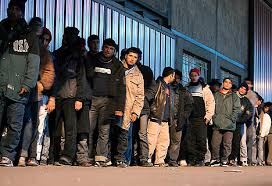 The Queen on the Application of MK(Iran) v Secretary of State for the Home Department
CA (Civ Div) (Sedley LJ, Carnwath LJ, Smith LJ) 25/2/2010 [2010] EWCA Civ 115
Directive 2004/83, which recognised the right to asylum as part of EU, did not alter the jurisprudence of the European Court of Human Rights that asylum decisions did not constitute determinations of civil rights under Article 6 of the Convention, and consequently a foreign national had no right under Convention law to claim for damages for the delay in processing his asylum application.
Like this:
Like Loading...

 For your weekend reading pleasure, some of this week’s human rights news, in bite-size form. The full list of our external links can be found on the right sidebar or here.


Recent comments