15 November 2010 by Adam Wagner

Updated x 2 | The lord chancellor Ken Clarke has announced plans for significant cuts to the legal aid system, which provides funding for legal representation to those who otherwise cannot afford it. The plans were largely as expected and will be open to consultation.
Update: The MoJ has published full details of the plans:
- The main documents, including impact assessments are here
- The proposals can be downloaded here
- Views on the consultation can be submitted online here
- A summary of the plans can be found here.
- The consultation on proposals for reform for civl litigation funding (the Jackson review) is here.
The scale of the cuts is expected to be around £350m out of the £2.2bm budget, which is just over 15%. Some of the plans had been leaked with partial accuracy by the Sunday Telegraph.
Update x 2: Read a summary of the reaction to the cuts here and an analysis of the underlying rational here.
Continue reading →
Like this:
Like Loading...
15 November 2010 by Adam Wagner
 Pink Tape, a family law blog written by barrister Lucy Reed, has published the latest Blawg (legal blog) review.
For more about legal blogging, see here. If you have never come across the Blawg review, which has reached its 290th edition, here is the explanation from the blog carnival’s headquarters:
Blawg Review is the blog carnival for everyone interested in law. A peer-reviewed blog carnival, the host of each Blawg Review decides which of the submissions and recommended posts are suitable for inclusion in the presentation. And the host is encouraged to source another dozen or so interesting posts to fit with any special theme of that issue of Blawg Review. The host’s personal selections usually include several that reflect the character and subject interests of the host blawg, recognizing that the regular readership of the blog should find some of the usual content, and new readers of the blog via Blawg Review ought to get some sense of the unique perspective and subject specialties of the host. Thanks to all the law bloggers who collaborate to make Blawg Review one of the very best blog carnivals of any genre.
Like this:
Like Loading...
12 November 2010 by Adam Wagner
 The best of human rights news from the web in the past week. You can read our full list of external links here.
Alternative feminist judgment: R v A (No 2) [2001] UKHL 25 – guardian.co.uk: This ‘alternative’ judgment is part of the new Feminist Judgments Project, an interesting attempt by academics, practitioners and activists to produce 23 alternative feminist judgments to a series of key cases in English law. An introductory article in the Guardian explains that the project’s aim is not to encourage judges taken an ideological viewpoint but, rather, to accept that prejudice may have coloured even the highest judges’ reasoning at various points in English legal history and see whether things could have been different. It could be said that all they are doing is replacing one form of prejudice with another.
In any case, no matter how clever our judges are – and they are very bright indeed – it must be of some relevance that at the highest level they are almost exclusively white males aged 60+. The debate over judges’ prejudices is still much more alive in the United States than it is here, but that doesn’t mean we should continue to ignore it, particularly after the passing of the Human Rights Act which means courts are ruling on increasingly sensitive social issues. This project seeks to tease out the potential of an alternative viewpoint.
Continue reading →
Like this:
Like Loading...
12 November 2010 by Rosalind English
 The much-debated “sovereignty clause” has now been published in the European Union Bill.
As predicted by our previous post on the subject and the wealth of commentary elsewhere, the declaratory provision does nothing more than set out, in unambiguous terms, the common law principle of parliamentary sovereignty; the principle that Parliament, being sovereign, cannot abandon its own sovereignty. It has no effect on the rights and obligations conferred by EU law. It simply serves as a reminder that the enforceability of these rights and obligations are dependent on the continuing survival of the European Communities Act 1972, and nothing more.
Continue reading →
Like this:
Like Loading...
12 November 2010 by Adam Wagner

Much has been made of the benefits of mediation and alternative dispute resolution (ADR) in recent weeks, both as a means of reducing the bitterness of family justice proceedings and also of saving money in the court system by keeping people out of it.
But is mediation a knight in shining armour or a trendy buzzword used as an excuse to keep people out of the expensive court system? The debate is often heard but rarely goes beyond anecdotal evidence. Lord Neuberger, our highly active Master of the Rolls, has given an excellent speech on the topic, entitled Has mediation had its day?, which presents the evidence on both sides, including references to a number of research studies.
Continue reading →
Like this:
Like Loading...
11 November 2010 by Adam Wagner
 The Commons Public Accounts Committee has published a damning report into the Children and Family Court Service’s (‘Cafcass’) response to increased demand following the Baby P scandal.
Cafcass was established nine years ago to advise children and the courts in family proceedings. It has come under significant criticism in that time. The new report deals specifically with the 34% surge in care cases following the Baby P scandal. The report is damning, concluding that Cafcass is not fit for purpose, taking 27 days to allocate a case and finding itself unprepared for the increase of cases following Baby P’s death.
The child protection system is likely to be significantly reformed following the recommendations of Professor Eileen Munro, who has been asked by the coalition government to lead a “fundamental” review. Part 1 of the review can be found here.
Continue reading →
Like this:
Like Loading...
11 November 2010 by Adam Wagner
 The Royal College of Nursing & Ors, R (on the application of) v Secretary of State for the Home Department & Anor [2010] EWHC 2761 (Admin) (10 November 2010) – Read judgment
The High Court has ruled that a scheme which prohibits people convicted or cautioned for certain crimes from working with children or vulnerable adults breaches human rights law.
The system of automatically banning those convicted for or who admit certain crimes from working with children and vulnerable adults without allowing them to make representations breached their rights to a fair trial.
Continue reading →
Like this:
Like Loading...
11 November 2010 by Matthew Hill
 Updated | JXF (a child) v York Hospitals NHS Foundation Trust [2010] EWHC 2800 (QB) – Read judgment
Mr Justice Tugendhat has held that the High Court should withhold the identity of a child claimant when approving the settlement of a clinical negligence case. The decision represents a restatement of the orthodox principle that cases should be heard in public and reported without restrictions, and that anonymity orders should only be granted after careful scrutiny.
His reason for coming to this particular decision was that revealing the name of the claimant would “make him vulnerable to losing the [settlement] money to fortune hunters or thieves.”
Continue reading →
Like this:
Like Loading...
10 November 2010 by Rosalind English

R v Chaytor and others (Appellants) UKSC 2010/0195 (Awaiting judgment)
The Supreme Court has dismissed the appellants’ appeal from the decision of the Court of Appeal Criminal Division that the Crown Court does have jurisdiction to try a Member of Parliament in relation to the submission of an allegedly dishonest claim for Parliamentary expenses or allowances.
The Appellants had argued that the court was deprived of jurisdiction by either or both of (i) Article 9 of the Bill of Rights 1688; or (ii) the exclusive jurisdiction of Parliament.
As can be seen from our previous posts on this matter, the appellants had each been committed for trial in the Crown Court on charges of false accounting contrary to s 17(1) Theft Act 1968 arising from their submission of claims for parliamentary expenses and/or allowances at a time when each appellant was a sitting Member of Parliament. At a preparatory hearing the appellants contended that the Crown Court did not have jurisdiction to determine the charges by reason of parliamentary privilege.
Read more:
Like this:
Like Loading...
10 November 2010 by Rosalind English
 Robert Elwyn Watkins v Philip James Woolas [2010] EWHC 2702 (QB) 5 November 2010- read judgment
Update – read our 3 December 2010 post on his defeat in the administrative court
The Election Court has ruled that the Labour MP for Oldham knowingly and deliberately misled the constituency and as a result his election is void under Section 106 of the Representation of the People Act (1983). Permission for judicial review of the decision has been refused.
The provision of the 1983 Act makes it an offence for anyone to publish “any false statement of fact in relation to the candidate’s personal character or conduct” to prevent them being elected “unless he can show that he had reasonable grounds for believing, and did believe, that statement to be true”.
Continue reading →
Like this:
Like Loading...
10 November 2010 by Matthew Hill
 R (Booker) v NHS Oldham and Direct Line Insurance PLC [2010] EWHC 2593 (Admin)- read judgment
The High Court has held that where a claimant agrees a damages settlement that includes an indemnity to fund private nursing care should existing NHS provision be withdrawn, it was unlawful for a primary care trust to cease its funding of the claimant’s care on the basis that her needs would be met through the settlement.
The claimant, B, was a tetraplegic who had sustained her injuries in a road traffic accident. She had received care from the defendant NHS trust (“the Trust”) over a number of years, and there was no dispute that her medical needs made her eligible for future care. In October 2009, B’s personal injury case was settled on the basis of both a lump sum and periodical payments, the latter due to commence from 15 December 2011. In respect of the period between the settlement date and the first periodical payment, a series of “safety net undertakings” were given by both sides in the litigation, and by DLI, the insurer of the injury claim defendant. These were to the effect that B would use her best endeavours to maintain the NHS funded care that she was receiving, but, should it nonetheless be withdrawn, DLI would indemnify B against the cost of providing replacement care. In June 2010, the Trust informed B that it intended to withdraw its provision of care from her with effect from the autumn, on the basis that B had elected to receive private care and hence no longer required NHS services. B sought judicial review of this decision.
Continue reading →
Like this:
Like Loading...
10 November 2010 by Catriona Murdoch
 Dr Zakir Naik and The Secretary of State for the Home Department and Entry Clearance Officer, Mumbai India [2010] EWHC 2825 (Admin) – read judgment
As we reported last week, the High Court has approved the exclusion of Dr Zakir Naik, a popular Indian television Islamic preacher, from the UK on the grounds that his presence would not be conducive to the public good.
Despite the High Court finding that the initial decision to exclude Dr Naik was procedurally unfair and that Article 10 ECHR (the right to freedom of expression) was engaged in relation to his supporters, his challenge to the exclusion was rejected. This case focuses the spotlight once more on the somewhat limited territorial reach of the rights and freedoms guaranteed under the Convention, as well as the wide discretion of the Home Office to exclude radicals which it considers have displayed ‘unacceptable behaviours’.
Continue reading →
Like this:
Like Loading...
9 November 2010 by Adam Wagner
 Updated | The Select Committee on the Constitution has published its report on the Public Bodies Bill, and has expressed concern that the Bill as proposed will impose “Henry VIII” powers on the Executive.
The Bill, which has already attracted attention for seeking to abolish 192 quangos, is currently making its way through Parliament (track its progress here) and has its second reading in the Lords on Tuesday 9th November. You can watch a recording of the debate here. The committee reports:
When assessing a proposal in a Bill that fresh Henry VIII powers be conferred, we have argued that the issues are ‘whether Ministers should have the power to change the statute book for the specific purposes provided for in the Bill and, if so, whether there are adequate procedural safeguards’. In our view, the Public Bodies Bill [HL] fails both tests.
Continue reading →
Like this:
Like Loading...
9 November 2010 by Adam Wagner
 The debate over whether control orders will survive the anti-terrorism review has been rumbling on for the past weeks, with a surprising amount of internal discussions being aired in public.
The human rights organisation Liberty, which opposes the orders, has posted a useful summary of the recent back and forth, which it calls (allegedly quoting the Prime Minister) a “car crash”. Reading the summary, it seems clear that there are a number of strongly held but opposing views within the coalition, apparently split down party lines. There also appears to be no clear picture from within the security services either.
Continue reading →
Like this:
Like Loading...
9 November 2010 by Rosalind English
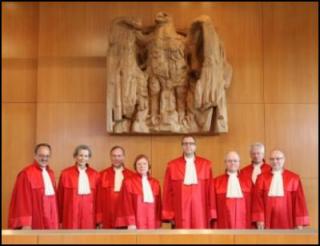 As we have seen from the recent ruling from the Supreme Court in Pinnock, British judges regard themselves as constrained to follow a “clear and consistent” line of authority from Strasbourg, even though the latter has no binding authority over the appellate courts in this country. Indeed, as we have noted in our post on the case, it overruled three of its own precedents without any ado.
How different the picture is in Germany, where the highest Constitutional Court, the Bundesverfassungsgericht, is armed with tremendous powers by the German Grundgesetz, or Basic Law, to uphold its own interpretation of national law in judgments that go to the heart of what the executive is or isn’t allowed to do.
Continue reading →
Like this:
Like Loading...



Recent comments