27 June 2015 by David Hart KC
 R (ota Lumsdon) v Legal Services Board [2015] UKSC 41, 24 June 2015 (see judgment)
The Supreme Court has reminded us, in a tour de force by Lord Reed, that there is no such thing as one-stop proportionality. It varies between ECHR and EU law, and the tests of EU proportionality then vary according to the nature of the EU issue in play.
And all this in a case about trying to improve standards for barristers’ advocacy.
Barristers challenged the Quality Assurance Scheme for Advocates or QASA, on EU grounds. QASA requires barristers in the criminal courts to be assessed by judges before they are allowed to take on certain categories of cases.
Its EU-ness arises in this way.
Continue reading →
Like this:
Like Loading...
26 June 2015 by Rosalind English
 Bournemouth Borough Council v PS and another [2015] EWCOP (11 June 2015) – read judgment
Mostyn J in the Court of Protection was asked to determine whether care arrangements in place for a 28-year-old man (BS) with severe autism and who lacked capacity constituted a deprivation of his liberty. He concluded that the care arrangements in place were in his best interests and did not constitute a deprivation of his liberty under Article 5 of the ECHR. Although he was subject to observation and monitoring in his own home he was not under continuous supervision and he was afforded appreciable privacy; there were no locks on the doors and he was free to leave.
Interestingly, comments made in this case shows that judges, or some of them, do engage with what is being said about them in the blogosphere.
Continue reading →
Like this:
Like Loading...
26 June 2015 by Adam Wagner

Today, I am delighted to launch a major new RightsInsfo infographic, the 50 Human Rights Cases That Transformed Britain. For the full experience, make sure you access it on a desktop computer.
Since RightsInfo launched two months ago, we have had over 300,000 hits and now have over 10,000 followers across social media. It has already been an amazing journey and we feel that this is the beginning of something very special.
 #50cases has been contributed to by top legal academics, writers and human rights experts through crowdsourcing on this blog. Along with our amazing infographic, each of the 50 landmark cases has also been translated into a plain-English, bitesize story. It is by the most comprehensive study so far as to what human rights have done for Britain.
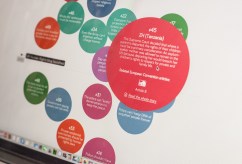 As the government seeks to reform human rights laws, it is crucial for people to understand what effect human rights have had on our society. This project shows that the European Convention on Human Rights and Human Rights Act have had a profound impact on British society. The #50cases project shows that human rights are not just for terrorists and criminals, but affect all of us.
The RightsInfo volunteer team, Information is Beautiful Studio and I have put a lot of work into this project. Please explore, engage and, most of all, enjoy.
Click here to begin your journey.
Like this:
Like Loading...
24 June 2015 by Hannah Noyce
 R (on the application of Hoang Anh Minh) v Secretary of State for the Home Department [2015] EWHC 1725 (Admin) – read judgment
This case concerned the proper approach to establishing whether there are “reasonable grounds” for believing that a person has been a victim of trafficking under the Council of Europe Convention on Action against Trafficking in Human Beings (“the Trafficking Convention”). It also touched on the scope of the state’s positive obligations under Article 4 ECHR (which protects citizens of Council of Europe Countries from subjected to slavery, servitude, or forced or compulsory labour).
Background
The claimant arrived in the UK from Vietnam via Russia, where he claimed he had been forced to work in a factory for several years before being released. On arrival here he claimed asylum, which was refused.
In parallel with asylum proceedings, however, his case was referred to the Home Office’s competent authority to determine whether he was entitled to protection and assistance under the Trafficking Convention. The question in this context was different from that in the asylum claim – the competent authority was required to consider whether there were “reasonable grounds” to consider that the Claimant had been a victim of trafficking.
The competent authority gave an emphatic “no” to that question, by way of three decisions (an initial decision and two further decisions which reconsidered the first) which were in effect treated as a single decision for the purposes of the claim. The Claimant challenged those decisions by way of judicial review.
Continue reading →
Like this:
Like Loading...
24 June 2015 by Guest Contributor
 Much has been said about our surveillance law and much more will be said in Parliament’s debate on Thursday. And yet, how we talk about surveillance law merits at least as much concern as what we say about it. Over-intrusive government surveillance is a problem. But so too is loose language in opposition to it.
The Oxford English Dictionary (Online) describes a ‘snooper’ as ‘one who pries or peeps; spec. one who makes an intrusive official investigation. orig. U.S.’ So it is, at best, an American term for an officious busy-body and at worst someone prying or peeping. This is hardly an administrative accolade or term of endearment – unless one has rather curious definitions of government and/or courtship.
Further etymological investigation reveals that the term ‘to snoop’ is Dutch in origin, and one use would be to describe a servant “slyly going into a dairy room and drinking milk from a pan.” It seems a Dutch Downton Abbey would have even more intrigue than the English one does. For none of these definitions or descriptions would we want Parliament to legislate. No-one is on the side of the ‘snooper’.
Continue reading →
Like this:
Like Loading...
22 June 2015 by Guest Contributor
 Chiragov and Others v. Armenia (App No 13216/05) – read judgment
In two important decisions, the Grand Chamber of the Strasbourg Court has held that the forced displacement of peoples from the disputed region of Nagorno-Karabakh during the armed conflict between Azerbaijan and Armenia constituted a violation of Article 1 of Protocol 1 (right to the peaceful enjoyment of property) and Article 8 (right to a private and family life) of the European Convention on Human Rights.
The case of Chiragov which concerned the forced displacement of Azerbaijani nationals was decided in parallel with the Grand Chamber judgment in Sargsyan v Azerbaijan (found here). Sargsyan was delivered on the same day and reached the same conclusions in respect of Armenian nationals forced to flee from Azerbaijani territory.
Continue reading →
Like this:
Like Loading...
20 June 2015 by Rosalind English
 British Academy of Songwriters, Composers and Authors and others, R(on the application of) v Secretary of State for Business, Innovation and Skills and another [2015] EWHC 1723 (Admin) – read judgment
An exception to copyright infringement for private use has failed to survive a challenge in the High Court. But this may not be the end of the story. Although he accepted part of the claimants’ contentions, Green J observed that
the Claimants’ argument does not sit well or easily with the very unusual and particular circumstances which have led to the decision to introduce the private use exception in the first place. These are that the advent of digitalisation has led to a market where device sellers and consumers assume they may copy and where rightholders have not sought private law remedies against infringers.[my italics]
It is a particular feature of this case that there is a widespread consensus that the law has signally failed to keep up with market reality and with reasonable consumer expectations and indeed has been brought into disrepute by its condemnation as illegal of activities which are now accepted by consumers as lawful and which in actual fact form the basic commercial premise upon which copying and storage devices are actively sold throughout Europe.
Having upheld a small part of the challenge, Green J will now hear submissions as to what flows from this conclusion and from the judgment generally. In particular he will hear submissions as to whether any issue of law that he had decided should be referred to the Court of Justice and if so as to the question(s) that should be asked.
Continue reading →
Like this:
Like Loading...
19 June 2015 by Guest Contributor
 R (Victor Nealon) v Secretary of State for Justice : R (Sam Hallam) v Secretary of State for Justice [2015] EWHC 1565 (Admin), 8 June 2015 – read judgment
As Michael Gove contemplates the future of the Human Rights Act 1998, the High Court has considered how far the presumption of innocence in Article 6(2) ECHR spreads into decisions on payment of compensation for a miscarriage of justice. In doing so, Burnett LJ also managed to find some less than complimentary sentiments about the Strasbourg court’s decision-making.
Sam Hallam was convicted of murder in 2011. Victor Nealon was convicted of rape in 1997. Both successfully appealed against their convictions and then applied to the Secretary of State (‘SoS’) for compensation under s133 of the Criminal Justice Act 1988 (the ‘1988 Act’’), as amended by the Anti-Social Behaviour, Crime and Policing Act 2014 (the ‘2014 Act’). Both men were refused compensation on the basis that their circumstances did not meet the s133 statutory test (as amended).
Continue reading →
Like this:
Like Loading...
16 June 2015 by Rosalind English
 Lambert and Others v. France (application no. 46043/14) – read judgment
In an important step away from Pretty v UK, the Grand Chamber of the Strasbourg Court has upheld the right of to die with dignity by ruling that there would be no violation of Article 2 (right to life) of the European Convention on Human Rights if artificial nutrition and hydration were to be withdrawn from a patient in a persistent vegetative state.
Although the facts were very different, it is heartening to see Strasbourg at last allowing the argument that the state’s obligation to protect life also involves a duty to respect people’s rights to exit life with dignity. The importance of this ruling cannot be underestimated, as can be seen in the ferocity of dissent set out in the Separate Opinion annexed to the judgment (discussed at the end of this post.)
The case involved a challenge by some of the patient’s family members to a judgment delivered on 24 June 2014 by the Conseil d’État which authorised this step. The following summary of the facts and judgment is based on the Court’s press release.
Background facts
Vincent Lambert sustained serious head injuries in a road-traffic accident on 29 September 2008, which left him tetraplegic and in a state of complete dependency. At the time of this hearing he was in the care of a hospital which specialises in patients in a vegetative or minimally conscious state.In 2011 his condition was characterised as minimally conscious and in 2014 as vegetative. He receives artificial nutrition and hydration which is administered enterally, through a gastric tube.
Continue reading →
Like this:
Like Loading...
14 June 2015 by acwessely
 This week’s Round-up is brought to you by Alex Wessely.
In the news
In a written statement the legal aid minister Mr Shailesh Vara confirmed that a further 8.75% will be cut from the criminal legal aid budget in 2015. The legal profession has reacted with dismay. Andrew Caplan, president of the Law Society has stated his “deep concern” and published an open letter to the lord chancellor arguing that the cuts “undermines the role of criminal legal aid solicitors in our justice system”. He also points to December 2014 research which shows that young legal aid lawyers are a “dying breed”, something which the most recent cuts will not help to alleviate. Elsewhere, Jonathan Black – president of the London Criminal Courts Solicitors’ Association – has also expressed his bitter disappointment: “There is no further fat to be cut, let alone meat or skin – we are cutting deep into the bone.” Alistair Macdonald QC, chairman of the Bar Council, also expressed his “serious concerns”. Last month, 96% of criminal barristers voted for industrial action if these planned cuts went ahead.
Continue reading →
Like this:
Like Loading...
13 June 2015 by Guest Contributor
 British legal history has long inspired the common law world. The Magna Carta, an 800-year-old agreement between a King and his barons, remains an icon of liberty, seen around the world as the foundation stone of the rule of law. In contrast, British law on online surveillance and privacy has been arcane and obscure – a field that is for reluctant experts if it is for anyone at all.
The law has largely been developed in reaction to external pressure. The Regulation of Investigatory Powers Act 2000 was the result of a series of judgments of the European Court of Human Rights. The Data Retention and Investigatory Powers Act 2014 was rushed into law after an EU Court of Justice ruling. This piecemeal approach provides a poor basis for investigatory powers and a worse one for privacy rights.
Momentum towards change has been building. The Edward Snowden revelations brought to an end the public’s ignorance – or quiet endurance – of state surveillance operations. So, although last year’s emergency law permits ongoing data surveillance, it also put in motion a review of the powers of intelligence and law enforcement agencies.
Continue reading →
Like this:
Like Loading...
13 June 2015 by Guest Contributor
 Re A (A Child; Wardship; Fact : Finding : Domestic Violence [2015] EWHC 1598 (Fam) – read judgment
This recent domestic violence case involving a child and the comments made by Mrs Justice Pauffley have been exciting the interest of both the media those agencies involved in child protection, such as the NSPCC.
Background facts
The parents met in 2004 and were married in India in January 2005. They travelled to England in 2006 on six month visas. They became ‘over stayers’ when those visas expired and they decided not to return. They lived in a series of addresses with other families.
In June 2007 their only child, A, was born.
It was the mother’s case that after about three months the marriage became unhappy – a situation which continued until the final separation in 2013. The father, by contrast, maintained they were very happy until about 2011.
Continue reading →
Like this:
Like Loading...
7 June 2015 by acwessely

Photo credit: Guardian
This week’s Round-up is brought to you by Alex Wessely.
In the news
Three high profile cases concerning the UK government have been granted hearings in the European Court of Human Rights grand chamber, putting the relationship between the government and the ECHR “in the spotlight“.
- Ibrahim and Others v. the United Kingdom concerns four men convicted of offences relating to the 21 July London terror plot. The men were initially interviewed by police before they were allowed to consult a lawyer (on the grounds that the urgent situation meant no delay was permissible), which they claim is a breach of their Article 6 rights (right to a fair trial).
- The second case, Hutchinson v UK, concerns the politically charged issue of whole life tariffs – prisoners who have been told they will never be released from jail. Ian Hutchinson, sentenced in 1983 for triple murder and rape, argues that this constitutes a violation of his Article 3 rights (protection against torture and inhumane and degrading treatment). This argument was rejected in February, but is now being re-heard.
- The third case is brought by the family of Jean Charles de Menezes, who was killed by police in 2005 when they mistakenly thought he was planning a suicide attack at Stockwell station. This is covered by Inquest, the Guardian and Evening Standard.
Continue reading →
Like this:
Like Loading...
4 June 2015 by Guest Contributor
 Last week the Queen revealed that the newly-elected government had delayed its promised proposals to repeal the Human Rights Act. If this signals a willingness to listen and reflect, rather than an opportunity to bring potential rebels into line, then so much the better. Let us keep talking.
In this post, I want to talk about the European Court of Human Rights in Strasbourg.
The government’s key concern – judging by the Grayling paper published last October – is that the Strasbourg Court has got too big for its boots and won’t stop telling us what to do. Hence the manifesto commitment to introduce a British Bill of Rights. The Prime Minister’s personal gripe – with some justification – is the Court’s 2005 ruling on prisoner voting: Hirst v UK (No.2) (2005) 42 EHRR 849.
Continue reading →
Like this:
Like Loading...
3 June 2015 by Kate Beattie
Tomorrow night (4 June) 1COR and JUSTICE are holding a seminar on public law in an age of austerity.
The seminar is designed for solicitors (whether in private practice or in-house) and those working in the civil justice and human rights sector.
Topics include:
- introduction to Public Law: Judicial Review Principles, Procedure and Funding
- Human Rights in an Age of Austerity – Moving towards a British Bill of Rights?
- Breakout sessions
- Panel discussion on the Future of Public Law in an Age of Austerity – Speakers include The Rt Hon Sir Stanley Burnton.
Thursday 4 June 5.00-7.30pm. Follow this link to the full programme: 4 June programme.
Places are free but you must register by emailing lisa.pavlovsky@1cor.com. When replying please state your preference for the break-out sessions.
Like this:
Like Loading...

 R (ota Lumsdon) v Legal Services Board [2015] UKSC 41, 24 June 2015 (see judgment)


Recent comments