Category: Politics / Public Order
10 February 2011 by Guest Contributor
 The recent critics of Strasbourg judicial activism will, doubtless, be pleased by the Court’s latest Article 10 decision. Free speech campaigners may have more mixed views.
In the case of Donaldson v United Kingdom ([2011] ECHR 210) the Fourth Section held that the application of a serving Republican prisoner alleging a violation of his rights under Article 10 (freedom of speech) and Article 14 (discrimination) was inadmissible.
Continue reading →
Like this:
Like Loading...
9 February 2011 by Adam Wagner
 Two of the UK’s top judges have given fascinating speeches this week on justice in the age of insecurity. One by the head of the supreme court warns that budget cuts will imperil the independence of the judiciary. The other, by the head of the court of appeal, argues that despite not being able to tell the government what to do, UK courts can provide effective protection of fundamental rights.
The speeches offer fascinating and sometimes controversial perspectives on our odd but in many ways admirable constitutional system, as well as warnings that strained budgets and political meddling could do it damage.
Continue reading →
Like this:
Like Loading...
1 February 2011 by Alasdair Henderson
 Police and local councils gained new powers yesterday to deal with gang-related violence and crime.
The new ‘gang injunctions’, or “gangbos”, which can be sought in the county courts against adults suspected of gang involvement, function in a similar way to ASBOs (anti-social behaviour orders), although they aim to target people involved in shootings, knife crime and other serious violence rather than low-level anti-social behaviour. But will they be a helpful measure to curb gang violence, or an unnecessary restriction on liberty?
Continue reading →
Like this:
Like Loading...
26 January 2011 by Adam Wagner
 Ex-Tory peer Lord Taylor of Warwick has become the first parliamentarian to be found guilty by a jury of making false parliamentary expenses claims. He now faces sentencing. Given the recent case of former MP David Chaytor, it seems unlikely that he will escape jail.
A jury at Southwark Crown Court found Taylor guilty of six counts of false accounting under section 17 of the Theft Act 1968, by a majority of 11 to 1. The expense at issue totalled £11,277. Mr Justice Saunders, who also sentenced Chaytor, presided over the trial.
Continue reading →
Like this:
Like Loading...
20 January 2011 by Adam Wagner
 The government has reportedly revised its plan to allow prisoners serving less than 4 years to vote in elections. Ministers now seek to limit the right to those sentenced to a year or less.
A looming presence in the debate has been the much-touted figure of £160m compensation which the prime minister has warned Parliament that the UK will have to pay if it does not comply with a 6-year-old judgment of the European Court of Human Rights (see my last post on the issue for the full background). But where did this figure arise from? And is it right?
Continue reading →
Like this:
Like Loading...
14 January 2011 by Rosalind English
 Bank Mellat v HM Treasury [2011] EWCA Civ 1: read judgment.
Financial restrictions imposed in 2009 on an Iranian Bank which effectively excluded it from the UK financial market did not breach common law or ECHR principles of fairness, said the Court of Appeal on Thursday.
The Counter-Terrorism Act 2008 conferred powers on the Treasury to restrict persons operating in the financial sector from entering or participating in any transaction or business relationship with the appellant Bank Mellat (BM). The Order, which was subject to the affirmative resolution procedure and reviewable on limited grounds (Section 63(2) CTA) was justified by a Ministerial Statement which declared that the direction to cease business would
reduce the risk of the UK financial sector being used, unknowingly or otherwise, to facilitate Iran’s proliferation sensitive activities.
Continue reading →
Like this:
Like Loading...
17 December 2010 by Adam Wagner
 Chester v Secretary of State for Justice & Anor [2010] EWCA Civ 1439 (17 December 2010) – Read judgment
The Court of Appeal has rejected a claim by a man convicted of raping and murdering a seven-year-old girl that the court should grant him the right to vote. Meanwhile, following the judgment the government has announced that it plans to allow all prisoners less than four years to vote.
Mr Chester’s case is interesting from a constitutional perspective, although the decision is not too surprising, as I will explain. But it does highlight the complex and sometimes unsatisfactory manner in which human rights are protected in the UK.
Continue reading →
Like this:
Like Loading...
9 December 2010 by Alasdair Henderson
 Today MPs will vote on whether to increase the maximum amount universities can charge to £9,000. Contrary to many commentators’ predictions, the student protests against the increase on 10 November have not been an isolated occurrence, but the beginning of a settled campaign. But would the students be able to rely on human rights arguments to resist eviction?
The campaign has been quite literally settled in many cases, as students at (amongst other universities) UCL, SOAS, Oxford, Sheffield, Manchester Met and Newcastle have staged occupations and sit-ins. Some have moved out, but others have occupied lecture theatres since around 24 November and don’t seem to be moving anywhere any time soon. That is, unless the police or university authorities force them out.
The right to protest is covered by Article 11 of the European Convention on Human Rights, which provides that:
Continue reading →
Like this:
Like Loading...
8 December 2010 by Adam Wagner
 I posted last week on the decision of the High Court to uphold the decision of an election court in declaring void the election of Phil Woolas to a seat in Parliament.
The case was of interest from a constitutional standpoint, as it clarified the precise role of the High Court in relation to election court decisions, and in particular whether it could review decisions of the election court in cases where it appeared that judges got the law wrong. The answer is that it can, and as such the courts have in effect expanded their own role in elections. The result is that in future there may be protracted court battles following disputed election results, with election court decisions potentially reaching the Supreme Court.
Continue reading →
Like this:
Like Loading...
2 December 2010 by Adam Wagner

Cromwell looks on
Chaytor & Ors, R v (Rev 2) [2010] UKSC 52 (01 December 2010) – Read judgment
Updated | The Supreme Court has dismissed the appeal of four men accused of fiddling their Parliamentary expenses. In doing so, it has provided a powerful statement of the limits of Parliamentary privilege against court interference, and of its own powers in our separation of powers system.
The background to the case is set out in my post on the Court of Appeal case. The basic summary is that three ex-MPs, Morley, Chaytor and Devine, and one member of the House of Lords, Lord Hanningfield, are charged with false accounting relating to their parliamentary expenses claims.
Continue reading →
Like this:
Like Loading...
24 November 2010 by Adam Wagner
 Updated | The House of Lords has voted against the Public Bodies Bill for a second time, making it more likely that the so-called Henry VIII powers buried within it will be revised.
The House defeated the bill by 235 votes to 201. The Bill, which has already attracted attention for seeking to abolish 192 quangos, was heavily criticised by the House of Lords Select Committee on the Constitution. The committee said that the powers given to ministers under the bill to change the statute book were too broad, and needed to be limited by procedural safeguards (see this post). It argued:
Continue reading →
Like this:
Like Loading...
19 November 2010 by Adam Wagner
 RT (Zimbabwe) & Ors v Secretary of State for the Home Department [2010] EWCA Civ 1285 (18 November 2010) – Read judgment
The Court of Appeal has ruled that asylum seekers cannot be forced to lie about not holding political beliefs when returning to their home country. The potentially wide-ranging decision extends the protection arising from a recent Supreme Court decision which found that homosexuals could not be sent back to their home country if they would have to lie about their sexuality.
The case concerned four Zimbabwean asylum seekers. In previous asylum cases involving Zimbabwe, it had been assumed that it is legitimate to require applicants, in order to avoid persecution, to demonstrate loyalty to Zanu-PF, itself a persecutory regime. The men in this case did not hold strong political views, but did not support the Zanu-PF either. The question was whether it would breach their human rights to send them back if they would be forced to join the ruling party.
Continue reading →
Like this:
Like Loading...
16 November 2010 by Adam Wagner
 Updated | One of the many points of interest from yesterday’s announcement that legal aid is to be cut by £350m per year was the underlying justification, put by Ken Clarke in his announcement, that England and Wales spend more on legal aid than other countries.
The Justice Secretary said that “we currently have one of the most expensive legal aid systems in the world“. But where does this often-quoted statistic arise from?
In its consultation document, the MoJ quotes (at para 3.43) a report commissioned from the University of York into comparative international legal aid systems. The report, Efficiency and quality of justice European Commission for the Efficiency of Justice (CEPEJ); International comparison of publicly funded legal services and justice systems, was produced in October 2009 by Roger Bowles and Amanda Perry. It investigated the legal aid systems in Australia, Canada, France, Germany, Netherlands, New Zealand and Sweden and compared these to the system in England and Wales.
Continue reading →
Like this:
Like Loading...
16 November 2010 by Adam Wagner
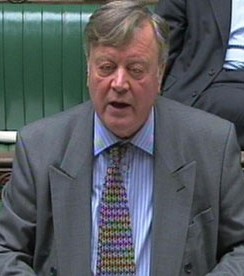 Updated | The legal community has been digesting yesterday’s announcement of government plans for legal aid to be reduced by around £350 per year from 2014-15.
Most commentators and legal professionals are worried that less money for legal representation will lead to less access to justice for the poorer members of society. But some have also expressed relief that the criminal legal aid scheme has been left largely untouched, as have funding for inquests, judicial reviews and asylum cases.
For those who have a view on the reforms, the Ministry of Justice has an online questionnaire which can be filled in here.
Nicholas Green QC (Chairman of the Bar of England and Wales: “A permanent contraction of justice cannot be justified by the “big society” or by any sort of philosophical mantra. Ultimately an efficient justice system is fundamental to the wellbeing of the country. We only have to look at our television screen at events unfolding in Burma and elsewhere to see the undeniable truth of that proposition.”
Continue reading →
Like this:
Like Loading...
10 November 2010 by Rosalind English
Robert Elwyn Watkins v Philip James Woolas [2010] EWHC 2702 (QB) 5 November 2010- read judgment
Update – read our 3 December 2010 post on his defeat in the administrative court
The Election Court has ruled that the Labour MP for Oldham knowingly and deliberately misled the constituency and as a result his election is void under Section 106 of the Representation of the People Act (1983). Permission for judicial review of the decision has been refused.
The provision of the 1983 Act makes it an offence for anyone to publish “any false statement of fact in relation to the candidate’s personal character or conduct” to prevent them being elected “unless he can show that he had reasonable grounds for believing, and did believe, that statement to be true”.
Continue reading →
Like this:
Like Loading...

 The recent critics of Strasbourg judicial activism will, doubtless, be pleased by the Court’s latest Article 10 decision. Free speech campaigners may have more mixed views.


Recent comments