Category: LEGAL TOPICS
4 April 2011 by Graeme Hall
 In an interesting post, Aidan O’Neill QC concludes that the European Court of Human Rights is “in danger of imminent collapse” due to its backlog of 140,000 applications with around 1,600 arriving every month; a conclusion compounded by inherent delays. He suggests that the way to draw back Strasbourg from the brink of judicial Armageddon is to abolish the individual right to petition Strasbourg and to introduce a referral system whereby national courts request Strasbourg’s opinion on human rights issues, akin to the Court of Justice of the European Union (CJEU).
by Graeme Hall
I must disagree. Strasbourg’s jurisdiction spreads across 47 contracting States, ranging from diverse populations such as Liechtenstein and Malta to Russia and Turkey. In turn, the Court is the guardian of the European Convention on Human Rights for over 800,000,000 individuals. The 61,300 valid applications which Strasbourg received in 2010 represent applications from 0.0077 per cent of the population to which the Convention applies. Given the importance of the Convention to the protection of fundamental human rights and freedoms, I find it surprising that Strasbourg does not receive more applications.
Continue reading →
Like this:
Like Loading...
30 March 2011 by Rosalind English
 Lumba v Secretary of State for the Home Deparment – a case of driving government policy further underground?
We have already reported on this appeal by three foreign nationals who have served sentences of imprisonment in this country (“FNPs”). They were detained pursuant to Schedule 3 of the Immigration Act 1971 and their challenge to the legality of this detention was successful. But the appeal was secured by a majority of 3 with strong dissenting opinions which merit close consideration here.
Continue reading →
Like this:
Like Loading...
29 March 2011 by Guest Contributor
 The relationship between the expression of religious beliefs and practice and equality law is a fraught one, and particular difficulty has been experienced in the matter of the application of the law outlawing discrimination.
Equality law, as currently interpreted, treats the six prohibited grounds of discrimination – age, disability, race, religion, sex (including transgender status) and sexual orientation – as being of equal weight and standing; there is no hierarchy among these grounds.
Continue reading →
Like this:
Like Loading...
28 March 2011 by Guest Contributor
 The coalition Government has appointed an independent Commission to investigate the case for a UK Bill of Rights. This Commission has also been tasked with providing advice to the Government on the possible reform of the European Court of Human Rights – as part of on the ongoing Interlaken process – ahead of and following the UK’s coming Chairmanship of the Council of Europe.
One does not have to be human rights sceptic to accept that there is an unequivocal case for further reform of the Strasbourg Court because, unless something is done, the current system for human rights protection at a European level is in danger of imminent collapse.
Continue reading →
Like this:
Like Loading...
28 March 2011 by Alasdair Henderson
 The Mayor of London v. Brian Haw & others [2011] EWHC 585 (QB) – read judgment.
The High Court has ruled that it would not be a breach of Articles 10 (freedom of expression) and 11 (freedom of assembly and association) to grant a possession order in respect of Parliament Square Gardens (“PSG”) and an injunction compelling protesters to dismantle and remove all tents and other structures erected on PSG. The potential effect of this might be to remove Brian Haw, the peace campaigner who has been protesting almost non-stop outside Parliament for the best part of a decade.
This is the latest in a long-running series of cases exploring the extent of the freedom to protest. We have analysed the previous court decisions about the Parliament Square protesters here and here. The issue of restrictions on freedom of assembly and freedom of expression has been a hot topic in recent months more generally, having also come up recently in the contexts of the student protests last year, political asylum seekers and hate speech.
Continue reading →
Like this:
Like Loading...
25 March 2011 by Rosalind English
 The case of Patmainiece v Secretary of State for Work and Pensions was reported in an earlier post. Here we discuss the underlying rationale for the decision and ask whether the finding that the nationality requirement amounted to mere indirect discrimination was a correct “fit” with EU principles of free movement.
Article 18 (now article 21 TFEU) provides:
1. Every citizen of the Union shall have the right to move and reside freely within the territory of the Member States
However a different regime applies to non-economic actors as opposed to workers. Free movement of workers is one of the fundamental underpinnings of the internal market on which the EU is based. The main EU Directives and Regulations giving effect to the right to free movement of workers are Regulation No 1612/68 on freedom of movement for workers within the Community (as amended by Directive 2004/38/EC) and Directive 2004/38/EC on the right of EU citizens and their family members to move and reside freely within the territory of the member states. But the rights of those who are economically inactive to reside for more than three months in other member states is subject to certain conditions, set out in the 2004 Directive; they must
Continue reading →
Like this:
Like Loading...
24 March 2011 by Maria Roche
 A (A Child) v Cambridge University Hospital NHS Foundation Trust [2011] EWHC 454 (QB)– read judgment
A High Court judge has ruled that a seven-year-old child with severe disabilities caused by medical negligence during his birth should be the subject of an order that prohibits their identification in any newspaper report.
The order was granted in the course of a hearing to approve the settlement between the child and the defendant hospital under Part 21.10 of the Civil Procedure Rules. The judge held that there was a risk that the objective of such proceedings, namely to ensure that settlement money is properly looked after and wisely applied, would be defeated if the Claimant was identified. Further, identification of the child would curtail his and his family’s right to respect for their private and family under Article 8 of the European Convention on Human Rights [‘ECHR’] and there was insufficient general public interest in identifying the child to justify that curtailment.
Continue reading →
Like this:
Like Loading...
23 March 2011 by Adam Wagner
 Lumba (WL) v Secretary of State for the Home Department [2011] UKSC 12 (23 March 2011) – Read judgment / press summary
The Supreme Court has ruled that it was unlawful and a “serious abuse of power” for the Home Office to follow an unpublished policy on the detention of foreign national prisoners which contradicted its published policy. Two convicted prisoners were therefore unlawfully detained.
This fascinating 6-3 majority decision could be important in respect of setting the boundaries for the courts’ scrutiny of executive powers. It is also, for the record, not a decision which is based on human rights. The appellants are both convicted criminals (and foreigners too), so the court may be criticised for upholding their human rights despite their criminal actions. But this is a case decided on traditional public law grounds, which preceded the human rights act by many years. As Lord Hope put it:
Continue reading →
Like this:
Like Loading...
23 March 2011 by Isabel McArdle
 AS v Secretary of State for the Home Department [2011] EWHC 564 (Admin) – Read Judgment
In a strange case, reminiscent of the film The Terminal in which Tom Hanks plays a person unable to leave an airport because he is temporarily stateless, an Applicant lost a judicial review application despite being unable to enter the UK lawfully and unable to acquire travel documents to return to Kuwait.
This was an application for judicial review of the decision by the Secretary of State to refuse to treat further representations by a failed asylum seeker as a fresh claim. The Applicant claimed to be a Bedoon, a member of an ethnic group mostly living around the borders of Iran, Iraq, Syria, Saudi Arabia and Kuwait. The Kuwaiti government is not permitting Bedoon outside Kuwait to return there, and since the 1980s the country has taken away from the Bedoon a great number of rights and benefits. It was accepted by both parties that in Kuwait, the Bedoon are at risk of persecution.
Continue reading →
Like this:
Like Loading...
18 March 2011 by Adam Wagner
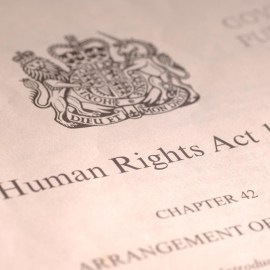 The much trumpeted commission on a UK Bill of Rights has been launched by the Ministry of Justice. It is pretty much as was leaked last week, although it will now have 8 rather than 6 experts chaired by Sir Leigh Lewis, a former Permanent Secretary to the Department of Work and Pensions.
The commission is to report by the end of 2012. Its members, described as “human rights experts”. Are they? The roll call, made up mostly of barristers, is:
Continue reading →
Like this:
Like Loading...
17 March 2011 by Adam Wagner

One of the country’s most senior judges, Lord Neuberger, has given a stirring speech on the challenges of open justice in the 21st century. His ideas are progressive and practical, and amount to a manifesto for building a more open justice system, fit for the internet age.
The annual Judicial Studies Board lecture has in recent years been used by the senior judiciary to criticise the European Court of Human Rights (see Lord Judge’s and Lord Hoffmann’s 2010 and 2009 speeches), so Neuberger’s Open Justice Unbound represents a refreshing change of pace.
Continue reading →
Like this:
Like Loading...
17 March 2011 by Matthew Flinn
 R (on the Application of AC) v Bershire West Primary Care Trust [2011] EWCA Civ 247 – Read judgment.
The Court of Appeal has dismissed the appeal of a male-to-female transsexual who was refused NHS funding for breast augmentation surgery.
The appellant, known as AC, had been diagnosed with gender identity disorder (GID) in 1996. As part of its GID treatment program the PCT had been prepared to provide genital reassignment surgery, which AC had not availed herself of.
Continue reading →
Like this:
Like Loading...
16 March 2011 by Adam Wagner
 Patmalniece (FC) (Appellant) v Secretary of State for Work and Pensions (Respondent) [2011] UKSC 11 – Read judgment / press summary
The Supreme Court has ruled that pensioners from other European Union states should not have the right to claim pension credits in the UK. Although the current ban on claiming these benefits is indirectly discriminatory, the discrimination is a justified response to the legitimate aim of protecting the public purse.
The 4-1 majority ruling (Lord Walker dissented) is likely to calm fears of “benefit tourism” and will probably be wrongly reported as a victory of sensible limits on public finances over human rights. For the record, the appeal was based squarely on EU freedom of movement law and had very little, if anything, to do with human rights.
Continue reading →
Like this:
Like Loading...
16 March 2011 by Rosalind English
 The government’s proposals for reform of the law on defamation have been published. The bill seeks to address concerns that libel law has a chilling effect on freedom of speech, failing to strike the right balance between free speech and protection of reputation.
The pressure of the widely-supported reform campaign, inspired by recent libel actions stifling comment on issues of scientific and academic debate, has no doubt contributed to the manifesto commitment on the part of all three parties which the coalition is now following through. The consultation paper and draft bill has been met with muted enthusiasm, with critics claiming that the proposed statute at best codifies the common law, with all its confusions and complexities, and that the whole is at worst “too little, too late” to meet their reform demands.
Continue reading →
Like this:
Like Loading...
16 March 2011 by Adam Wagner
 As well as blaming bloggers for media frenzies in yesterday’s Law in Action interview, the Attorney General also made some interesting comments on the UK’s bold new tactic on prisoner votes (see my post on Monday), which is effectively to try to appeal an unappealable ruling.
He said (from 19:20) that the UK “takes its responsibility seriously” and that it would be seeking to reform the court when it takes on the chairmanship later this year. “In any political process” he reminded Rozenberg, “the movement of the tectonic plates is always going to be a bit rough” (please note that the programme was recorded before the Japanese earthquakes). He would not say, however, whether the government would do anything to comply with the ruling in Hirst No. 2.
Continue reading →
Like this:
Like Loading...



Recent comments