Category: In the news
23 June 2010 by Rosalind English
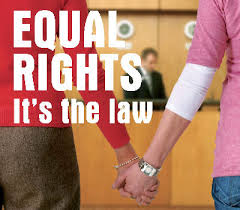 The controversial Equality Act, which was designed to replace a number of anti-discrimination laws, was due to come (partially) into force in October. However the intervening change of government since its enactment in April 2009 appeared to threaten the legislation, particularly after the timetable for the gradual enforcement of its provisions was withdrawn.
Some experts speculated that instead of repealing the Act, the new Government would simply not bring certain parts of it into force, notably the provisions on pay reporting and positive discrimination that were unpopular with the Conservative Party. However the Government Equality Office has now reinstated the original timetable, with the core provisions due to commence in October.
There is still some possibility that some parts of the Act will not become law. Introduced as part of the Labour Party’s 2005 manifesto fulfilment, the Equality Act came under fire for some of its sections dealing with equal pay, positive action and addressing socio-economic disadvantage.
Like this:
Like Loading...
22 June 2010 by Adam Wagner
 George Osborne is to announce the Government’s emergency budget today. Although the Government has been seeking to emphasise measures which will soften the blow to the poor, the fact remains that these are the biggest cuts in decades and that many will end up worse off, particularly if wages decrease and unemployment increases.
Update: The full budget can be downloaded here. The section on benefits starts at page 33.
The Government is to cut benefits by £11bn by 2014-15. The huge cost of benefits (“spending on social security and tax credits has increased by 45 per cent, around £60 billion, in real terms over the past 10 years.), the Chancellor told Parliament, were one of the reasons why there isn’t any more money in the Government coffers. The Health in Pregnancy grant will be abolished from 2011 and Sure Start will be limited. Child Benefit is to be frozen for the next three years. Disability Living Allowance will be restricted by a new medical check from 2013. The Chancellor has said he will “increase the incentives to work” and will reassess benefits on the basis of the Consumer Price Index rather than the Retail Price Index. Housing benefit will be limited significantly and maximum limits on what can be claimed are to be introduced for the first time.
Rosalind English posted two weeks ago on whether budget cuts will lead to revised calls for “socio-economic” human rights; a concept which is as old as the European Convention on Human Rights and just as controversial. We will now revisit that post.
Continue reading →
Like this:
Like Loading...
22 June 2010 by Adam Wagner
 Holder v. Humanitarian Law Project, United States Supreme Court – Read judgment
The US Supreme Court has ruled that it does not violate the US Constitution for the government to block speech and other forms of advocacy supporting a foreign organization that has been officially labeled as terrorist, even if the aim is to support such a group’s peaceful or humanitarian actions.
The judgment does not, of course, have any direct effect on the UK. But UK anti-terrorism legislation already provides the police with broad powers to prosecute those who support terrorist groups. The UK Government is likely to be keeping a close eye on the United States in order to guide future policy, in terms of what is and what is not beyond the pale in restriction freedom of expression.
Continue reading →
Like this:
Like Loading...
18 June 2010 by Adam Wagner
 The controversy generated by the Bloody Sunday Inquiry continues to generate much comment and conjecture.
Lord Saville himself is to resign his judicial post in the Supreme Court early, although he was only a year away from retirement at age 75.
The most pressing concern for many of the relatives of those who were killed will be riding the momentum in order to push for prosecutions; either for the deaths themselves (fairly unlikely given the length of time which has elapsed since the killings) or perjury. Whilst public inquiries are not supposed to lead directly to prosecutions, at least not as a result of a person’s self-incriminating evidence, they can led to charges if someone is found to have lied under oath. The views of the families of the dead appear to be mixed in relation to this possibility.
Continue reading →
Like this:
Like Loading...
18 June 2010 by Adam Wagner
 The Equality Act 2010 may be a quiet addition to the Coalition Government’s repealing agenda as the Government Equality Office (GEO) withdraws the timetable for its implementation.
According to Out-law.com, a spokesperson from the GEO said “An announcement on scheduling for implementation of the Equality Act will be made in due course” and also confirmed that the new Government is not bound by the timetable set by its predecessor.
The Equality Act 2010 was passed into law on in the dying days of the New Labour government despite opposition of from the Pope, who complained that it would run contrary to “natural law” due to its likely effect on Catholic adoption agencies. The Conservatives may have more luck, however, in thwarting the Act’s implementation and in particular three aspects of it which they are opposed to. Some of the main provisions were supposed to come into force in October, but this now appears to have been put on hold. The original timetable can be accessed here.
Continue reading →
Like this:
Like Loading...
17 June 2010 by Adam Wagner
 The BBC report that plastic bags are to be put over “scores” of surveillance cameras in Birmingham following allegations that they deliberately targeted Muslim areas.
Update 19/06/10: Campaigners and the Guardian say police are now facing an investigation for failing to disclose the true purpose of the cameras
The decision marks a victory for campaigners who threatened to bring a judicial review challenging a surveillance project that uses 150 automatic number plate recognition cameras to monitor the roads in two predominantly Muslim areas of Birmingham. We posted earlier this week on the issue, sparked by a Guardian investigation:
The newspaper’s investigation has led to considerable public criticism of the scheme and the threat of legal action. The criticisms have concerned three main areas.First, it has been alleged that the scheme constitutes an unacceptable infringement of civil liberties. Local MPs Roger Godsiff (Labour) and John Hemming (Lib Dem) have attacked it on these grounds, with the latter said to be seeking the support of Deputy Prime Minister Nick Clegg. Second, there have been complaints about a lack of consultation despite the fact that Project Champion is reported to be undergoing tests with the intention of going live in August.
The cameras will not be used “until a consultation has been carried out“.
Like this:
Like Loading...
16 June 2010 by Adam Wagner
 Lord Saville has already come under significant criticism for the time and money which has been swallowed up by the Bloody Sunday Inquiry. Future public inquiries could now be under threat as new Justice Secretary Ken Clarke has accused the Lord Saville of allowing the process to get “ludicrously out of hand“.
The Saville Inquiry Report was published yesterday and can be downloaded here, a summary here and a good analysis here. Lord Saville’s long-awaited inquiry into the Bloody Sunday killings of 30 January 1972 was set up to investigate the events surrounding a march in Derry when 29 protesters were shot by British soldiers, leading to 13 deaths. The Inquiry has been widely criticised prior to its findings.
Continue reading →
Like this:
Like Loading...
15 June 2010 by Matthew Hill
 The Human Rights organisation Liberty is threatening to bring a judicial review challenging a surveillance project that uses 150 automatic number plate recognition (“APNR”) cameras to monitor the roads in two predominantly Muslim areas of Birmingham.
Update 18/06/10 – Muslim area CCTV cameras to be covered by plastic bags [updated]
The Guardian reports that the plan, Project Champion, is funded by the Association of Chief Police Officer’s Terrorism and Allied Matters fund, which is intended to “deter or prevent terrorism or help to prosecute those responsible”. Project Champion provides for three times as many APNR cameras in the suburbs of Sparkbrook and Washwood Heath as are present in Birmingham City Centre. According to the Guardian: “The cameras form “rings of steel”, meaning residents cannot enter or leave the areas without their cars being tracked. Data will be stored for two years.”
Continue reading →
Like this:
Like Loading...
14 June 2010 by Adam Wagner

No entry?
A number of recent cases have ignited an interesting debate on the place of religion in the UK court system, and whether the courts are doing enough to ensure religious freedom as they are obligated to do under Article 9 of the European Convention on Human Rights.
The most notorious example has been McFarlane v Relate Avon Ltd, an unfair dismissal claim brought by a relationship counselor who as a result of his Christian beliefs refused to promote gay sex. The former Archbishop of Canterbury submitted a witness statement stating that cases such of these should be heard by judges with special religious sensitivity. Lord Justice Laws in the Court of Appeal rejected his arguments outright.
We also posted last week on the Hardeep Singh case, in which Mr Justice Eady in the High Court effectively threw out a libel action because it rested upon fundamental principles of legal doctrine which could not properly be examined by a secular court. We posted:
Continue reading →
Like this:
Like Loading...
11 June 2010 by Adam Wagner
 The Guardian claims to have access to key findings of the long awaited inquiry into the Bloody Sunday killings of 30 January 1972, and some of the soldiers implicated may now face prosecution almost 40 years after the event.
The Inquiry was set up to investigate the events surrounding a march in the Bogside area of Derry in 1972 when 29 protesters were shot by British soldiers, leading to 13 deaths.
Lord Saville’s report, which marks the conclusion of the longest and most expensive public inquiry in British history, “will conclude that a number of the fatal shootings of civilians by British soldiers were unlawful killings“. However, the Guardian has not revealed where its information originates from, or how the shootings were “unlawful”, which could mean a number of different things.
The report is to be published on Tuesday 15 June at 3pm. The Inquiry’s website, which also has transcripts of the hearings, can be found here.
Continue reading →
Like this:
Like Loading...
10 June 2010 by Adam Wagner
 The Government has commissioned an independent review of children’s social work and frontline child protection practice. Child protection services have been widely derided as a result of a series of scandals such as that involving baby Peter Connelly (Baby P), and many lawyers feel the court system is at breaking point.
Update 13/06/10 – The Court of Protection has issued its first annual report, which can be accessed here. The forward to the Report says “The court has had to endure more than its fair share of setbacks, which were caused in the main by a failure to anticipate, prior to the implementation of the Act, the volume of work that would inundate the court during the initial transitional period, and the overall burden it would place on the judges and staff.”
According to a Department for Education (DoE) press release, Michael Gove, the Secretary of State for Education, has asked Professor Eileen Munro, a professor of social policy at the London School of Economics, to lead the a “fundamental” review of child protection services. Professor Munro has written widely on child protection and the regulation of child care.
According to the DoE, the Government intends to
Continue reading →
Like this:
Like Loading...
9 June 2010 by Adam Wagner
 The Council of Europe has expressed “profound regret” that the UK has failed to implement its 5-year-old European Court of Human Rights ruling against the policy which prevents prisoners from voting in elections.
In a Committee of Ministers decision, the Council, which monitors compliance with European Court rulings, has:
expressed profound regret that despite the repeated calls of the Committee, the United Kingdom general election was held on 6 May 2010 with the blanket ban on the right of convicted prisoners in custody to vote still in place
It also appears to be giving the new Government a chance, expressing
confidence that the new United Kingdom government will adopt general measures to implement the judgment ahead of elections scheduled for 2011 in Scotland, Wales and Northern Ireland, and thereby also prevent further, repetitive applications to the European Court;
Continue reading →
Like this:
Like Loading...
9 June 2010 by Adam Wagner

Lord Phillips
Lord Phillips of Worth Matravers, the head of the UK Supreme Court, has responded to accusations that the Human Rights Act is hampering the fight against terrorism, and that “respect for human rights is a key weapon in the ideological battle”.
With reports this morning that the Government has written to High Court judges encouraging then not to delay a deportation flight to Bagdad, the speech presents a well timed defence of judicial independence.
The Gresham Special Lecture: The Challenges of the new Supreme Court is available in text and audio format. Lord Phillips used the opportunity to defend the judiciary in light of their regular use of the Human Rights Act to limit the effects of the anti-terrorism laws enacted by the government in the past decade, including controversial measures such as control orders and the Special Immigration Appeal Commission (SIAC). He said:
After 9/11 the British Government decided that the threat of terrorism in Britain was such as to amount to a public emergency threatening the life of the nation and purported, on that ground, to derogate from the Convention.
He continued:
Continue reading →
Like this:
Like Loading...
8 June 2010 by Rosalind English
 Prime Minister David Cameron has been busy preparing the country for “painful” cuts to pensions, pay and benefits. In a recent Guardian Article, The changing face of human rights, Afua Hirsch comments with approval on the 2008 recommendation by the Joint Committee on Human Rights that a new UK bill of rights should include the rights to health, education, housing and an adequate standard of living. Rosalind English asks whether the time has indeed come for “economic” human rights.
Ms Hirsch cites a number of examples around the world where such “social and economic rights” have been used successfully to challenge government policy on the distribution of healthcare, housing and benefits. Why, then, she asks, is such an extension of our existing rights so strenuously resisted in this country?
Continue reading →
Like this:
Like Loading...
7 June 2010 by Adam Wagner

Update 08/06/10: Is there no limit to the damage which restrictive libel laws can do? A Wayne Rooney biography, and possibly England’s football World Cup chances, are the latest victim of threats of libel action, says Afua Hirsch in the Guardian:
I’m not saying that information about Rooney’s background is up there with other public interest revelations that have been caught by libel law – lying politicians or innocent people dying from toxic waste, for example. On the other hand, if the Daily Star is to be believed, the book is fundamental to England’s World Cup performance. The paper claims that the book, which I haven’t read, contains “embarrassing material on the England hero” and “is threatening to derail England’s World Cup dreams.”
The law of libel and defamation sets the limits of freedom of expression. It is therefore unsurprising how many conflicting views there are on the Government’s proposed libel reforms. To keep up with this fast-moving debate, we are introducing a new feature: Libel reform watch.
Continue reading →
Like this:
Like Loading...



Recent comments