Category: In the news
6 July 2010 by Matthew Hill
 The Coalition Government is to introduce a system of statutory regulation to govern the use of automatic number plate recognition (ANPR) cameras, responding to criticism of its scheme in Birmingham which was said to be targeting Muslim residents.
As we posted recently, ANPR cameras were controversially introduced in two predominantly Muslim areas of Birmingham under a scheme funded by an counter-terrorism initiative; the cameras have since been covered with plastic bags while a consultation process is undertaken
Continue reading →
Like this:
Like Loading...
3 July 2010 by Rosalind English
 Regina v Budimir and another; Interfact Ltd v Liverpool City Council [2010] EWCA Crim 148; [2010] EWHC 1604 (Admin); [2010] WLR (D) 166
CA and DC: Lord Judge CJ, David Clarke, Lloyd Jones JJ: 29 June 2010 – read judgment
A new High Court decision has struck a blow for legal certainty and enforced the sometimes forgotten right under human rights law against retrospective criminal sanctions, which applies even in cases where the UK had failed to enact European Community legislation. In this case, the lack of retroactivity meant that a company and two men could not have their convictions for supplying videos illegally quashed.
The High Court held that where defendants had been convicted of criminal offences under national legislation which was unenforceable owing to a failure by the UK to comply with a pre-enactment procedural requirement imposed by EU law, it was not incumbent upon the Court of Appeal to re-open their cases out of time unless their convictions had given rise to any substantial injustice.
The Video Recordings Act 1984 made it an offence to supply pornographic videos “from” rather than “in” a licensed sex shop (Section 12); it was also an offence under the Act (Section 10 (1)) to supply videos with no classification certificate. The applicants had been convicted under these sections in 2004 and 2008 respectively.
Continue reading →
Like this:
Like Loading...
2 July 2010 by Adam Wagner

Delicious!
We recently started adding links to interesting new articles and case-law the sidebar under the heading “Recent selected sources (del.icio.us)”. Below is a quick rundown of the most recent links. The full list of links can be found here.
Continue reading →
Like this:
Like Loading...
1 July 2010 by Adam Wagner
 The Coalition Government has today launched the “Your Freedom” website, “giving people the opportunity to suggest ideas on restoring liberties that have been lost, repealing unnecessary laws and stripping away excessive regulation on businesses”.
The website can be accessed here, although it appears to be having some bandwidth issues at the moment. Amongst other things, it asks the public “which current laws would you like to remove or change because they restrict your civil liberties?” According to the Number 10 press release, the answers will be taken into account in the Freedom Bill later this year.
In its Program for Government, the Coalition promised a “Freedom” or “Great Repeal Bill”, which is a marrying together of the two parties’ manifesto promises (the Liberal Democrats and Conservatives respectively). Whether the eventual legislation will be as wide-ranging as the draft Bill published by the Liberal Democrats is not clear, although interestingly a substantial number of the Bill’s proposals made it into the Coalition agreement, notably children’s biometrics, freedom of information, trial by jury, ID cards, DNA, regulation of CCTV and the right to public assembly.
Like this:
Like Loading...
1 July 2010 by Adam Wagner
 The European Court of Human Rights has rejected the United Kingdom’s application to appeal its decision in a recent finding that stop and search powers enacted as part of anti-terrorism legislation breached human rights law.
In January 2010 the European Court held that section 44 of the Terrorism Act 2000 (the broad police power to stop and search without suspicion) violates the right to respect for private life guaranteed by Article 8 of the Convention on Human Rights (Gillan and Quinton v. UK 4158/05 [2010] ECHR 28 (12 January 2010)). The claimants received £500 each by way of compensation.
Continue reading →
Like this:
Like Loading...
1 July 2010 by Adam Wagner
 It is possible that yesterday’s controversial Supreme Court decision on human rights on the battlefield was merely an academic exercise and therefore not binding on future courts.
There has been significant commentary and conjecture over the decision in R (Smith) v Secretary of State for Defence & Anor (see our post or read the judgment). The Supreme Court seemed to have decided by a 6-3 majority that the Human Rights Act did not apply once a soldier stepped out his or her base, therefore reversing a previous decision by the Court of Appeal that it did.
But the most interesting comments from a legal perspective have been on the question as to whether the decision was in fact binding. Adrian O’Neil QC picked up the point in an interesting commentary piece on the UK Supreme Court Blog.
Continue reading →
Like this:
Like Loading...
30 June 2010 by Adam Wagner
 The Mayor of London v Hall & Ors [2010] EWHC 1613 (QB) (29 June 2010) – Read judgment
The Mayor of London has won a court order to evict a camp of protesters from Parliamentary Square, with the High Court stating that his response to the protest was proportionate and not a breach of the protesters’ human rights.
The protesters have gained a temporary reprieve by appealing the decision, and according to their website have therefore delayed their eviction until at least 4pm on Friday 2 July
As we posted earlier this month, during the build-up to the General Election a number of protesters erected tents and flags in Parliament Square, a green outside the Houses of Parliament. The protesters named the site “Democracy Village”. Boris Johnson, the Mayor of London, launched an action for possession against the protestors, who he claimed were trespassing on Parliament Square.
Continue reading →
Like this:
Like Loading...
30 June 2010 by Rosalind English
 The Queen on the Application of Janet Harris (Appellant) v London Borough of Haringey (Respondent) and Grainger Seven Sisters Ltd (2) Northumberland And Durham Property Trust Ltd (Interested Parties) and The Equality and Human Rights Commission (Intervener) [2010] EWCA Civ 703 22 June 2010 – read judgment
In granting planning permission for redevelopment of a site in an area made up predominantly of ethnic minority communities, a local authority had failed to discharge its duties under the Race Relations Act 1976 s.71(1)(b) as the requirements of s.71 had not formed, in substance, an integral part of the decision-making process –
The appellant challenged a decision to grant planning permission to the first interested party (“Grainger”) for the development of a site in Tottenham which incorporated an indoor market. The grant permitted the demolition of all the business and residential units on the site, and erection of mixed use development with parking and “public realm improvements”.
Continue reading →
Like this:
Like Loading...
25 June 2010 by Rosalind English
Wikileaks founder Julian Assange, who has been on the run from the US authorities after being linked to a serious US national security breach, has come out of hiding in Belgium.
The Telegraph
reports that trouble started for Assange after a US intelligence analyst bragged about sending 260,000 confidential state department cables about the wars in Afghanistan and Iraq to the online whistleblower website. Washington tried to stop the classified information being posted online by arresting the analyst, Bradley Manning. Amid reports that he was the target of a US military manhunt, Mr Assange went to ground for one month.
Continue reading →Like this:
Like Loading...
25 June 2010 by Adam Wagner
 Baroness Hale of Richmond has spoken to the Salford Human Rights Conference on the development of human rights law, and has lamented the time spent on constitutional wrangling rather than applying the essence of the Act.
Lady Hale is the only female judge on the UK Supreme Court. The speech can be downloaded here, and makes for interesting reading; many thanks to the UK Supreme Court Blog who have provided a useful summary.
Lord Phillips, the head of the Supreme Court also spoke recently on the Human Rights Act, responded to accusations that it is hampering the fight against terrorism. He said that “respect for human rights is a key weapon in the ideological battle”. Lady Hale suggested that the tension between the Government and the courts arising from such cases is preventing judges from doing their job. She concluded:
Continue reading →
Like this:
Like Loading...
23 June 2010 by Rosalind English
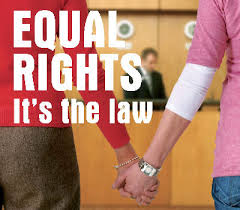 The controversial Equality Act, which was designed to replace a number of anti-discrimination laws, was due to come (partially) into force in October. However the intervening change of government since its enactment in April 2009 appeared to threaten the legislation, particularly after the timetable for the gradual enforcement of its provisions was withdrawn.
Some experts speculated that instead of repealing the Act, the new Government would simply not bring certain parts of it into force, notably the provisions on pay reporting and positive discrimination that were unpopular with the Conservative Party. However the Government Equality Office has now reinstated the original timetable, with the core provisions due to commence in October.
There is still some possibility that some parts of the Act will not become law. Introduced as part of the Labour Party’s 2005 manifesto fulfilment, the Equality Act came under fire for some of its sections dealing with equal pay, positive action and addressing socio-economic disadvantage.
Like this:
Like Loading...
22 June 2010 by Adam Wagner
 George Osborne is to announce the Government’s emergency budget today. Although the Government has been seeking to emphasise measures which will soften the blow to the poor, the fact remains that these are the biggest cuts in decades and that many will end up worse off, particularly if wages decrease and unemployment increases.
Update: The full budget can be downloaded here. The section on benefits starts at page 33.
The Government is to cut benefits by £11bn by 2014-15. The huge cost of benefits (“spending on social security and tax credits has increased by 45 per cent, around £60 billion, in real terms over the past 10 years.), the Chancellor told Parliament, were one of the reasons why there isn’t any more money in the Government coffers. The Health in Pregnancy grant will be abolished from 2011 and Sure Start will be limited. Child Benefit is to be frozen for the next three years. Disability Living Allowance will be restricted by a new medical check from 2013. The Chancellor has said he will “increase the incentives to work” and will reassess benefits on the basis of the Consumer Price Index rather than the Retail Price Index. Housing benefit will be limited significantly and maximum limits on what can be claimed are to be introduced for the first time.
Rosalind English posted two weeks ago on whether budget cuts will lead to revised calls for “socio-economic” human rights; a concept which is as old as the European Convention on Human Rights and just as controversial. We will now revisit that post.
Continue reading →
Like this:
Like Loading...
22 June 2010 by Adam Wagner
 Holder v. Humanitarian Law Project, United States Supreme Court – Read judgment
The US Supreme Court has ruled that it does not violate the US Constitution for the government to block speech and other forms of advocacy supporting a foreign organization that has been officially labeled as terrorist, even if the aim is to support such a group’s peaceful or humanitarian actions.
The judgment does not, of course, have any direct effect on the UK. But UK anti-terrorism legislation already provides the police with broad powers to prosecute those who support terrorist groups. The UK Government is likely to be keeping a close eye on the United States in order to guide future policy, in terms of what is and what is not beyond the pale in restriction freedom of expression.
Continue reading →
Like this:
Like Loading...
18 June 2010 by Adam Wagner
 The controversy generated by the Bloody Sunday Inquiry continues to generate much comment and conjecture.
Lord Saville himself is to resign his judicial post in the Supreme Court early, although he was only a year away from retirement at age 75.
The most pressing concern for many of the relatives of those who were killed will be riding the momentum in order to push for prosecutions; either for the deaths themselves (fairly unlikely given the length of time which has elapsed since the killings) or perjury. Whilst public inquiries are not supposed to lead directly to prosecutions, at least not as a result of a person’s self-incriminating evidence, they can led to charges if someone is found to have lied under oath. The views of the families of the dead appear to be mixed in relation to this possibility.
Continue reading →
Like this:
Like Loading...
18 June 2010 by Adam Wagner
 The Equality Act 2010 may be a quiet addition to the Coalition Government’s repealing agenda as the Government Equality Office (GEO) withdraws the timetable for its implementation.
According to Out-law.com, a spokesperson from the GEO said “An announcement on scheduling for implementation of the Equality Act will be made in due course” and also confirmed that the new Government is not bound by the timetable set by its predecessor.
The Equality Act 2010 was passed into law on in the dying days of the New Labour government despite opposition of from the Pope, who complained that it would run contrary to “natural law” due to its likely effect on Catholic adoption agencies. The Conservatives may have more luck, however, in thwarting the Act’s implementation and in particular three aspects of it which they are opposed to. Some of the main provisions were supposed to come into force in October, but this now appears to have been put on hold. The original timetable can be accessed here.
Continue reading →
Like this:
Like Loading...

 The Coalition Government is to introduce a system of statutory regulation to govern the use of automatic number plate recognition (ANPR) cameras, responding to criticism of its scheme in Birmingham which was said to be targeting Muslim residents.


Recent comments