By: Rosalind English
20 May 2015 by Rosalind English
 ABC v St George’s Healthcare NHS Trust and others [2015] EWHC 139, Nicol J – read judgment
Philip Havers QC and Hannah Noyce, and Elizabeth-Anne Gumbel Q.C. and Henry Witcomb of Crown Office Row represented the defendants and claimant respectively in this case. None of them have had anything to do with the writing of this post.
I have blogged before on the Pandora’s box of ethical problems and dilemmas emerging out of our increasing understanding of genetic disorders (see here, here and here), and here is a case that encompasses some of the most difficult of them.
Continue reading →
Like this:
Like Loading...
11 May 2015 by Rosalind English
 H & S (Surrogacy Arrangement) EWFC 36, 30 April 2015
M, a fifteen month old girl, was born as the result of artificial or assisted conception and of a highly contested agreement between S (the mother, a Romanian national) and H (the father, of Hungarian extraction) and B (the second applicant and H’s partner who had moved to the UK in 2004). None of these parties are portrayed in the photograph illustrating this post. Read judgment here
H is in a long-term and committed relationship with B and was at the time of conception. H and B contended that they had an agreement with S that she would act as a surrogate and that H and B would co-parent the child but that S would continue to play a role in the child’s life. It was a central part of their evidence that S offered to help them become parents and, following discussions between them, first with H and then involving B, the parties agreed to proceed on the basis that H and B would be the parents to the child and that S would have a subsidiary but active role. On 20 or 22 April 2013 M was conceived by artificial insemination using sperm from H at the applicants’ home. It is agreed by all parties that B was at home when the insemination took place.
Continue reading →
Like this:
Like Loading...
29 April 2015 by Rosalind English
Zuchtvieh-Export (Judgment) [2015] EUECJ C-4242/13 (23 April 2015) – read judgment
 Animal welfare groups and campaigners for humane farming have welcomed the latest ruling by the European Court of Justice upholding the refusal of German authorities to allow the export of live cattle to Kazakhstan, a 7,000 km journey involving insufficient rest stops and unloading. According to Compassion in World Farming,
Every year, over three million animals are exported from the European Union to non-EU countries. Hundreds of thousands are destined for countries in Russia, Turkey, The Middle East and North Africa. (Live exports from the EU)
This was a referral from German municipal authorities on just this question. It sought a ruling from the European Court of Justice (CJEU) regarding the interpretation of Council Regulation (EC) No 1/2005 of 22 December 2004 on the protection of animals during transport and related operations.
Continue reading →
Like this:
Like Loading...
23 April 2015 by Rosalind English
 JK, R(on the application of) v Secretary of State for Home Department and another [2015] EWHC 990 (Admin) 20 April 2015 – read judgment
This case concerned the rights of transgender women, and their families, in particular the right to keep private the fact that they are transgender.
The Court heard a challenge to the requirement in the UK’s birth registration system that men who had changed gender from male to female should be listed as the “father” on the birth certificates of their biological children. Having decided that this did engage the claimant’s privacy rights under Article 8 of the European Convention of Human Rights, in conjunction with the right not to be discriminated against under Article 14, the Court concluded that the interference was justified.
Factual and legal background
The clamant JK had been born male. She was married to a woman, KK, and the couple had two naturally conceived children. After the birth of the first child in 2012, JK was diagnosed with gender identity disorder and concomitant gender dysphoria. In October 2012, she started a course of feminising hormone treatment. The treatment pathway requires two years living as a female before consideration is given for referral for gender reassignment surgery. Before the claimant started feminising hormone therapy, KK fell pregnant a second time, again conceiving naturally by the claimant.
Continue reading →
Like this:
Like Loading...
17 April 2015 by Rosalind English
 Reactiv Media Limited v The Information Commissioner (Privacy & Electronic Communications Regulations (2003) [2015] UKFTT 2014_0213 (GRC) (13 April 2015) – read judgment
Although an individual’s right to privacy is usually thought of in the context of state intrusion in one form or another, in reality the real threat of intrusion in a society such as ours comes from unsolicited marketing calls.
What many people may not be aware of is that if an individual has registered with the Telephone Preference Service, these calls are unlawful and the company responsible may be fined. It is therefore worth making a complaint, even if one instinctively feels that taking such a step will invite more intrusion. This case is a nice illustration of privacy being upheld and the rules enforced against an unscrupulous and persistent offender.
TPS is operated on behalf of the direct marketing industry by the Direct Marketing Association (DPA) and subscribers’ rights not to receive such calls may be enforced under Regulation 21 of the Privacy and Electronic Communications (EC Directive) Regulations 2003.
Continue reading →
Like this:
Like Loading...
16 April 2015 by Rosalind English
 Fish Legal v Information Commissioner and others (Information rights practice and procedure) [2015] UKUT 52 (AAC) Charles J – read judgment
Water and sewage utility companies are “public authorities” for the purposes of the environmental information regulations, and are bound by them accordingly, the Administrative Appeals Chamber of the Upper Tribunal has ruled.
Fish Legal is the legal arm of the Angling Trust. In 2009 it asked United Utilities Water plc and Yorkshire Water Services Ltd for information relating to discharges, clean-up operations, and emergency overflow. Emily Shirley is a private individual. Again, she asked Southern Water Services Ltd for information relating to sewerage capacity for a planning proposal in her village. All three companies denied that they were under a duty to provide the information under Environmental Information Regulations. Both Fish Legal and Mrs Shirley complained to the Commissioner. In 2010 the Commissioner replied, explaining that as the companies were not public authorities for the purposes of EIR, he had no power to adjudicate the complaints.
Continue reading →
Like this:
Like Loading...
31 March 2015 by Rosalind English
 Google Inc v Vidal-Hall and others [2015] EWCA Civ 311 (27 March 2015) – read judgment
This case concerned the misuse of private information by an internet provider based in the United States. Google had secretly tracked private information about users’ internet browsing without their knowledge or consent, and then handed the information on to third parties (a practice known as supplying Browser-Generated Information, or ‘BGI’).
The issue before the Court of Appeal was twofold:
- Was the cause of action for misuse of private information a tort, specifically for the purposes of the rules providing for service of proceedings out of the jurisdiction?
- What was the meaning of ‘damage’ in section 13 of the Data Protection Act 1998 (the DPA) and in particular, did it give rise to a claim for compensation without pecuniary loss?
Continue reading →
Like this:
Like Loading...
25 March 2015 by Rosalind English
 The Bussey Law Firm PC & Anor v Page [2015] EWHC 563 (QB) – read judgment
The facts of this case are simple. A defamatory comment was posted on the claimant’s Google maps directional page, implying that he was a “loser” as a lawyer and that his firm lost “80%” of cases brought to them. The defendant claimed that someone must have hacked in to his own Google account to put up the post.
There were jurisdictional complications in that the firm is situated in Colarado but these need not concern us here as Sir David Eady, sitting as a High Court judge, allowed the trial to go ahead in England. The real question was why any third party would have gone to the trouble of hacking into the defendant’s Google account in order to post the offending review; if the objective were merely to hide the hacker’s identity from the claimants, there would be the simpler option of setting up an anonymous Google account. This would in itself render the would-be publisher untraceable, and especially if it were done from a public computer.
Continue reading →
Like this:
Like Loading...
19 March 2015 by Rosalind English
 A healthcare NHS Trust v P & Q [2015] EWCOP (13 March 2015) – read judgment
The Court of Protection has clarified the position on revealing the identity of an incapacitated adult where reporting restrictions apply.
This case concerned a man, P, who as a result of a major cardiac arrest in 2014, has been on life support for the past four months. Medical opinion suggests that he is unlikely ever to recover any level of consciousness, but his family disagrees strongly with this position. The Trust therefore applied to the Court for a declaration in P’s best interests firstly, not to escalate his care and secondly to discontinue some care, inevitably leading to his demise. The trust also applied for a reporting restrictions order. When it sought to serve that application on the Press Association through the Injunctions Alert Service, the family (represented by the second
Continue reading →
Like this:
Like Loading...
16 March 2015 by Rosalind English
 Let’s apply some hard history to the 13th century charter governing the obligations flowing between King John and his barons, or at least read the thing (translation here). So says Lord Sumption in a fascinating address to Friends of the British Library on 9 March.
All sides jockey for position at the Magna Carta shrine, but its significance is entirely due to the myth-making tendencies of the seventeenth century politician and judge Edward Coke. Since he plucked the charter quite clean of its historical context, the claims made in its name are extraordinary and downright self-serving:
In his column in the Daily Telegraph, Peter Oborne recently described the European Convention on Human Rights as a “document which entrenches the principles of Magna Carta in international law.” Others have come forward to suggest that the partial abrogation in 2014 of a legal aid system which was first created in 1949 was contrary to Magna Carta. Recently, a Global Law Summit in London, which was essentially an international marketing opportunity for British lawyers, described itself on its website as “grounding the legacy and values of Magna Carta in a firmly 21st Century context.
Sumption is not against liberty of the subject, nor motherhood and apple pie, nor even international marketing opportunities for lawyers, but he does have a problem with “the distortion of history to serve an essentially modern political agenda.”
Continue reading →
Like this:
Like Loading...
25 February 2015 by Rosalind English
 CG v Facebook Ireland & Another [2015] NIQB 11 (20 February 2015) – read judgment
The plaintiff was a former sex offender who had been identified on a Facebook page run by the second defendant called “Keep Our Kids Safe From Predators 2”. He had been released on licence and he was apprehensive about his safety upon his return to the community.
He resides with his father, who is disabled, and with his adult children one of whom is also disabled. He was particularly fearful of the reactions of others to his conduct in the light of the fact that his name had been published on the internet. I have posted on an earlier case where another former sex offender won an injunction against Facebook Ireland Limited in respect of the original KOKSFP, which was subsequently taken down (XY v Facebook Ireland Ltd [2012] NIQB 96).
Continue reading →
Like this:
Like Loading...
15 February 2015 by Rosalind English
 Geller and another, R (on the application of) v The Secretary of State for the Home Department [2015] EWCA Civ – read judgment
This short case involves the old dilemma of public order law: whether it is right to shut down speech when the speaker himself does not intend to incite violence, but whose presence it is said may lead third parties to commit violence. Indeed the facts of this particular case go further than that , because the applicants had no plans to make any public address during their proposed visit to Britain. It was their presence alone which was feared would inflame “community tensions”.
The applicants were two well-known US writers whose critical views of Islam led to them being prevented from entering the country in May 2013, to speak at a rally in the aftermath of the terrorist murder of Drummer Lee Rigby. An exclusion order was issued against them on grounds of public order, of which they sought judicial review. This was their appeal against the Immigration Tribunal’s refusal to allow them to proceed with the judicial review claim.
Continue reading →
Like this:
Like Loading...
9 February 2015 by Rosalind English
 Carter v. Canada (Attorney General), 2015 SCC 5 (CanLII) 6 February 2015 – read judgment
The Supreme Court of Canada has upheld a challenge to the constitutionality of the prohibition on assisted dying, saying that since they last ruled on this issue in the 1993 case of Rodriguez (where a “slim majority” upheld the prohibition), there had been a change in the circumstances which “fundamentally shifted the parameters” of this debate.
The Court issued a declaration of invalidity relating to those provisions in the Canadian criminal code that prohibit physician assisted dying for competent adults who seek such assistance as a result of a “grievous and irremediable” medical condition that causes “endurable and intolerable” suffering. These laws should be struck down as depriving those adults of their right to life, liberty and security of the person under Section 7 of the Canadian Charter of Rights (The Constitution Act 1982)
Importantly, the court recognised what has long been proposed by campaigners on both sides of the Atlantic, that the prohibition deprives some individuals of life, as it has the effect of forcing people to take their own lives prematurely, for fear that they would be incapable of doing so when they reached the point where suffering was intolerable.
Continue reading →
Like this:
Like Loading...
2 February 2015 by Rosalind English
 BB, PP, U and others v Secretary of State for the Home Department [2015] EWCA Civ 9 (23 January 2015) – read judgment
This was an appeal by Algerian nationals who had been found by the Special Immigration and Appeals Commission (SIAC) to constitute a threat to UK national security, against deportation to Algeria.
The appellants had resisted attempts by various home secretaries to deport them via protracted litigation over several years. Despite several findings by the SIAC that their human rights would not be infringed in Algeria, doubts remained, particularly with regard to the period of up to twelve days of initial detention in Algeria, known as “garde a vue” detention, in a barracks run by the Algerian security services (DRS). The purpose of such detention was to interrogate prisoners to obtain evidence for future proceedings. SIAC had wholly accepted the evidence of an innocent British citizen (AB) detained there in a case of mistaken identity as “punitive in the extreme”, but determined that his treatment showed a lack of care over the detainee’s welfare rather than a breach of his human rights. It had conceded that the treatment of the appellants might well be no better, not least because DRS officers considered such treatment to be consistent with respect for human dignity.
The appellants submitted that, in the light of this, SIAC’s conclusion that their treatment would not violate Article 3 of the Convention was legally unsustainable; that SIAC had erred in law in its findings that the Algerian government’s assurances were capable of independent verification; and that the SIAC had also erred in law in maintaining, without any open evidence in support, that the DRS had been present during discussions about those assurances and had subscribed to them.
The Court of Appeal upheld the appeals.
Continue reading →
Like this:
Like Loading...
29 January 2015 by Rosalind English
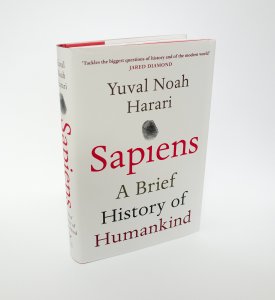 Most law undergraduates are familiar with Jeremy Bentham’s dismissal of natural rights as “nonsense on stilts”. This is a slight misrepresentation of what he said, which was that “Natural rights is simple nonsense: natural and imprescriptible rights, rhetorical nonsense — nonsense upon stilts“. But let’s take the stilts away and consider rights in their ordinary sense. They furnish not only arguments before courts, but reasons for going to war and toppling whole regimes. As Israeli historian Yuval Noah Harari points out in his recent book:
No one was lying when, in 2011, the UN demanded that the Libyan government respect the human rights of its citizens, even though the UN, Libya, and human rights are all figments of our fertile imaginations.
So, might the author have added, are “citizens”, since in a reality without cities and states, it is a non-sequitur to talk of citizens.
Continue reading →
Like this:
Like Loading...

 ABC v St George’s Healthcare NHS Trust and others [2015] EWHC 139, Nicol J – read judgment


Recent comments