We use cookies to enhance your browsing experience. If you continue to use our website we will take this to mean that you agree to our use of cookies. If you want to find out more, please view our cookie policy. Accept and Hide [x]
In Episode 231 of Law Pod UK Jim Duffy is joined by David D. Cole, Professor of Law and Public Policy at Georgetown University and former National Legal Director of the American Civil Liberties Union. They discuss the US President’s invocation of emergency powers to deport, to attack vessels on the high seas, and to impose sweeping international trade tariffs.
In Episode 209, Jim Duffy is joined by fellow 1COR barristers Alasdair Henderson and Paula Kelly to examine recent judicial attempts to grapple with questions of gender in the workplace. How do the UK courts and tribunals distinguish legitimate and protected expressions of belief from harassment and transphobia?
As a new Chief Coroner takes up the reins, Jim Duffy is joined by 1COR colleagues Richard Mumford and Lance Baynham to discuss the challenges facing the coronial system today. They look at recent cases on Article 2 ECHR and the ordering of fresh inquests, before reflecting on how the process works for those who come into contact with it.
In January this year, the Transparency Implementation Group Reporting Pilot was rolled out to 16 more courts across England. The pilot works on the basis of a presumption that journalists and legal bloggers may report on what they see and hear during family cases, subject to strict rules of anonymity.
In Episode 197 of Law Pod UK barrister Jim Duffy speaks to two experienced 1COR family law practitioners – Richard Ager and Clare Ciborowska. They explore the principles at stake and the on-the-ground impact of the pilot so far.
In Episode 181 Jim Duffy discuss small boats and some big, constitutional changes on the horizon, with Prof Jim Murdoch, Shameem Ahmad and Angus McCullough KC
After being placed briefly on ice, the Bill of Rights Bill is now described by Justice Secretary Dominic Raab as ‘ready to go’. The Bill would repeal and replace the Human Rights Act 1998 with what Angus McCullough KC describes as a “hotch-potch of measures” designed to secure a “conscious uncoupling” with the Strasbourg Court.
Joining Angus and me on the latest episode of Law Pod UK are Shameem Ahmed – the new CEO of the Public Law Project – and Jim Murdoch, Professor of Public Law at the University of Glasgow and long-time Council of Europe expert on human rights law and practice.
We examine the key features of the Bill, place it in a wider European and international legal context, and discuss the direction of travel for human rights law in the UK in the wake of the Illegal Migration Bill.
And finally!
If you have feedback on Law Pod UK, please take a couple of minutes to fill in this very short, anonymous survey. Thank you in advance!
World Cup opening ceremonies can be head-scratching affairs. Chicago, 1994, is perhaps as helpful an example as any. This was the setting for Diana Ross’s attempt to burst the net with a choreographed spot kick. She didn’t quite find the target – there ain’t no goal mouth wide enough – but it didn’t stop the mock woodwork from splitting theatrically into two halves as the goalkeeper dived redundantly to his right.
Aonghus Kelly is the director of Irish Rule of Law International. In our latest episode Aonghus joined Jim Duffy just before he flew to Kyiv last week – before the shelling began – to talk about his organisation and the importance of the work of individual lawyers bringing their skills and expertise to war torn countries, to help the families of victims of war crimes and miscarriages of justice seek justice.
Aonghus talks about the challenges of traversing between common law and civil law cultures in order to help post-war societies set up their own legal systems so that their citizens can seek redress in the courts, both national and international.
He emphasises that other countries have their own cultures that need to be respected, and can only be helped effectively when organisations such as his liaise with local players. Aonghus is currently in Ukraine assisting his colleagues to build mechanisms which will ensure a future reckoning for the war crimes of today.
This war didn’t start in February, he says.
It started in 2014… The reality now is that the number of criminal acts is so enormous it is now presenting problems. And how could it not – in any war… even in the richest jurisdiction in the world.
This Government’s key message has been its ability get things done, whether it be Brexit, HS2 or stopping the spread of Coronavirus.
Indeed, if the new high speed trains move as swiftly as the Health Secretary did on Monday, then they might break the sound barrier: the Health Protection (Coronavirus) Regulations 2020 were enacted at 6.50am on Monday and laid before Parliament by 2.30 that afternoon. Their preamble states that
the Secretary of State is of the opinion that, by reason of urgency, it is necessary to make this instrument without a draft having been laid before, and approved by a resolution of, each House of Parliament.
One can appreciate the desire to bypass the cumbersome mechanics of Parliament to save the country from a potentially deadly virus. But in the fullness of time, the resulting Regulations might well be held up as an excellent advertisement for Parliamentary scrutiny.
Depending on the content of the warnings about medicines, Ms Thornberry may be right. An argument that a deceased’s death has been caused or contributed to by neglect is usually levelled against a local police force that fails to provide basic medical attention to a detainee in need, or a hospital that does not act to counter a life-threatening illness in a patient. It is not commonly deployed against central government on the basis of a decision said to have denied basic medical attention to whole sections of the population.
The UK Human Rights Blog – edited by barristers at 1 Crown Office Row – is seeking recent law graduates to contribute regular articles on human rights cases handed down by the courts in Scotland, Northern Ireland and Strasbourg.
We are looking
for about five contributors in total to assist us for a period of up to a year,
with each contributor focusing on a particular jurisdiction.
Contributors would be expected to produce about five to ten blog
posts over the course of the year.
If you are interested, please email Jim Duffy (jim.duffy@1cor.com) with a copy of your CV and an article relating to a recent human rights case handed down in one of the above jurisdictions (word limit: 1,000 words).
Please note that contributors should hold a law degree or graduate diploma in law as of this summer, and that the Scottish/NI contributors will be law graduates from universities in those countries.
A bank requires its would-be recruits and some of its existing employees to undergo a medical. It sends them to the home of one particular, self-employed doctor. There, they undergo a medical examination, unaccompanied by anyone from the bank.
The doctor completes the bank’s proforma examination form, headed with its logo and entitled “Barclays Confidential Medical Report”. The form is detailed. It includes sections on chest “Inspiration” and “Expiration”, “Abdomen (including Genito-Urinary System)”. It contains a section for “Female applicants only”, asking whether they have suffered from menstrual or pregnancy disorders.
The doctor – Gordon Bates – subsequently dies. A large group of women sue the bank alleging that it is liable for sexual assaults carried out by the doctor during the examinations. The question for the Court of Appeal in Barclays Bank plc v Various Claimants[2018] EWCA Civ 1670 was whether the bank could be vicariously liable.
Background
Following Dr Bates’ death in 2009, 126 women came forward alleging that he had abused them during medical examinations carried out on behalf of Barclays between around 1968 and 1984. The police concluded in 2013 that, had he been alive, there would have been sufficient evidence to pursue a criminal prosecution against him.
Adam Wagner acted for victims of the Blood Contamination scandal in a proposed Judicial Review of the refusal to hold an inquiry. He is not the author of this post
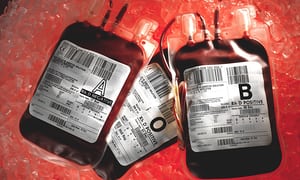
Amid the blizzard of news stories circling Westminster on Friday, it would have been easy to miss an announcement of considerable significance to victims of the contaminated blood scandal and their families.
In a written statement to Parliament, Damian Green confirmed that the inquiry into the scandal – announced by the Prime Minister in July – will take the form of a UK-wide, statutory inquiry.
Not only that, it will no longer be set up by the Department of Health (DoH), but by the Cabinet Office. Campaigners for the victims and their families had boycotted talks with Downing Street, arguing that the DoH would have a conflict of interest, due to the need for the inquiry to investigate the actions of health officials.
However, there was yet more disappointment and frustration over the continued failure to appoint an inquiry chair or to announce terms of reference. Continue reading →
In the new age of alternative facts, even Sean Spicer might struggle to spin Tuesday’s Supreme Court judgment as anything other than a comprehensive defeat for the government.
Yet, as my colleague Dominic Ruck Keene’s post alluded to, the ultimate political ramifications of Miller would have made the Article 50 process appreciably more turgid had the Justices accepted the various arguments relating to devolution.
“Today is an important day in the life of our court. For it is the first occasion upon which either we or our predecessors in the House of Lords have had occasion to address the interface between the power of the Secretary of State to deport a foreign criminal and the latter’s ability to resist deportation by reference to his right for respect for his family life under article 8 of the ECHR.”
Next Tuesday, the British Institute of International and Comparative Law (BIICL) will be holding an event in London to mark the start of the final furlong in the run-up to the In/Out EU referendum. Continue reading →
This blog is maintained for information purposes only. It is not intended to be a source of legal advice and must not be relied upon as such. Blog posts reflect the views and opinions of their individual authors, not of chambers as a whole.
Our privacy policy can be found on our ‘subscribe’ page or by clicking here.



 A bank requires its would-be recruits and some of its existing employees to undergo a medical. It sends them to the home of one particular, self-employed doctor. There, they undergo a medical examination, unaccompanied by anyone from the bank.

 In the new age of alternative facts, even Sean Spicer might struggle to spin Tuesday’s Supreme Court
 Amid a level of scrutiny unprecedented in the Supreme Court’s seven-year history, that is a headline unlikely to make it into tomorrow’s tabloids.


Recent comments