Monthly News Archives: August 2024
26 August 2024 by Emilia Cieslak
In UK news
The Children’s Commissioner for England, Dame Rachel de Souza, has published a report which found that black children are four times more likely to be strip searched compared to national population figures. The report analysed a dataset of all the strip searches conducted by all 44 police forces in England and Wales from January 2018 to June 2023. The report found that in almost half (45%) of the strip searches an appropriate adult was not confirmed to be present and the youngest child searched was eight years old. The majority (88%) of searches were conducted on suspicion of drugs and in 47% of cases the search resulted in “no further action”. The Commissioner argues that this calls into question their necessity and that strip searches should only be carried out on children where there is a clear and immediate risk of harm to themselves or others.
The UN’s Committee on the Elimination of Racism (CERD) has recommended that the UK government “implement comprehensive measures to curb racist hate speech and xenophobic rhetoric, including on the part of political and public figures”. The CERD highlighted the riots which occurred in the UK in August 2024, after the Southport stabbings in which three young girls were killed and emphasised the role of social media disinformation regarding the perpetrator’s identity in stoking the riots. The government has responded to the disorder by activating Operation Early Dawn. This is an emergency action to manage the transfer of prisoners as hundreds of people have been charged for involvement in the riots. Under Operation Early Dawn, defendants will only be summoned to a magistrates court when a cell in the prison estate becomes available, and until then, if they are remanded in custody, they will be held in police station cells.
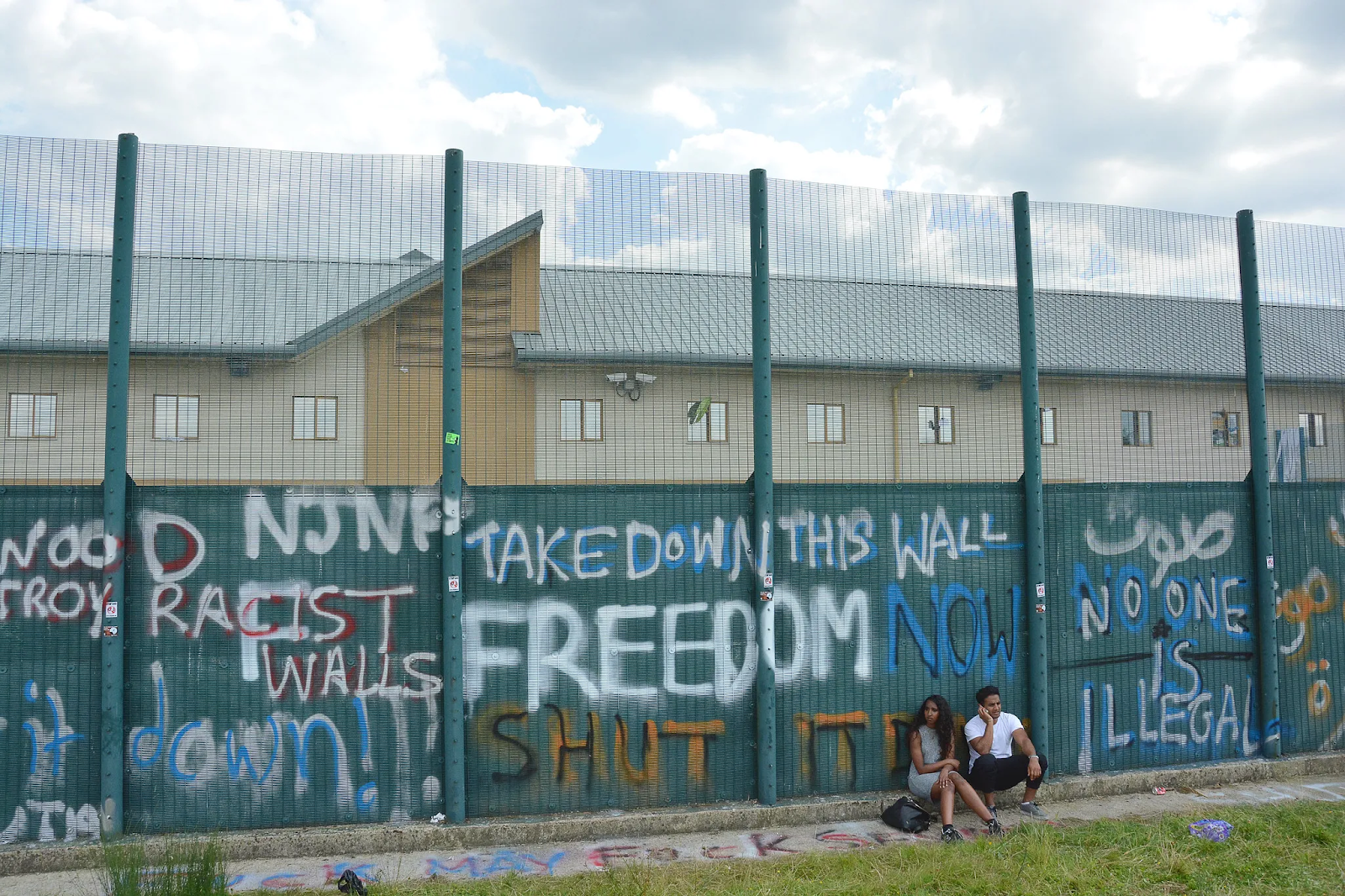
The Home Secretary, Yvette Cooper, has announced new measures to significantly increase the removal of failed asylum seekers. These measures include recruiting 100 specialist intelligence officers to the National Crime Agency to disrupt human smuggling gangs, new measures to target employers who hire illegal workers, and increasing capacity at the Campsfield and Haslar Immigration Removal Centres.
In international news
The Ukrainian Parliament (Verkhovna Rada) has passed legislation to ratify the Rome Statute of the International Criminal Court (ICC) making Ukraine a state party. The Ukrainian Foreign Minister Dmytro Kuleba has stated that the move shows Ukraine’s “unwavering commitment to strengthening international justice” and to work effectively with the ICC to “ensure comprehensive accountability for all Russian atrocities committed in the course of Russian aggression”. The ratification of the Rome Statute is also a requirement for Ukraine to join the European Union, as set out in the Association Agreement between the European Union and Ukraine. The ICC has so far issued arrest warrants for Vladimir Putin, Commissioner for Children’s Rights Maria Lvova-Belova, former Minister of Defence Sergei Shoigu, and Chief of the General Staff of the Armed Forces and First Deputy Minister of Defence Valery Gerasimov.
The UN Special Rapporteur on Torture, Alice Jill Edwards, has expressed concern after video footage was leaked of an Israeli Defence Forces (IDF) soldier sexually assaulting a Palestinian detainee. The Special Rapporteur has urged that “all alleged crimes committed within the context of this terrible war must be investigated transparently and impartially, and those responsible held accountable by civilian courts of law”. The Israeli NGO B’tselem has published a report based on the testimonies of 55 Palestinian detainees who described systematic abuses including violence, sexual assault, and denial of medical treatment. As of July 2024, there are 9,623 Palestinians held in Israeli prisons, 4,781 of which are held in “administrative detention” which means they are held without charge.
In the courts
The UK government has lost an appeal against the decision that it cannot restrict the movement of asylum seekers who inadvertently arrived at the Diego Garcia military base. In October 2021, 47 Sri Lankan Tamil asylum seekers, including a number of children, were rescued at sea by the Royal Navy and brought to the military base which is classified as a British overseas territory. Since then they have been restricted to a small area of the island due to the “operational, security, health and safety risks” if they were granted freedom of movement. The court rejected the government’s grounds of appeal, inter alia, that the judge acted unreasonably in failing to place adequate weight on the authorities security concerns. This long-standing litigation has been followed and reported by Joshua Rozenberg KC (hon), and his commentary is available here.
The Federal Court of Australia has determined that Australian case law has consistently held that sex is “changeable and not necessarily binary”. Ms Roxanne Tickle, a trans woman, sued Giggle for Girls, a social media app for communication between women, alleging unlawful gender discrimination when she was barred from having an account on the app. The court held that the claim of indirect gender discrimination succeeds, as to gain access to the app users had to send a selfie and the reviewer determined that Ms Tickle did not have the appearance of a cisgender woman.
Like this:
Like Loading...
12 August 2024 by Catherine Churchill
In UK News
Riots continued throughout the UK last week, sparked by the attack and murder of 3 children in Southport on July 29th. The riots have been linked to a widely circulated online rumour falsely identifying the perpetrator as a Muslim asylum seeker. UK Chief Executive for Amnesty International, Sacha Deshmukh, has stated the riots to be caused at root by “racism, Islamophobia and xenophobia”. Prime Minister Keir Starmer has called the rioting an “assault on the rule of law and the execution of justice” and made clear that those involved will not “be allowed to hide behind the legitimate right to protest”. The Crown Prosecution Service revealed on Friday via a post on X (formerly Twitter) that 159 individuals have been charged in connection with the “violent disorder” across the country, with a total of 741 arrests having been made. The news follows Justice Minister Heidi Alexander’s announcement that the process of opening 500 prison places for those involved in the riots is underway.
On Friday, the UK Government announced fresh sanctions against Belarus in response to ongoing human rights violations in the country. The sanctions have been announced on the four-year anniversary of the “deeply flawed” 2020 presidential elections in Belarus; elections which Foreign Secretary David Lammy stated have resulted in “over 40,000 citizens arrested on trumped up political charges, civil society and independent media trampled and a regime with no regard for democracy or human rights”. The Viasna Human Rights Center, a Belarusian NGO, claims that as of August 11, Belarus holds 1385 political prisoners including journalists and human rights activists. The new sanctions raise the total number against Belarus to over 200 individuals and entities. The announcement also revealed a funding package of £2.5 million to support human rights and civil liberties in Belarus.
In Other News
Unrest continues in Venezuela following the contested re-election of President Nicolas Maduro on July 28th. US Secretary of State Anthony Blinken has published a statement arguing that there is “overwhelming evidence” that the opposition leader, Edmundo Gonzalez Urrutia, was the true victor. The statement cites the fact that the opposition have published over 80 percent of the tally sheets from polling stations across Venezuela showing Urrutia to have won by an “insurmountable margin”, further corroborated by exit polls. The announcement of Maduro’s re-election sparked protests across the country which have continued into this week. In a press conference on Tuesday, Maduro announced that over 2229 individuals had been arrested in connection with the protests, calling those involved “terrorists”. In a press conference last week, a spokesperson for UN High Commissioner for Human Rights Volker Turk expressed concern over the “numerous cases of arbitrary detention”, including that of peaceful protestors, human rights defenders, children, and journalists. Amnesty International sent an open letter on Friday to the Prosecutor of the International Criminal Court calling for his “resolute and immediate action” against the crimes being committed under international law by Venezuelan authorities. Amnesty argue in the letter that the ongoing “tragedy is a consequence of the impunity for serious human rights violations and crimes against humanity that Maduro’s government has been committing for years.”
Reports have surfaced that in only two days last week, Iranian authorities executed a minimum of 29 individuals. The UN Office of the High Commissioner have verified that a further 38 people were executed in Iran over the course of July, raising the total for 2024 thus far to 345. The Office raised concerns in particular about the “lack of due process and fair trial standards”, with several executions occurring with “neither the prisoner’s family nor legal counsel being informed”. NGO Iran Human Rights has reported that 26 men were executed in a group hanging outside Ghezelhesar Prison – an execution the scale of which has been unparalleled since 2009. Amnesty have revealed that at least one of the prisoners executed in the spree was imprisoned in connection with the Woman Life Freedom protests that erupted following the murder of Mahsa Amini in 2022.
The Bulgarian Parliament passed an anti-LGBT amendment last Wednesday to the country’s education laws, banning the “propaganda, promotion, or incitement in any way, directly or indirectly, in the education system of ideas and views related to non-traditional sexual orientation and/or gender identity other than the biological one.” The amendment was passed by an overwhelming majority with 159 votes in favour and only 22 against. LGBT rights group Forbidden Colours have stated they believe the move represents Bulgaria “adopting tactics from Russia’s anti-human rights playbook”, a development they call “deeply troubling”. The organisation have also raised questions about the swiftness with which the amendment occurred, both readings occurring on a single day – raising “serious concerns about the legislative process and the intent behind such haste”. A spokesperson for the EU Commission told POLITICO last Thursday that while the EU is aware of the amendment, they were unable to comment. The spokesperson however reiterated that the Commission “remains steadfast in its commitment to tackling discrimination, inequalities and challenges faced by LGBTIQ individuals.”
In the Courts
Last Wednesday, the UK Supreme Court rejected Shamima Begum’s permission to further appeal the removal of her British citizenship. Ms Begum appealed on four grounds: trafficking, invoking Article 4 ECHR; deprivation of the right to make representations; a failure to ensure good community relations, required per s.149 of the Equality Act; and de facto statelessness. Permission to appeal was refused on all four grounds, concluding that “the grounds of appeal do not raise an arguable point of law”. In response to the ruling, Maya Foa, director of human rights NGO Reprieve, has stated that “exiling British nationals like Ms Begum is about politics, not the law”. The decision signifies the exhaustion of Ms Begum’s legal remedies in the UK. However, Ms Begum’s lawyers told the BBC that they intend to take the case to the European Court of Human Rights in Strasbourg.
The Dublin High Court found last week that the Irish Government’s treatment of asylum seekers breaches the EU Charter of Fundamental Human Rights. Mr Justice Barry O’Donnell stated in judgment that in failing to support the accommodation needs of applicants for asylum, “the State has breached the rights of those persons as provided for in Article 1 of the Charter of Fundamental Rights of the European Union” – the right to human dignity. It was held that central to respecting the human rights of asylum seekers is the maintenance of “an adequate standard of living which guarantees their subsistence and protects their physical and mental health where they do not have the means to provide for themselves”.The judgment has been welcomed by the UN Refugee Agency, who have now called on the Irish Government to take “immediate action”. The Court did, however, decline to grant the mandatory orders sought by the applicants, the Irish Human Rights and Equality Commission, on the basis that it was not satisfied that there was evidence the Government would ignore its obligations.
US federal judge Mark Walker ruled last Thursday in Claire v Florida DMS that Florida’s ban on transgender healthcare access for state employees violates their civil rights. Florida has had a categorical ban on coverage of healthcare for “gender reassignment or modification services or supplies” of state employees for decades, which has now been found to be in violation of Title VII of the Civil Rights Act of 1964 as a form of unlawful discrimination on grounds of sex since it denies transgender employees coverage for medically necessary treatment for gender dysphoria. Quoting a judgment from 2020, Judge Walker reiterated that “discrimination based on homosexuality or transgender status necessarily entails discrimination based on sex” as “the first cannot happen without the second”. The American Civil Liberties Union (ACLU) praised the judgment in a press release, with Staff Attorney Samantha Past stating that “discrimination has no place” in Florida. The ACLU “are hopeful that this decision will encourage a commitment from the state to treating members of the transgender community with the respect they deserve”.
Like this:
Like Loading...
5 August 2024 by Emma-Louise Fenelon
Robert Mills takes listeners through three recent cases on material contribution:
- CNZ v Royal Bath Hospitals NHSFT & The Secretary of State for Health and Social Care [2023] EWHC 19 (KB)
- CDE v Surrey and Sussex Healthcare NHS Trust [2023] EWCA Civ 1330
- Holmes v Poeton Holdings Ltd [2023] EWCA Civ 1377
John Whitting KC outlines developments in the law of informed consent:
- Bilal and Malik v St George’s University Hospital NHS Foundation Trust [2023] EWCA Civ 605
- McCulloch and others v Forth Valley Health Board [2023] UKSC 26
And the episode concludes on a discussion of expert evidence:
- Woods v Doncaster and Bassetlaw Teaching Hospitals NHS Foundation Trust [2024] EWHC 1432 (KB)
- CE (Cameroon) [2023] UKAITUR PA011122020
The podcast has previously covered expert evidence in the following episodes:
- Disaster Avoidance for Experts with Margaret Bowron KC here
- Disaster Avoidance for Experts with Neil Sheldon KC here
Law Pod UK is published by 1 Crown Office Row. Supporting articles are published on the UK Human Rights Blog. Follow and interact with the podcast team on Twitter.
Law Pod UK is available on Spotify, Apple Podcasts, Audioboom, Player FM, ListenNotes, Podbean, iHeart, Radio Public, Deezer or wherever you listen to your podcasts.
Please remember to rate and review us if you like what you hear.
Like this:
Like Loading...
5 August 2024 by Emilia Cieslak

In UK news
The Minister for Immigration and Citizenship, Seema Malhotra has announced the opening of the Afghan Citizens Resettlement Scheme Pathway 1 Stage 2: Separated Families. This is a reunification scheme for families separated during Operation Pitting. This was the operation in which vulnerable people such as the LGBT community, women’s rights activists and judges were evacuated from Kabul by the British government after the Taliban takeover of Afghanistan in August 2021. Persons resettled in the UK can submit an “expression of interest” to be reunited with a spouse or unmarried partner or their dependent children aged under 18 at the time of the evacuation. Children separated from their parents during the evacuation can apply to be reunited with their parents and siblings aged under 18 at the time of the evacuation. The Scheme is open now and the deadline to submit an “expression of interest” is 30 October 2024.
The Secretary of State for the Home Department, Yvette Cooper has announced that the Migration Advisory Committee (MAC) has been asked to review, among other things, the minimum income requirement for family and partner visas. The minimum income requirement rose from £18,600 per year to £29,000 per year in April 2024, and it is planned to rise to £34,500 later this year and £38,700 in 2025. The Home Secretary stated that the MAC review will make sure that the Immigration Rules “balance a respect for family life whilst also ensuring the economic wellbeing of the UK is maintained”. The campaign group Reunite Families UK has launched a legal challenge against the planned rise to £38,700 per year, arguing, among other things, that it will disproportionately impact women, members of ethnic minorities and young people.
In international news
As the civil war in Sudan continues, reports are coming out regarding famine and mass sexual violence. The UN’s World Food Programme (WFP) has identified 14 areas at risk of famine, including conflict hotspots Darfur and Khartoum. The WFP estimates that 26 million people, more than half the population, are now facing acute hunger and 755,000 people are facing catastrophic conditions with deaths caused by starvation already being recorded. Human Rights Watch has published a report documenting widespread rape and sexual abuse committed by the warring parties, in particular the Rapid Support Forces, with local healthcare providers reporting survivors of sexual violence between the ages of 9 and 60. An explainer on the origins of the conflict is available here.
On 01 August 2024, the EU AI Act (also known as Regulation 2024/1689), the world’s first piece of legislation on artificial intelligence, entered into force. The act splits the different uses of AI into four categories each with a different level of regulation. Category one are video games and spam filters which pose minimum risk and so are not regulated. Category two are chatbots, deepfakes and other uses which present issues regarding transparency. The regulation will require developers to make sure users are aware that they are interacting with AI. Category three are high risk uses such as transport, marking exams, recruitment and granting of loans, which will be strictly regulated. Category four are unacceptable risk uses such as social scoring, predictive policing, emotional recognition and cognitive behavioural manipulation, which are banned in their entirety under the act. The bans on prohibited practices will be applied in the first six months of the Act being passed, and the other regulations will be brought in over the next two years.
The International Criminal Court has allowed individuals and states to submit amicus curiae briefs regarding its upcoming decision whether or not to issue arrest warrants for Israeli PM Benjamin Netanyahu and Israeli Minister of Defence Yoav Gallant. The UK was the first state which declared that it would provide a brief arguing against the issuing of an arrest warrant, however, the government has since announced that it will be dropping their challenge. All amicus curiae briefs regarding this matter are available here. The UN Human Rights Office has published a report regarding arbitrary and prolonged detention of Palestinians by the State of Israel. Detainees report abuse including blindfolding, deprivation of food, electric shocks, being burnt with cigarettes and sexual violence against both men and women.
American journalist Evan Gershkovich has been released by Russia in the biggest prisoner swap between the USA and Russia since the Cold War. In March 2023, Gershkovich was arrested by Russia’s Federal Security Service on espionage charges and sentenced to 16 years in prison. His arrest and subsequent sentence was condemned by leading human rights organisations and UN Special Rapporteurs on human rights in the Russian Federation and the right to freedom of opinion and expression. The prisoner swap saw the release of 16 people from Russia, including influential opposition figure Vladimir Kara-Murza, journalist Alsu Kurmasheva and activist Sasha Skochilenko who was sentenced to seven years in a penal colony for affixing anti-war stickers on supermarket shelves as a form of protest. The USA released Russian detainees including Vadim Krasikov, a hitman who worked for Russia’s Federal Security Service.
In the courts
The High Court has ruled that the emergency ban on the use of puberty blockers as medication for trans children through private and EU prescriptions is lawful. The campaign group TransActual and an anonymous 14-year-old trans girl now unable to access puberty blockers, sought to challenge the ban arguing, amongst other things, that the Secretary of State did not have sufficient medical evidence to institute the ban. The court held that the Secretary of State was entitled to rely on the Cass Review, which recommended a clinical trial to determine the effects of puberty blockers, and held that “this decision required a complex and multi-factored predictive assessment, involving the application of clinical judgment and the weighing of competing risks and dangers, with which the Court should be slow to interfere”. The court also dismissed arguments that the ban was introduced with an unfair failure to consult and arguments based on Article 8 ECHR. In response to the ruling the British Medical Association (BMA), the trade union and professional body for doctors and medical students in the UK, has called for a pause in the implementation of the Cass Review and questioned the “weaknesses in the methodologies used in the [Cass] Review”.
Like this:
Like Loading...



Recent comments