We use cookies to enhance your browsing experience. If you continue to use our website we will take this to mean that you agree to our use of cookies. If you want to find out more, please view our cookie policy. Accept and Hide [x]
A private member’s bill to enshrine the rights of nature was introduced in the House of Lords on October 23, 2025. The bill is supported by former Green Party Leader Baroness Natalie Bennett, and drafting was led by the organization Nature’s Rights. The objective of the nature’s bill of rights is to change the legal status of nature to that of a recognized legal entity with inherent, enforceable rights. The bill would create a duty of care for the government to protect nature. The proposal includes a governance structure, monitoring, and the creation of a nature’s rights tribunal for enforcement and dispute resolution.
According to Nature’s Rights, the purpose of the bill is to establish a legal framework for a more regenerative and sustainable society while aligning with realities of climate change science. If the bill passes, the UK will join a number of other states which recognize some degree of rights for nature in their constitutions, laws or regulations, including Ecuador, Brazil, Bolivia, Mexico, New Zealand, Uganda, Canada and the US.
In the courts
The Supreme Court heard arguments last week in relation to the 2014 decision known as Cheshire West. The 2014 ruling established the ‘acid test’ for determining whether an individual has been deprived of their liberty. According to the test, if a person (1) is subject to continuous supervision and control and (2) is not free to leave, then they are deprived of their liberty. The ruling had implications for persons with disabilities where it had been concluded that where a person with a disability cannot consent to their care arrangements that involve confinement, they are being deprived of their liberty. Where a person cannot consent to their care, an independent individual is required to determine that the confinement is justified, lawful and in the person’s best interests. The ruling has resulted in a significant increase in deprivation of liberty safeguards (“DoLS”) applications: for 2023-24, 332K applications were made (an increase of 300K over 10 years), with a backlog of 124K.
The Attorney-General of Northern Ireland (“AGNI”) is asking the seven-judge panel to reconsider Cheshire West in order to change the current DoLS established in response to the Cheshire judgement. The AGNI is seeking for consent for care arrangements to be obtained through an expression of a person’s feelings and wishes where they lack capacity to consent.
The Department of Health and Social Care (“DHSC”), an intervener, argued Cheshire West was “wrongly decided” and created an unsustainable system. DHSC argued that the focus of safeguards should be on identifying a person’s wishes and feelings and avoid intruding upon individuals’ lives. Three charities, Mencap, Mind and the National Autistic Society, intervened in the case. They jointly expressed a serious concerns about the arguments put before the Supreme Court and argued that the current test applies to “highly restrictive settings” and is there to ensure individuals have advocates in the care process; changes would jeopardize the safety, freedom and rights of disabled persons.
The International Federation for Human Rights (Féderation Internationale pour les droits humains, FIDH) has published a report sharply critical of French, German, UK and US state and media responses to pro-Palestine movements between October 2023 and September 2025, in what it calls “a profound crisis”, “not only under authoritarian regimes, but also in liberal democracies that have long claimed to uphold human rights.” Co-signed by the Ligue des droits de l’Homme (France), the Center for Constitutional Rights (US) and the Committee on the Administration of Justice (Northern Ireland), the report compares “violations to the rights of freedom of opinion and expression” across the four jurisdictions, particularly through what it perceives as direct and indirect media censorship and “systematic bias in reporting”; “violations against activists, NGOs, and civil society”; “violations against academic freedom”; and restrictions to “freedoms of peaceful assembly and association” (with blanket bans on protests in France and Germany coming under particular criticism for failing to meet tests of necessity and proportionality). FIDH claims that diverse measures “directly violat[ing] international human rights obligations… have created a widespread chilling effect on freedom of expression and public debate” in the countries concerned, “further undermining democratic participation and the voices of minority groups.” Among the report’s recommendations directed at the UK are a review of public nuisance orders, and the creation of an independent body to oversee police practices during demonstrations, based on the model of the Police Ombudsman in Northern Ireland.
Michael O’Flaherty, the Council of Europe Commissioner for Human Rights, has published two separate letters on human rights concerns in the UK: one regarding protest policing, the other the “situation of trans people”. The first letter, addressed to the Home Secretary Shabana Mahmood, notes the “ever more prominent” policing of protests in the UK since the Commissioner’s visit in July. It urges a “comprehensive review of the current legislation on the policing of protests within the United Kingdom’s human rights obligations” (referring specifically to the Terrorism Act 2000, the Police, Crime, Sentencing and Courts Act 2022, and the Public Order Act 2023). Further concerns are expressed about the prohibitions of assemblies “in the vicinity of a place of worship” and of the wearing of masks in the Crime and Policing Bill, currently before the House of Lords. In the second letter, addressed to the Chairs of the Joint Committee on Human Rights and the Women and Equalities Committee, O’Flaherty draws attention to the guidance provided by Strasbourg case law on the rights of trans people: “this is particularly important as the Supreme Court [in For Women Scotland Ltd v The Scottish Ministers [2025] UKSC 16] did not engage with these human rights issues.” Speaking of the fallout of the Supreme Court case, the Commissioner warns against “a tendency to see the human rights of different groups of people as a zero-sum game. This has contributed to narratives which build on prejudice against trans people and portray upholding their human rights as a de facto threat to the rights of others.”
In the courts
The Home Secretary has lost her appeal against the decision to grant one of the founders of Palestine Action permission for judicial review of the group’s proscription under the Terrorism Act. In R (Huda Ammori) v Secretary of State for Home Department [2025] EWCA Civ 1311, Lady Carr CJ held that the fact there was a route open for Palestine Action to seek “deproscription” through the Proscribed Organisations Appeal Commission did not rule out a challenge to the original proscription by way of judicial review. “We consider that the fact that judicial review would be a more expeditious means of challenging the Order, given the public importance of issues raised, and, in particular, the fact that persons were facing convictions for acting in ways that were made criminal as a consequence of the Order, justified using judicial review” ([59]). The Court of Appeal also granted Ms Ammori permission to apply for two further grounds of review: that the Home Secretary failed to have regard to relevant considerations, and that she did not follow her published policy. These are in addition to the two grounds already permitted by the High Court on 30 July: that the Home Secretary’s Order was unlawful as a disproportionate interference with Articles 10 and 11 of the European Convention (freedom of expression and assembly), and that the Home Secretary should have consulted Palestine Action before making the Order, and by failing to do so was in breach of natural justice and Article 6 of the Convention (right to fair trial). The judicial review hearing is due to commence at the High Court on 25 November.
In the Queen’s Speech last week, the government presented its legislative programme for the next session of parliament, including a number of bills with important human rights implications. The speech was of particular interest because of the extent to which Brexit and COVID-19 have dominated the prime minister’s time in office so far.
Last Tuesday’s to-do list includes an enormous 31 bills, listed in full here and set out in greater detail here. Two bills with key implications are addressed below.
The Upper Tribunal (Immigration and Asylum Chamber) has found that Priti Patel breached her procedural obligations under Article 2 of the ECHR in respect of deaths in immigration detention.
The application for judicial review arose following the death of Oscar Lucky Okwurime on 12 September 2019 in his cell at IRC Harmondsworth. Mr Okwurime had tried but failed to secure healthcare at the centre. He was not provided with his obligatory ‘Rule 34’ GP appointment within 24 hours of his arrival.
Priti Patel was subject to a legal requirement to assist the coronial inquest by identifying and securing evidence from potential witnesses. Instead, she elected to continue with her plans to remove a number of potential witnesses, including the Applicant, Mr Lawal, a close friend of Mr Okwurime.
Later, the Area Coroner for West London required Mr Lawal to attend the inquest on the basis that he was “an important witness of fact.” The jury later found that “multiple failures to adhere to healthcare policy” and “neglect” contributed to Mr Okwurime’s death from coronary heart disease.
The court found that Patel acted unlawfully in deciding to remove the Applicant in that she failed to take to take reasonable steps to secure the applicant’s evidence concerning the death of Oscar Okwurime. Aditionally, the absence of a policy directing caseworkers on how to exercise immigration powers in a case concerning a witness to a death in custody was unlawful. This was contrary to her Article 2 procedural obligations.
A Home Office spokesperson has said that, in light of the judgment, its processes were being refreshed and a checklist was being introduced to ensure all potential witnesses are identified.
The decision comes as Patel faces criticism for “serious mistakes” and “fundamental failures of leadership and planning” by the Home Office in managing former military sites as makeshift accommodation for asylum seekers. The Home Office is also being sued by a female asylum seeker who claims that staff at her asylum accommodation refused to call an ambulance for three hours after she told them she was pregnant, in pain and bleeding. When she was eventually taken to a nearby hospital, she learned that her baby had died.
In Other News:
Helena Kennedy QC, a leading human rights barrister and author of Eve Was Framed, has been included on the list of those sanctioned by the Chinese government for criticism of the human rights abuses against Uighur Muslims in Xinjiang province. Together with David Alton, a crossbencher, she helmed an ultimately unsuccessful attempt to persuade the UK government to create a procedure that would have enabled the English high court to make a determination on whether the evidence reached the threshold for genocide. China has imposed sanctions on 10 other UK organisations and individuals, including the former leader of the Conservative party Iain Duncan Smith, over what it called the spreading of “lies and disinformation” about human rights abuses in Xinjiang.
The investigatory powers tribunal (IPT), which examines allegations that the state has misused its surveillance powers, has heard from an environmental activist who was deceived into a long-term sexual relationship by an undercover Metropolitan police officer that his managers knew about the deception and allowed it to continue. A judge-led public inquiry into the activities of undercover officers is ongoing; Phillipa Kaufmann QC, who represents women deceived into sexual relationships, has called the practice “endemic”.
In the Courts:
Hamilton & Ors v Post Office Ltd [2021] EWCA Crim 577: the Court of Appeal quashed the convictions of thirty nine men and women employed by the Post Office as sub-postmasters, sub-postmistresses, managers or counter assistants; three other former employees’ appeals failed and were dismissed. All the appellants were prosecuted by their employer and convicted of crimes of dishonesty. The reliability of the computerised accounting system, “Horizon”, in use in branch post offices during the relevant period, was essential to the prosecutions. Despite repeated assertions by the Post Office that the system was robust and reliable, it has become clear that it was critically undermined by bugs and glitches which cause it to incorrectly record shortfalls. The court called the convictions “an affront to the public conscience.” A public inquiry chaired by Sir Wyn Williams, President of Welsh Tribunals, is currently trying to establish an account of the implementations and failings of the system.
Howard, R (On the Application Of) v Secretary of State for the Home Department [2021] EWHC 1023 (Admin): the High Court ruled that the Home Office’s handling of a Windrush citizenship application was irrational and unlawful. Hubert Howard was repeatedly denied British citizenship over the course of a decade, despite having lived in the UK since he arrived from Jamaica at the age of three in 1960, on the grounds that a number of minor convictions prevented him from meeting a “good character” requirement, which is an eligibility criteria for citizenship.
Elkundi & Ors, R (On the Application Of) v Birmingham City Council [2021] EWHC 1024 (Admin): the High Court has ruled that Birmingham City Council has been operating an unlawful system for the performance of its main housing duty under the Housing Act 1996. The Council had been operating on the basis that an applicant owed the main housing duty may be left in unsuitable accommodation while the Council takes a reasonable time to secure permanent suitable accommodation. Steyn J held that this was unlawful; the main housing duty is an “immediate, unqualified and non-deferrable” duty to secure suitable accommodation. Putting applicants on a waiting list was not a lawful means of performing that duty.
On the UKHRB:
Caroline Cross covers a recent case in which the boundaries of causation in mesothelioma deaths were tested and clarified.
Martin Forde QC summarises the High Court’s decision (set out briefly above) that the Home Office’s handling of a Windrush citizenship application was unlawful
The duty to expeditiously return under the Hague Convention vs the principle of non-refoulment in asylum law
In the News:
Last week, the Supreme Court considered an interesting interplay between two competing obligations of the state: on the one hand, the duty expeditiously to return a wrongfully removed or retained child to his home jurisdiction under the Convention on the Civil Aspects of International Child Abduction (“the 1980 Hague Convention”); on the other, the principle that refugees should not be refouled, meaning expelled or returned to a country where they have a well-founded fear of persecution.
The parties to G (Appellant) v G (Respondent) [2021] UKSC 9are the divorced parents of an eight-year-old girl (“G”). G was born in South Africa, and was habitually resident until G’s mother wrongfully removed her to England, in breach of G’s father’s custody rights. G’s mother fled South Africa when, after separating from G’s father and coming out as a lesbian, her family subjected her to death threats and violence. On her arrival in England, she applied for asylum and listed G as a dependant on her asylum application.
G’s father applied for an order under the 1980 Hague Convention for G’s return to South Africa. At first instance, Lieven J held the application should be stayed pending the determination of G’s mother’s asylum claim. The Court of Appeal considered that the High Court was not barred from determining the father’s application or making an order for expeditious return
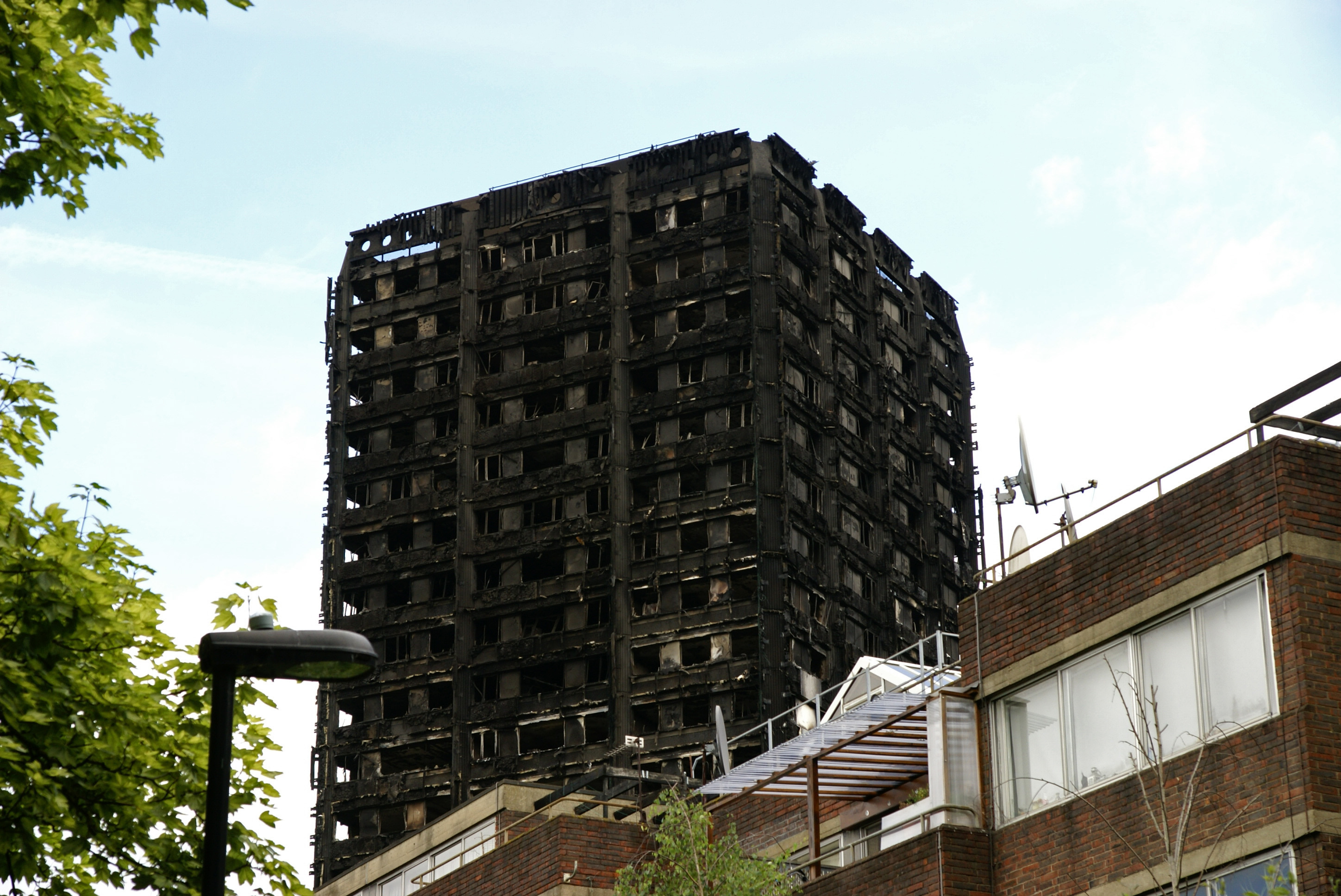
Having been temporarily suspended in early January as a result of an increase in COVID-19 cases, the Grenfell Tower Inquiry hearings resumed on 8 February 2021. The fire killed 72 people.
The hearings are being conducted remotely using a Zoom-based video platform, which the Inquiry describes as “a temporary measure to be used only for as long as absolutely necessary”.
The Inquiry conducted Phase 1 of the investigation, which focused on the events of the night of 14 June 2017, on 12 December 2018. Phase 2 is currently underway, which examines the causes of these events, including how Grenfell Tower came to be in a condition which allowed the fire to spread in the way identified by Phase 1.
Rampant spread, fuelled by a combination of a new variant that is around 50-70% more transmissible, plus a lifting of restrictions at the beginning of December, brings us into another national lockdown.
In many ways, Prime Minister Boris Johnson’s first address of 2021 felt unpleasantly like a return to early 2020.
The original “Stay Home” messaging made a comeback. The Prime Minister was deliberately vague about how long lockdown would last. Big Brother Watch criticised the government for “yet again … evading the democratic process” by denying MPs a meaningful vote on the new national restrictions prior to their televised announcement to the nation, or their coming into force. The new guidance differs from the Tier 4 guidance in emphasis, if not substance.
Ever the optimist, the Prime Minister was keen to emphasise “one huge difference” between this lockdown and the first one: the UK is “rolling out the biggest vaccination programme in its history”. He also managed to get in a jab at the UK having delivered more vaccines than the rest of Europe combined.
There were other, more subtle differences, as No. 10 tweaked its messaging in light of past mistakes.
There is a long history of crossover between lawyers and politicians; more members of parliament come from the law than almost any other profession. But the relationship – never totally tranquil – has become more strained in recent years.
On 12 October 2020, the Prime Minister made a statement in Parliament and addressed the nation to announce a new three tier lockdown system would be introduced across the country. The Secretary of State for Health introduced three statutory instruments before Parliament which came into force two days later.
In oversimplified terms, the restrictions in place in each tier are as follows:
Conor Monighan brings us the latest updates in human rights law
In the News:
Internationally there were a number of developments which have significant consequences for human rights. In Russia a prominent critic of Vladimir Putin has allegedly been poisoned. Alexei Navalny, who is known for exposing corruption within the country, suddenly fell ill last week after drinking tea.
Supporters claim the Russian state has tried to silence Mr Navalny’s criticism of President Putin, and then attempted to cover up its actions by stopping Mr Navalny from being treated abroad. Despite initial resistance from doctors, who said that Mr Navalny was too ill to be moved, the leader has now been flown out of Russia. Critics say the developments are part of a wider crackdown on freedom of speech within the country.
Conor Monighan brings us the latest updates in human rights law
In the News:
Anti-racism protests, sparked by the death of George Floyd, continued across the world. This week much of the focus has been on statues commemorating controversial historical figures. In Bristol, campaigners toppled the statue of a 17th century slave trader called Edward Colston.
The move led to a debate about what ought to be done with such statues. The founder of the Scouts, Robert Baden-Powell, was accused of racism, homophobia, and anti-Semitism. Initially it seemed his statue would be put into storage, but following an outcry it has been boarded up instead. A number of other figures have received similar treatment, including Sir Winston Churchill.
In the US, it seems change is coming to policing. The Democratic Party is proposing a police reform bill which, if passed, would become the Justice in Policing Act of 2020. The Bill would ban chokeholds from being used, limit the use of military weapons, and restrict qualified immunity (the legal principle which has prevented many officers from being sued for alleged misconduct). President Trump confirmed that he ‘generally’ supported ending the use of chokeholds.
Conor Monighan brings us the latest updates in human rights law
In the News:
ICCSA, the Independent Inquiry into Child Sexual Abuse, published its report into protecting children who live outside the UK.
It described how there has been “extensive” sexual abuse of children by British nationals whilst abroad. Between 2013 – 2017, 361 UK nationals requested consular assistance between 2013 – 2017 for being arrested for child sex offences. The inquiry suggested this was likely to be a small proportion of offenders committing crimes abroad.
The report highlights the case of Gary Glitter, who was able to travel abroad and abuse vulnerable children even after he had been convicted. Glitter was later sentenced again for abusing two girls, aged 10 and 11, in Vietnam.
ICCSA concluded that travel bans should be imposed more frequently to prevent this behaviour. It noted that Australia bans registered sex offenders from travelling overseas. ICCSA’s report also argued that the burden of proof for imposing travel bans should be reduced, saying that the need for evidence is often overstated by courts and the police.
The inquiry described the global exploitation of children as worth an estimated £27.7 billion, with developing countries being particularly at risk.
The full report can be read here. More from the BBC here.
Conor Monighan brings us the latest updates in human rights law
Credit: The Guardian
In the News:
Last week, Boris Johnson decided to ask the Queen to prorogue (suspend) Parliament. The decision means that Parliament will be closed for 23 working days, reducing the amount of time MPs will have to pass legislation about Brexit.
Supporters of PM Johnson pointed out that Parliament has already been sitting for around two years. They have also suggested that proroguing Parliament is entirely proper because it is simply an exercise of a prerogative power. Finally, they argue that it will allow the government to hold a Queen’s Speech and outline its plans.
A number of figures spoke against the move:
Tom Watson (Labour) stated proroguing Parliament was an “utterly scandalous affront to our democracy”.
Nicola Sturgeon (SNP) has asked that MPs work together to stop Mr Johnson, or “today will go down in history as a dark one indeed for UK democracy”.
Dominic Grieve (Conservative) described it as “an outrageous act”.
Anna Soubry (Independent Group for Change) tweet that it was “outrageous that Parliament will be shut down at a moment of crisis as we face crashing out of the EU with no deal & for which there is no mandate”.
Ruth Davidson, who had been the leader of the Conservative Party in Scotland, quit. She said her decision was driven by political reasons and personal ones (she recently had a baby). The government whip, Lord Young, also resigned.
Demonstrations took place over the weekend. A judicial review, led by Gina Miller and her legal team, is also being launched.
Following the summer recess, MPs will return to Parliament on the 8th October.
Conor Monighan brings us the latest updates in human rights law
In the News:
Credit: The Guardian
The House of Commons has passed amendments which are likely to liberalise the law on abortion and same-sex marriages in Northern Ireland.
The amendments were added to the NI Executive Formation Bill. The first was put forward by Conor McGinn (Labour). It states that if the NI Assembly is not restored by the 21st October, the government must create secondary legislation to allow same-sex marriage in Northern Ireland. This means there will be no further debate in the House of Commons, because the government will make use of regulations. The second amendment, tabled by Stella Creasy (Labour), has a similar effect. However, both are subject to the condition that the Northern Irish Assembly can legislate to change the law.
Prior to the vote, Ms Creasy said “At this moment in time, if somebody is raped in Northern Ireland and they become pregnant and they seek a termination, they will face a longer prison sentence than their attacker”.
The Conservative leadership contenders were split on the vote. Boris Johnson stated that both subjects were devolved matters, whilst Jeremy Hunt voted for both proposals. Karen Bradley (the Northern Ireland Secretary) and Theresa May (PM) abstained.
Unusually, MPs in the Scottish National Party were given a free vote. The party ordinarily abstains from voting on devolved issues in other countries. Continue reading →
Conor Monighan brings us the latest updates in human rights law
Credit: The Guardian
In the News:
The High Court has heard how MI5, which is responsible for domestic spying operations, may have unlawfully retained the data of innocent civilians for years.
Liberty’s challenge centres on the Investigatory Powers Act 2016, which gives the security services the ability to access digital devices and electronic communications. It alleges that the system of information gathering used by the security services is illegal.
As part of a systemic judicial review, the High Court was told MI5 had realised that there were problems with their data handling in January 2016, but that the Prime Minister and Home Secretary were only informed in April. It was also alleged that MI5 has been holding sensitive data without proper safeguards. Liberty argued that the security services had submitted warrant applications which misled judges, because the agencies had incorrectly suggested sensitive data was being properly protected.
Much of the case will be heard in private over the next week.
This blog is maintained for information purposes only. It is not intended to be a source of legal advice and must not be relied upon as such. Blog posts reflect the views and opinions of their individual authors, not of chambers as a whole.
Our privacy policy can be found on our ‘subscribe’ page or by clicking here.






Recent comments