


In UK news
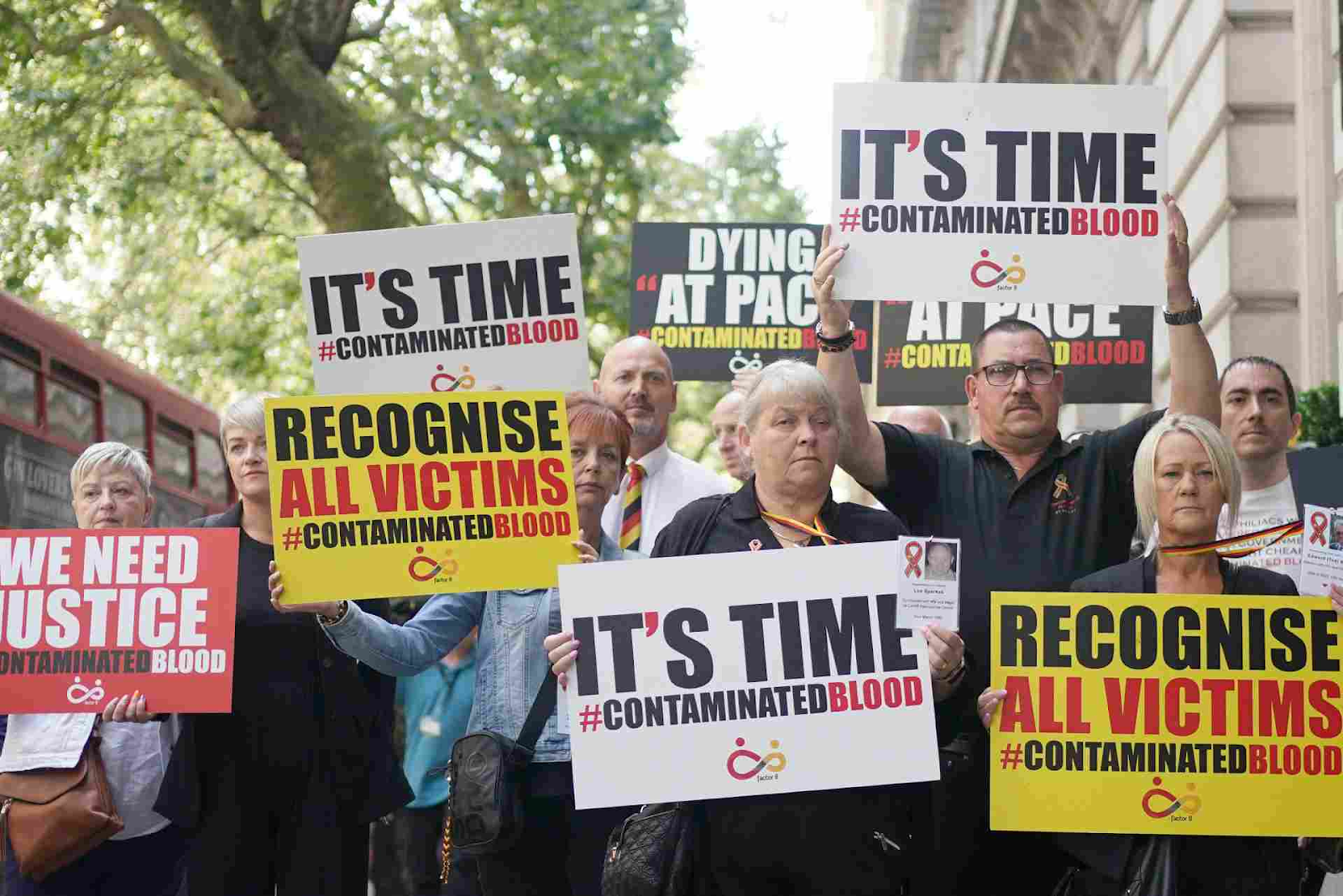
On 20 May, the Infected Blood Inquiry, chaired by Sir Brian Langstaff, published its final report. The inquiry was set up to investigate the circumstances in which people treated by the NHS were given infected blood and blood products, in particular since 1970. The inquiry found that more than 3,000 deaths of NHS patients are attributable to infected blood, blood products and tissue. The report details the many failures which lead to this situation, such as flaws in the licensing regime which allowed for the import of high risk blood products, failing to ensure sufficiently careful donor selection, and treating children at Treloar School (a school for disabled children) with risky commercial blood products for research. The report is strongly critical of the lack of candour shown by the NHS and successive governments. Patients were told they were receiving “the best treatment available” and some documents were deliberately destroyed. The report makes many recommendations to memorialise what happened to the people affected and to ensure lessons are learnt, yet the “principal recommendation” is that “a compensation scheme should be set up now”.
The Post Office (Horizon System) Offences Act received the Royal Assent this week. This is the final stage of the legislative process after the Bill was examined by the House of Lords. The Bill will quash the convictions of hundreds of postmasters and others in England, Wales and Northern Ireland who were charged with fraud, theft and other offences due to the faulty Post Office Horizon IT system. The “Post Office scandal” is also the subject of an inquiry led by Sir Wyn Williams. Paula Vennells, the former CEO of the Post Office Ltd, gave evidence to the inquiry this week. Recordings of the inquiry hearings are available here.
The Equality and Human Rights Commission (EHRC) is launching an inquiry investigating whether the Department for Work and Pensions (DWP) has broken equality law. The EHRC will be looking at whether the DWP is making reasonable adjustments for people with mental health impairments during health assessment determinations for a range of benefits, such as Universal Credit and the Personal Independence Payment.
In international news
International Criminal Court (ICC) Prosecutor Karim Khan KC made an application for arrest warrants for Yahya Sinwar (Head of the Islamic Resistance Movement “Hamas” in the Gaza strip), Mohammed Diab Ibrahim Al-Masri (Commander-in-Chief of the military wing of Hamas), Ismail Haniyeh (Head of the Hamas Political Bureau), Benjamin Netanyahu (Prime Minister of Israel), and Yoav Gallant (Minister of Defence of Israel). Khan KC submits that the Hamas officials bear criminal responsibility for war crimes and crimes against humanity including extermination, murder, hostage taking, rape and other acts of sexual violence, and torture. He submits that the Israeli officials bear criminal responsibility for war crimes and crimes against humanity including starvation of civilians as a method of warfare, wilful killing or murder, and intentionally directing attacks against a civilian population. Khan KC also published a report by international law experts arguing, amongst other things, that the ICC has jurisdiction over the alleged war crimes in Israel/Palestine. The International Court of Justice (ICJ) has reaffirmed its previous measures and published further provisional measures in relation to South Africa’s case against Israel. One of the most significant measures requires Israel to “immediately halt its military offensive, and any other action in the Rafah Governorate, which may inflict on the Palestinian group in Gaza conditions of life that could bring about its destruction in whole or in part”.
A French court found three Syrian officials guilty of crimes against humanity and sentenced to life imprisonment in absentia. The three men are Ali Mamlouk (former Head of the National Security Bureau), Jamil Hassan (Head of the Air Force Intelligence Directorate) and Abdel Salam Mahmoud (former director of the directorate’s investigations branch). The Syrian officials were charged with complicity in the arrest, torture and deaths of Patrick Dabbagh and Mazzen Dabbagh, both of whom had dual French-Syrian nationality. This case is the first time officials working for the regime led by Bashar al-Assad have been tried and convicted in France.
In the courts
The High Court held that protest regulations, that gave the police the power to intervene in protest where they caused “more than minor” disruption, were ultra vires (i.e. beyond the legal power of the Secretary of State). The regulations were ultra vires because the primary legislation gave the police the power to intervene where there was “serious” disruption. The Secretary of State used a Henry VIII power (i.e. a delegated power which allows them to amend primary legislation using secondary legislation) to define “serious” as “more than minor”. The court held that this was ultra vires because “as a matter of ordinary and natural language ‘more than minor’ is not within the scope of the word ‘serious’”. The regulations were also unlawful because they were introduced after an procedurally unfair and one-sided consultation procedure, in which the Secretary of State consulted law enforcement agencies but failed to consult with the public or any body or organisation who may have opposed the proposed regulations.
Julian Assange has been given permission to appeal his extradition to the USA to face trial for conspiracy to obtain and disclose national defence information, after the US government failed to provide diplomatic assurances requested by the High Court. The court’s ex tempore judgment was reported on by Joshua Rozenberg KC (hon) here.

