


In the news
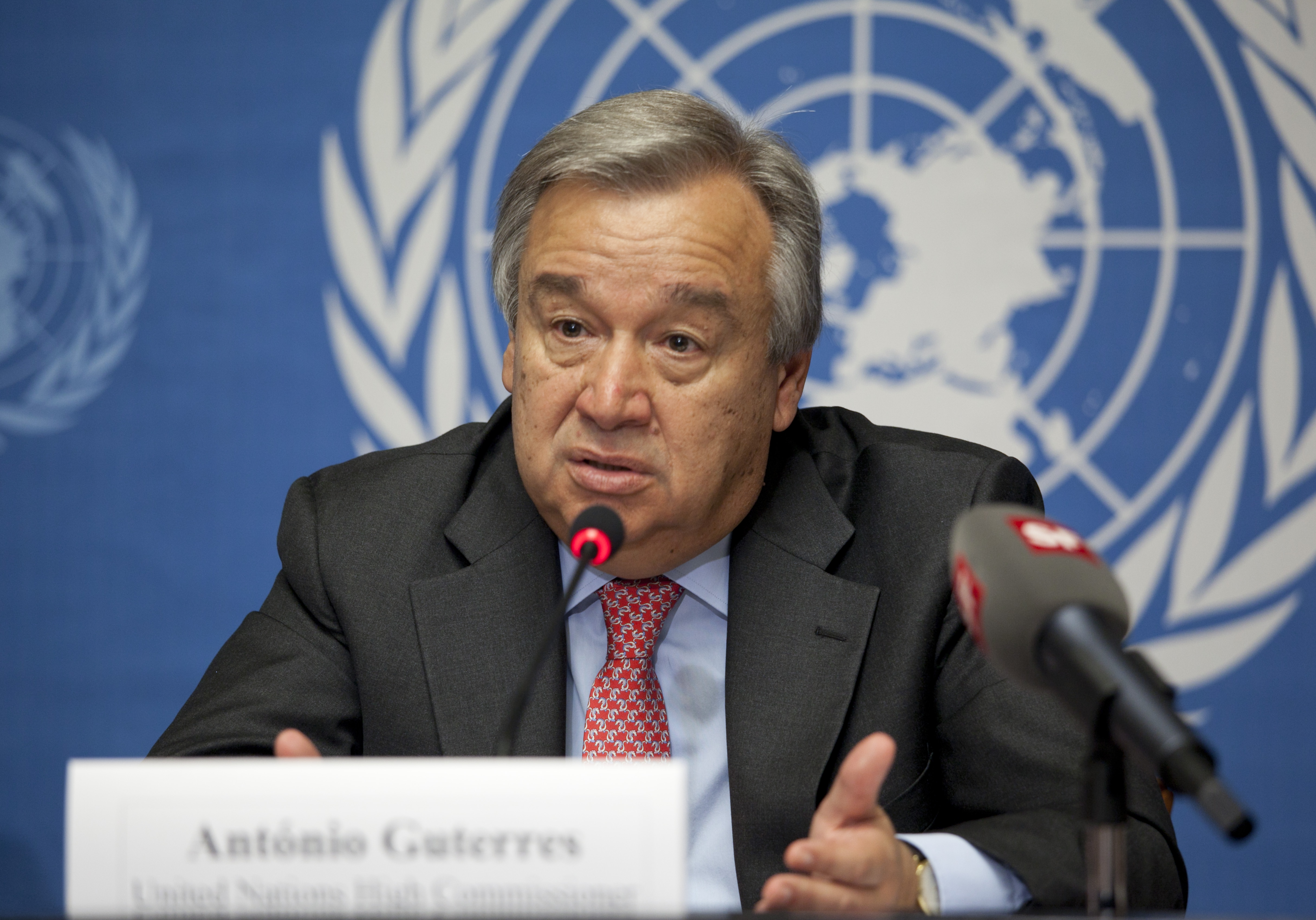
The world is reckoning this week with the human rights consequences of governmental efforts across the world to address the coronavirus pandemic. UN Secretary-General Antonio Gutierres has released a report on how the pandemic is becoming a ‘human rights crisis’. He highlights the disproportionate impact on minority communities, urging that national states of emergency must be proportionate, limited in scope, and alert to the risks of undue censorship and privacy violations. The report is available here.
Within the UK, the Equality and Human Rights Commission has been urging that more reasonable adjustments be made for the disabled and vulnerable in the handling of the pandemic.
In the sphere of criminal justice, the EHRC warns in an interim report that video hearings risk serious discrimination for people with learning disabilities, autism spectrum disorders, and mental health conditions. The report’s recommendations include ensuring disabled defendants have accessible information explaining their right to raise issues to do with participation, ensuring frontline professionals consider identifying people for whom video hearings may be unsuitable, and using registered intermediaries to support disabled defendants in video hearings. The report is available here.
The EHRC has also written a letter to the British Retail Consortium, highlighting concerns about disabled people’s access to food and supplies during the pandemic. They suggest that adjustments may need to be made in respect of long queues, store layouts, and accompanied shopping for the vulnerable. Further, they have written to the British Medical Association, urging that discrimination must be avoided in access to critical care for disabled and elderly people during the pandemic.
In other news:
- Saudi Arabia has officially ended the use of flogging as a punishment. Meanwhile, a leading activist Abdullah al-Hamid, founder of Saudi Civil and Political Rights Association, has died from a stroke in custody. He was serving an 11-year prison sentence for offences such as ‘breaking allegiance’ to the ruler and ‘inciting disorder’, according to Amnesty International.
- Concerns remain over human rights violations in China. The US has now officially urged China to let human rights lawyer Wang Quangzhang return home from his enforced quarantine, while activist Li Bifeng remains in a similar situation in Sichuan. Meanwhile, the UN Office of the Human Rights Commissioner says it is closely monitoring the Chinese government’s handling of arrests of activists in Hong Kong. A piece in the Guardian argues that China is using the coronavirus pandemic as an opportunity to ‘advance its interests’.
- A chronically ill refugee in immigration detention in Australia (suffering from asthma, diabetes, high blood pressure) has launched a case in the Australian High Court seeking release to protect him from infection with COVID-19.
- With jury trials suspended in the UK, Geoffrey Robertson QC has taken this opportunity to put the case for offering a defendants the right to waive their right to jury trial in favour of trial by a single judge – his arguments are here.
In the courts
The Court of Appeal gave judgement this week in the ‘right to rent’ case, The Secretary of State for the Home Department v R (on the application of) Joint Council for The Welfare of Immigrants.
This case concerned Part 3 Chapter 1 of the Immigration Act 2014, which forms part of the government’s ‘hostile environment’ provisions, which are intended to discourage illegal immigration. The provisions in question make it a criminal offence for a private landlord to knowingly lease property to a person who is disqualified in virtue of their immigration status. The Joint Council for the Welfare of Immigrants brought a judicial review, on the basis that this scheme was in violation of Article 14 read with Article 8, as it led to discrimination on the basis of nationality. They were successful in the High Court.
The Court of Appeal reversed that decision. Although satisfied that the Scheme does result in discrimination by landlords against individuals without British passports on the basis of actual or perceived nationality, the court (Hickinbottom LJ) held that the Scheme was a proportionate means of achieving a legitimate objective, namely that of discouraging illegal immigration; the courts must defer to Parliament in respect of measures implementing economic or social policy. Further, the fact of some landlords being likely to discriminate in practice did not render the Scheme itself discriminatory. Although it might be administratively convenient and commercially advantageous for landlords to discriminate, their behaviour would still be in violation of Equality Act obligations enforceable in the courts. Their behaviour could not be described as ‘rational’ or ‘logical’, per Davis LJ, who quoted with approval Lady Hale’s dictum that “the law itself is not to blame for individual shortcomings which it does its best to prevent.” The Joint Council have said they will appeal to the Supreme Court. The case is covered in more detail on the blog by Samuel March.
Two other immigration cases are worth noting:
- Samson Bello, R (On the Application Of) v The Secretary of State for the Home Department: the applicant had been convicted of attempted rape and kidnap and put under a hospital order pursuant to the Mental Health Act 1983. He was then detained pending a deportation order, but deportation to Nigeria was not possible due to COVID-19; he was described as a low-to-medium risk detainee, and as being especially vulnerable to COVID-19. He seeks judicial review on the grounds of breach of the Hardial Singh principles, violation of the Adults at Risk Policy and Casework Guidance, and breaches of Articles 2-3 ECHR, due to the ‘real and immediate risk’ in detention of detainees suffering serious harm or dying. The judge refused to grant an interim injunction to release the applicant, relying on his risk of absconding, and noting that the risks in respect of COVID-19 were being managed in UK immigration detention centres, and the applicant’s mental health was being appropriately managed. The full claim will be decided at an urgent rolled-up hearing.
- Habte, R (On the Application Of) v Secretary of State for the Home Department: this case concerned the application of the EU’s ‘Dublin III’ Regulation on international protection. On his path to the UK, the Claimant had been fingerprinted in Italy, but this was not known to the UK authorities when he arrived, with the result that his claim was ‘examined’ via an asylum interview. The question was whether this was sufficient to transfer responsibility for examining his asylum claim from Italy to the UK, under Article 17 of the Regulation. The court held it was not, as there must be a decision that engages with the purpose of Article 17, clearly indicating the exercise of the discretion to voluntarily transfer responsibility, in line with Fathi.
A couple of cases in the media and communications lists are noteworthy also:
- Hijazi v Yaxley-Lennon: this was a pre-trial meaning ruling in the litigation between EDL leader Tommy Robinson (real name Stephen Yaxley-Lennon) and Syrian refugee schoolboy Jamal Hijazi. The schoolboy had been filmed being violently pushed to the ground and ‘waterboarded’ by a fellow pupil in a school playground; Mr Yaxley-Lennon subsequently recorded two videos at a rally outside the aggressor’s house, alleging, among other things, that Jamal Hijazi had ‘beaten a girl black and blue’ and ‘threatened to stab’ another boy. Nicklin J held that the meaning of these videos was that “the Claimant had (1) as part of a gang, participated in a violent assault on a young girl which had caused her significant injuries; and (2) threatened to stab another child.” Mr Yaxley-Lennon will seek to rely on the defence of truth at trial. It is reported that Jamal Hijazi has been unable since the incident to find a school where he can pass his GCSEs, so that he can pursue his chosen career as a pharmacist.
- Riley v Murray: this was another pre-trial meaning ruling. In this case, TV personality Rachel Riley was suing Corbyn staffer Laura Murray in respect of a tweet she had published about Rachel Riley’s own tweet about Jeremy Corbyn being attacked by a Brexiteer outside a mosque. Ms Riley had retweeted Owen Jones’ tweet about ex-BNP leader Nick Griffin, ‘if you don’t want to be egged, don’t be a Nazi’. Ms Murray tweeted ‘[….]Rachel Riley tweets that Corbyn deserves to be violently attacked because he is a Nazi. This woman is as dangerous as she is stupid. Nobody should engage with her. Ever’. It was held by Nicklin J this was defamatory on its ordinary natural meaning.
There were also a number of Freedom of Information Act requests in the First-tier Tribunal, including:
- David Blundell v IC: the appellant sought “details of all communications, electronic or otherwise, from or to the Treasury regarding B&B [Bradford & Bingley] on the 29.09.08” from the Financial Conduct Authority. The FCA refused on the grounds that the request was vexatious under s.14(1) FOIA, as it would have to review more than 6000 files. The appellant argued that this information was important because it related to the legality of the nationalisation of Bradford and Bingley, a matter of serious public interest. Related issues had been examined in Upper Tribunal cases in 2012 and 2017, but the FTT nevertheless concluded that the request had a reasonable foundation, because those cases had not explored all the issues, and there was continuing public interest in the case.
- Peter Shaw v IC: the appellant had made requests to (i) Arts Council England, and (ii) the Acceptance in Lieu Panel (AILP) in respect of the acquisition by the National Portrait Gallery of a painting of Bonnie Prince Charlie, under the Acceptance in Lieu scheme in lieu of inheritance tax. He was concerned about the authenticity and valuation of the painting and alleged fraud. He made two requests: the first had been substantially complied with, while the second was for all information generated by AILP as a result of emails from him. The FTT held that this was a case of ‘vexatiousness by drift’ under Dransfield, where ‘the underlying grievance has been exhaustively considered and addressed’ (by three independent bodies in this case); the appeal was dismissed.
- Prof Tim Crook v IC (Dismissed): the appellant, a law professor and vice-president of the Chartered Institute of Journalists, sought information relating to a decision by the Greater London Authority to exclude journalists from meetings held with the Mayor of London in 2018 about increasing knife crime. The decision had been made in line with ‘purdah’ rules for the pre-election period. The disputed request related to legal advice given after the time of the decision, which was withheld on the basis of legal professional privilege. The appellant argued that Article 10, interpreted at its highest, would ‘trump’ legal professional privilege. The FTT rejected this argument, noting that the decision had already been amply explained, and dismissed the appeal.
On the UKHRB
- Samuel March explains the Court of Appeal ruling on the ‘right to rent’ scheme
- Rafe Jennings comments on the Fisheries Bill 2020
- Francis Hoar evaluates the Coronavirus Regulations in light of European Convention on Human Rights
- Law Pod UK discusses possible upcoming legal challenges, and ‘judicial activism’ in the time of coronavirus
